

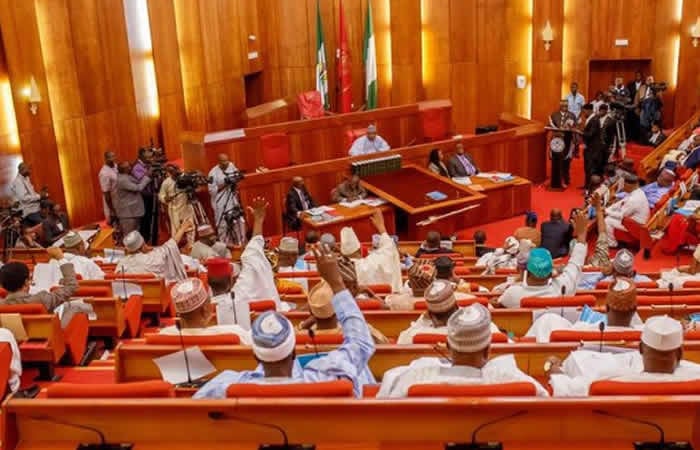
The Senate has stepped down consideration of the Electoral Act (Repeal and Amendment) Bill, 2025, following an extensive debate on its general principles, to allow for broader consultation and a more detailed review of its provisions.
The proposed legislation seeks to repeal the Electoral Act 2022 and enact a new law aimed at strengthening Nigeria’s electoral framework, enhancing credibility, and ensuring inclusiveness in the democratic process. Among its proposed innovations are the introduction of digital registers of results, QR-coded voter identification cards, and stricter timelines for political party primaries and the transmission of election results.
Leading the debate, Chairman of the Senate Committee on the Independent National Electoral Commission (INEC), Senator Simon Lalong, noted that the 2023 general elections tested Nigeria’s democracy in profound ways. While acknowledging that the 2022 Act introduced several key reforms, he said it also revealed gaps such as delayed release of election funds, disputes over voter registration, conflicting interpretations of result transmission, and weak enforcement of electoral offences.
“The key objectives of this legislation are to ensure transparency, efficiency, and integrity in our electoral system, guarantee free and fair competition among political parties, and restore public confidence in elections,” Lalong stated.
“Nigerians expect us to respond not with patchwork corrections, but with a holistic law that strengthens INEC’s independence and rebuilds trust in the process,” he added.
The senator further explained that the new bill mandates the early release of election funds, continuous voter registration, and enhanced use of technology to improve result management and transparency.
However, the session took a turn when Senator Emmanuel Udende (Benue North East) raised concerns that members had yet to receive copies of the bill for proper scrutiny.
In response, Deputy Senate President Jibrin Barau, who presided over the session, clarified that the second reading of a bill focuses on its general principles, while the detailed clauses are examined during the committee stage.
Several lawmakers, including Senator Titus Zam (Benue North West) and Senator Binos Yaroe (Adamawa South), supported the bill’s second reading, describing it as timely and vital to electoral integrity. Lalong also informed the chamber that the Senate and House Committees on Electoral Matters had worked jointly on the legislation for over a year and held a public hearing earlier in the week.
Despite this, some senators expressed reservations about specific clauses. Senate President Godswill Akpabio, who later presided, shared personal experiences from the 2019 elections, stressing the need to ensure INEC’s accountability for misconduct.
Akpabio also proposed a review of the campaign timetable, arguing that prolonged campaign periods negatively affect governance.
“In a four-year term, government effectiveness suffers when ministers and public officers spend almost a year campaigning,” he cautioned.
After extensive deliberation, Akpabio called for a voice vote on a motion to step down the bill pending further consultations. The motion, moved by Senate Leader Opeyemi Bamidele and seconded by Minority Leader Abba Moro, was unanimously adopted.
Bamidele explained that the decision would allow senators to engage with stakeholders and ensure that any amendments reflect the aspirations of Nigerians.
In his closing remarks, Akpabio emphasized that while the bill aims to modernise Nigeria’s electoral process, lawmakers must achieve a common understanding before moving it to the committee stage for further legislative action.