

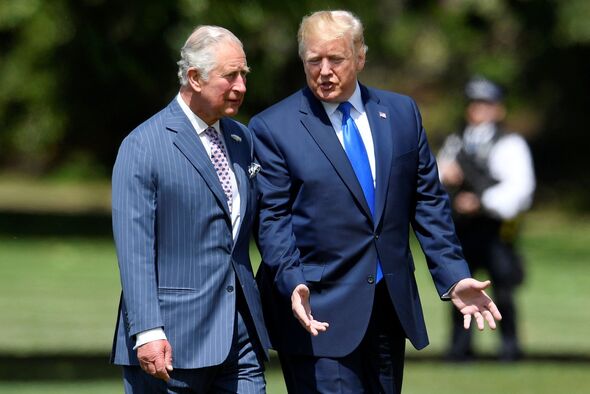
Britain rolled out its most dazzling pageantry for President Donald Trump, offering him the kind of royal welcome that seemed designed to appeal directly to his love of pomp, spectacle, and personal flattery. From a ride in Queen Victoria’s gilded state coach to Windsor Castle, to military parades with bagpipers and guards in bearskins, and finally a white-tie state banquet where Trump was seated between King Charles III and Catherine, Princess of Wales, the visit was crafted to project grandeur. For Trump, who has long styled himself as larger-than-life, the reception was among the highest honors he has received as president.
The royal family’s embrace of Trump wasn’t merely ceremonial. Britain is facing pressing challenges: a sluggish economy, reliance on the US for defense, and uncertainty over Ukraine. By showering Trump with respect, His Majesty’s government aimed to secure favorable trade terms, attract American investment in its tech ambitions, and temper Trump’s unpredictable foreign policy instincts,particularly his closeness with Vladimir Putin.
Yet, the spectacle also revealed the fragility of Britain’s position. The lavish traditions harked back to an era when the United Kingdom was an empire, but today the country is far more dependent on American power than it projects. While the displays of grandeur flattered Trump, they underscored how Britain now sells its 19th-century glories to secure 21st-century survival.
Trump, who thrives on praise, appeared fully at ease in the royal court. King Charles struck a reflective tone, recalling George Washington’s refusal to ever set foot in Britain and John Adams’ disdain for bowing before a monarch. By contrast, Trump relished every gesture of honor. His comfort with monarchical trappings highlighted how he often resembles a leader more drawn to unchecked power than Washington’s vision of restrained governance.
Diplomacy, however, comes with trade-offs. For Prime Minister Keir Starmer, who swept to power in a landslide but now faces domestic political turmoil, Trump’s visit posed a significant test. Starmer managed to win a relatively low 10% tariff rate on British exports to the US,less than the EU’s rate,while aligning Britain with Washington in post-war security plans for Ukraine. He also pledged higher defense spending, despite doubts about funding. But Starmer’s embrace of Trump is politically risky at home, where many Britons view the US president as dangerous and corrupt.
Meanwhile, Trump’s populist politics are echoing in the UK, where Nigel Farage’s Reform Party is surging in polls, threatening the dominance of Labour and Conservatives alike. Trump’s administration has also meddled in British affairs, pressing for looser online speech rules and clashing with UK leaders over free expression.
The state visit also revived old scandals. Starmer dismissed UK ambassador Peter Mandelson over ties to Jeffrey Epstein, inadvertently drawing attention to Trump’s own past friendship with the disgraced financier. Prince Andrew’s Epstein-linked downfall cast another shadow. Protesters even projected images of Trump and Epstein onto Windsor Castle, highlighting public opposition to his presence.
For Britain, Trump’s royal welcome was a gamble: balancing diplomacy, political risk, and public unease. For Trump, it was a triumph of image,proof that few leaders can resist his vanity when their national interests are at stake.