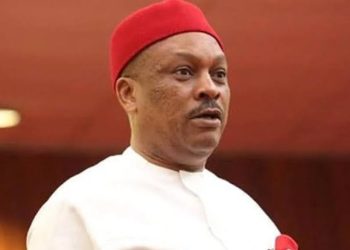



Former presidential aide and Arise Television’s Morning Show host, Dr Reuben Abati, has faulted the Federal Government’s proposed N70,000 transport stipend for civil servants, labelling the measure discriminatory against workers in the private sector.
Abati argued that the initiative leaves out private sector employees who are equally grappling with escalating commuting expenses and the rising prices of essential commodities.
He maintained that soaring petrol prices and transportation fares affect Nigerians regardless of their employment status, questioning the government’s decision to limit the proposed financial assistance to public servants.
The media commentator also expressed reservations about the timing of the announcement, hinting that political considerations could be behind the introduction of the scheme.
Abati made these remarks on Wednesday during a discussion on the government’s planned transport subsidy for public employees amid worsening economic conditions and increasing household expenses.
Speaking on the proposed monthly benefit, the broadcaster queried why workers employed by private companies were not considered, despite facing comparable financial constraints.
He stressed that the burden of expensive transportation extends beyond civil servants and organised labour, noting that employees across different industries are contending with similar economic pressures.
Abati pointed out that public and private sector workers purchase petrol at the same prevailing rates and are equally affected by the rising cost of travelling to their workplaces.
He questioned who would provide equivalent financial assistance to private employees, many of whom devote a considerable share of their salaries to daily transportation.
According to him, restricting the intervention to government workers raises concerns about unequal treatment, particularly when Nigerians across the country are struggling with higher living expenses.
The television presenter also challenged the Federal Government’s instruction to the Nigerian National Petroleum Company Limited (NNPC), arguing that the anticipated impact of the directive had yet to be felt by the public.
He expressed doubts about the practical outcome of the measure, insisting that Nigerians continued to bear the consequences of expensive fuel and increased commuting fares.
Abati maintained that government policies intended to ease workers’ financial difficulties should accommodate the realities of employees across different sectors rather than concentrate exclusively on public servants.
He consequently described the proposed allowance as discriminatory, arguing that leaving out private sector employees failed to recognise the economic hardship experienced by the wider workforce.
Meanwhile, DAILY POST reported that the Federal Government reached an agreement on the N70,000 transportation package following a reconciliation meeting with the Nigeria Labour Congress (NLC) in Abuja on Tuesday.
Under the arrangement, eligible public service employees are expected to receive the monthly benefit for six months, starting in November 2026, to help offset the effects of rising living costs.
The agreement covers government workers at different levels of public administration.
It also addresses unpaid allowances and other matters concerning employees’ welfare.
The intervention forms part of ongoing engagements between the Federal Government and organised labour aimed at improving workers’ conditions amid persistent economic difficulties.
Abati’s comments have consequently raised questions about the fairness of restricting transportation relief to public servants when private sector employees are also contending with increasing commuting expenses and declining purchasing power.
His position centres on the need for inclusive government assistance that considers the financial difficulties confronting workers across the country, irrespective of their employment arrangements.