

Professor Pat Utomi has opened discussions with opposition presidential contenders and senior party officials as part of an initiative aimed at facilitating a single candidate for the 2027 presidential race.
The exercise is being organised through the Movement for Credible Elections (MCE), which is exploring ways to bring competing opposition interests under a common political arrangement before the election.
Utomi, the head of the MCE Political Commission, is expected to conduct a series of confidential engagements with prominent figures seeking to contest the presidency and representatives of their parties.
The meetings are expected to take place before the commission holds its tactical gathering in Ibadan in approximately two weeks.
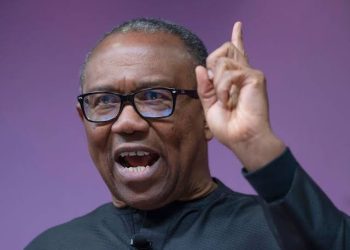
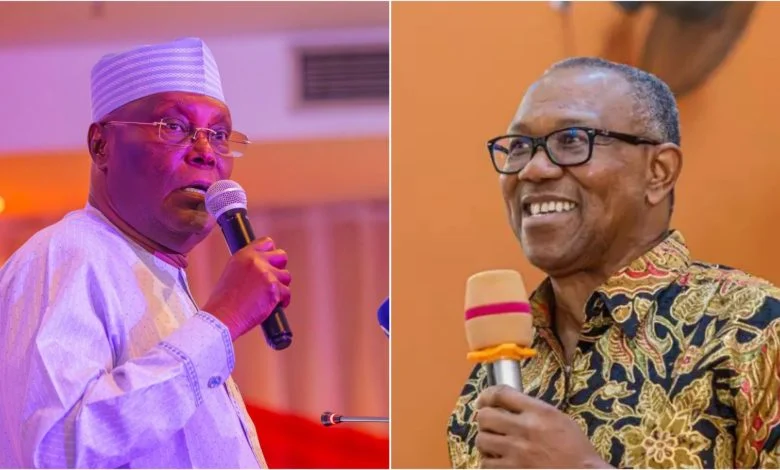
The politicians earmarked for the consultations include former Vice President Atiku Abubakar of the African Democratic Congress (ADC), Peter Obi of the Nigeria Democratic Congress (NDC), Adewole Adebayo of the Social Democratic Party (SDP), Seyi Makinde of the Allied Peoples Movement (APM), Donald Duke of the Peoples Redemption Party (PRP), Sandy Onor of the Peoples Democratic Party (PDP), Peter Agada of the Young Progressive Party (YPP), and Omoyele Sowore of the African Action Congress (AAC).
James Ezema, the MCE’s Media Coordinator, announced the planned engagements in a statement.
The organisation said the talks would be held behind closed doors due to the delicate nature of the issues involved. It explained that restricting the meetings to private settings would give the participants greater freedom to discuss disagreements, negotiate and consider possible compromises.
MCE also warned that the process could face attempts at disruption from political interests that do not support the proposed opposition arrangement.
The statement said Utomi’s committee would engage both the identified aspirants and their party leadership before the scheduled tactical meeting.
Rather than asking politicians to simply withdraw from the presidential contest, MCE said it intends to establish an agreed mechanism for arriving at a common candidate.
The organisation said the process would be guided by openness, impartiality, accountability, fairness and adherence to agreed rules.
It added that the parties and aspirants involved would participate in deciding how the selection exercise would be conducted.
MCE said a number of issues would be taken into account when considering the various contenders. These include their level of national recognition, leadership record, personal integrity, competence, political influence, policy agenda, commitment to democratic governance and ability to accommodate people from different backgrounds.
The commission also intends to examine the aspirants’ understanding of Nigeria’s political and democratic challenges, including debates surrounding the nation’s constitutional framework.
MCE said selecting a common candidate would only form part of the proposed arrangement. It maintained that the opposition would also require a unified policy blueprint capable of addressing major national concerns.
Issues highlighted by the organisation include insecurity, unemployment, poverty, economic difficulties, institutional deterioration, electoral changes, constitutional reform, education, healthcare, energy supply and government expenditure.
The group said it does not favour an alliance that merely combines political personalities without establishing a clear direction for governance.
It argued that any credible opposition platform should offer Nigerians a programme based on policies, competence, shared principles and a defined vision for the country.
MCE also acknowledged that reaching an agreement would involve extensive bargaining and compromise, with political actors expected to accommodate one another and make concessions where necessary.
The question of whether opposition parties should contest independently or coordinate their efforts behind one presidential candidate has remained central to political discussions ahead of 2027.
MCE has been involved in the broader electoral conversation for months. In March, it voiced concerns about Nigeria’s democratic environment and preparations for the forthcoming elections.
Utomi and the organisation have also pushed for more credible elections and stronger democratic structures.
Meanwhile, the G100 initiative began engaging opposition parties and political stakeholders in August. It released its “Doctrine of a Necessary Democratic Opposition” and advocated closer cooperation among opposition forces ahead of 2027.
G100 later consulted with several parties, including the ADC, APM, NDC, PDP, PRP and SDP.
MCE said its broader mission is to facilitate a united opposition structure that could present a coordinated political alternative to the ruling All Progressives Congress (APC) in the 2027 presidential contest.