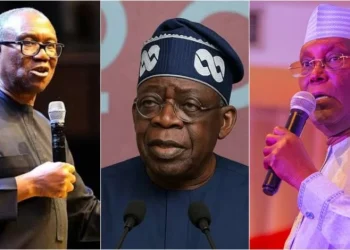


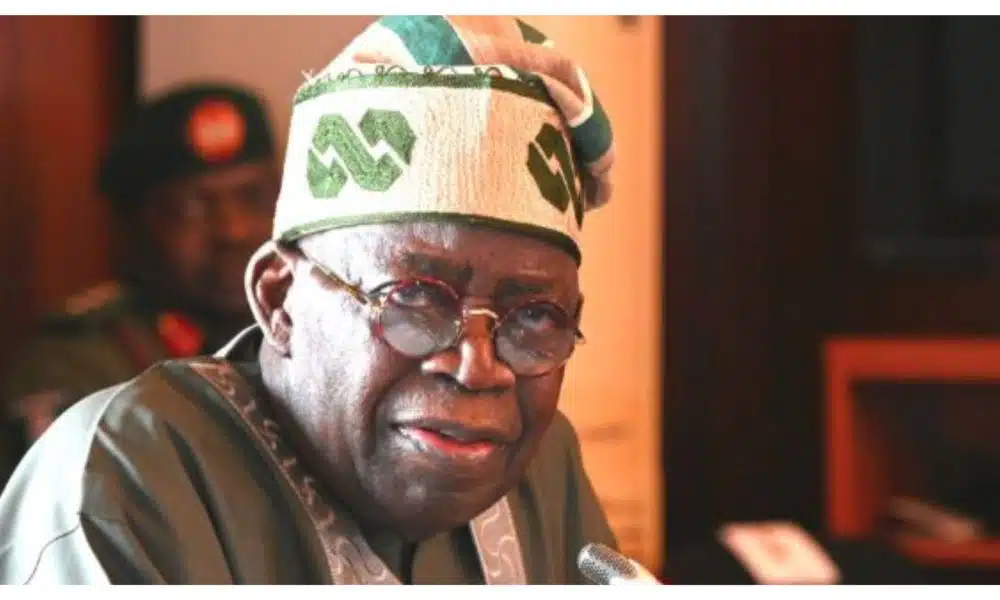
The controversy surrounding President Bola Ahmed Tinubu’s historical records with United States law enforcement authorities has intensified, following fresh calls from opposition parties for the documents to be released publicly.
The African Democratic Congress (ADC) and the Nigeria Democratic Congress (NDC) have criticised the President’s attempt to prevent the disclosure of the records, arguing that Nigerians have a legitimate interest in understanding the circumstances surrounding his past.
The development followed the emergence of legal submissions filed by Tinubu’s lawyers before the United States District Court for the District of Columbia. The legal team, comprising Christopher Carmichael, Victor Henderson and Oluwole Afolabi, outlined several grounds for opposing the publication of Tinubu’s unredacted records held by the Federal Bureau of Investigation (FBI) and the Drug Enforcement Administration (DEA).
The lawyers maintained that the documents contain sensitive personal information obtained through law enforcement investigations and are therefore covered by exemptions contained in the US Freedom of Information Act and Privacy Act.
They argued that American law did not provide sufficient grounds for making the requested information public simply because the subject of the records is Nigeria’s sitting president.
According to Tinubu’s legal representatives, claims that Nigerians have a right to examine the President’s background do not constitute the type of public interest recognised under US freedom-of-information legislation.
They also dismissed the suggestion that releasing the documents could help Nigerians assess Tinubu’s suitability for public office, arguing that such considerations fall outside the purpose of the relevant American disclosure laws.
The lawyers further questioned the intentions behind the request, alleging that the push for access to the records was motivated primarily by political interests in Nigeria.
They pointed to filings by American transparency campaigner Aaron Greenspan, arguing that the documents appeared to be sought because they contained references to Tinubu.
Tinubu’s lawyers consequently urged the court to reject any attempt to use the FOIA process to obtain confidential information about an individual merely because he occupies the highest political office in Nigeria.
The legal team also challenged claims that the documents might reveal a previous criminal investigation, an abandoned prosecution or an arrangement by American authorities not to prosecute Tinubu. They described such assertions as conjectural and said they were not supported by established evidence.
The lawyers maintained that the publication of some information concerning Tinubu’s past did not automatically eliminate his privacy rights over additional material contained in official US government records.
ADC Questions Tinubu’s Position
Reacting to the latest development, ADC spokesperson Bolaji Abdullahi expressed concern over the President’s resistance to the release of the documents.
Speaking to a correspondent on Saturday, Abdullahi argued that Tinubu should support the disclosure if he genuinely wants to end the lingering questions surrounding his past.
He maintained that allowing the records to become public would provide an opportunity for the President to address the allegations and remove doubts surrounding the matter.
Abdullahi described the President’s opposition as questionable and urged him to demonstrate transparency by supporting the release of the records.
NDC Backs Call for Disclosure
The NDC also joined the call for the documents to be made public, insisting that Nigerians deserve clarity regarding the President’s background.
The party’s National Publicity Secretary, Osa Director, rejected the claim that the request was merely an opposition-driven political exercise.
Speaking with The PUNCH on Saturday, Director maintained that the public deserves access to information capable of shedding light on issues surrounding the President’s history.
He argued that the matter should not simply be dismissed as political rivalry, stressing that transparency was important when questions concerning the background of a sitting president remain unresolved.
The opposition parties have therefore renewed pressure for the release of Tinubu’s US law enforcement records, saying greater disclosure would help settle ongoing questions and allow Nigerians to make informed judgments.