

The rising political influence of House of Representatives member James Abiodun Faleke has generated renewed discussion within Nigeria’s political circles, with public affairs commentator Simsim Jaga examining his relationship with President Bola Ahmed Tinubu and his possible political future ahead of the 2027 elections.
In a commentary titled “Faleke’s Rising Influence: What Does He Really Want?”, Jaga reviewed Faleke’s political journey, his growing prominence within the All Progressives Congress (APC), and his involvement in the party’s activities ahead of the 2027 general elections.
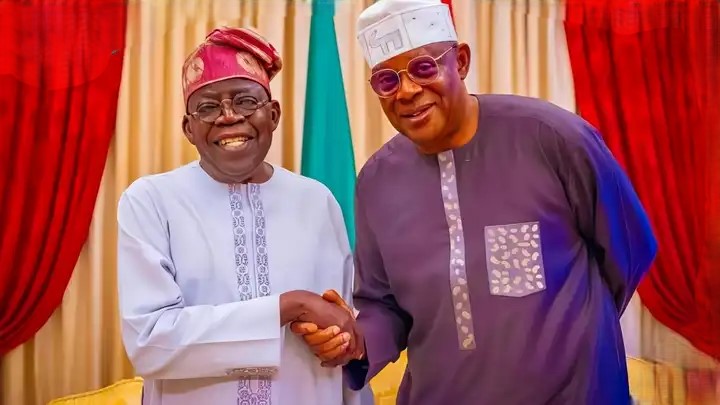
Faleke has remained a prominent political ally of President Tinubu, with his political career closely associated with the Lagos political establishment. He currently represents Ikeja Federal Constituency in the House of Representatives and has held important legislative responsibilities.
Jaga traced part of Faleke’s political history to the 2015 Kogi State governorship election, when he served as running mate to the late Prince Abubakar Audu, the APC governorship candidate.
Audu was leading in the election when he died during the collation of results. Following his death, Faleke argued that he should inherit the mandate as Audu’s running mate. The dispute eventually reached the Supreme Court, which ruled against his position.
According to the commentator, that episode became an important chapter in Faleke’s political career and contributed to his emergence as a notable political figure.
Jaga also linked the latest questions surrounding Faleke to the APC’s defeat in the August 2026 Osun governorship election. Governor Ademola Adeleke defeated APC candidate Bola Oyebamiji in the election, with Adeleke securing 511,067 votes against Oyebamiji’s 444,815 votes.
Faleke participated in the APC’s campaign activities in Osun, and his role attracted attention during the election period. His public exchanges with Afrobeats singer Davido over allegations surrounding the election also generated considerable discussion.
The Osun result has subsequently triggered debate within the APC over the factors responsible for the party’s defeat, including campaign strategy, grassroots mobilisation and the roles played by different political actors.
Jaga further examined Faleke’s involvement in previous political controversies, while acknowledging that some of the allegations surrounding his name remained matters of political debate rather than established facts.
The commentator said the bigger question was what Faleke’s increasing political influence could mean for his future.
There has been speculation linking Faleke to a possible Kogi State governorship ambition, while some observers have also discussed the possibility of him seeking other senior political positions in the future. Jaga, however, stressed that these remain speculation and that Faleke has not publicly announced such plans.
Recent reports have also indicated that Faleke’s associates have urged him to remain focused on supporting Tinubu’s 2027 re-election rather than becoming distracted by speculation about the Kogi governorship.
The discussion therefore centres on whether Faleke’s current activities are primarily aimed at strengthening Tinubu’s political project or whether he is gradually building an independent political base for a future political ambition.
As the 2027 elections approach, Faleke’s activities within the APC are likely to remain under close observation, particularly because of his longstanding relationship with Tinubu and his growing influence within the party.
For now, however, there is no confirmed indication that Faleke has declared a bid for any higher political office.
The debate surrounding his political future reflects the wider realignment taking place within the APC as politicians position themselves ahead of the 2027 elections.