

Presidential candidate of the Nigeria Democratic Congress (NDC), Peter Obi, has called on Nigerians to scrutinise the credentials and records of all candidates seeking the presidency ahead of the 2027 general elections.
Obi made the call while outlining his political and policy agenda, stressing that presidential candidates should be prepared to answer questions about their backgrounds, qualifications and plans for governing Nigeria.
According to him, candidates should not avoid public scrutiny or rely on representatives to speak on their behalf when important issues concerning their qualifications and records are raised.
The former Anambra State governor said Nigerians deserve transparency from anyone seeking to occupy the highest political office in the country.
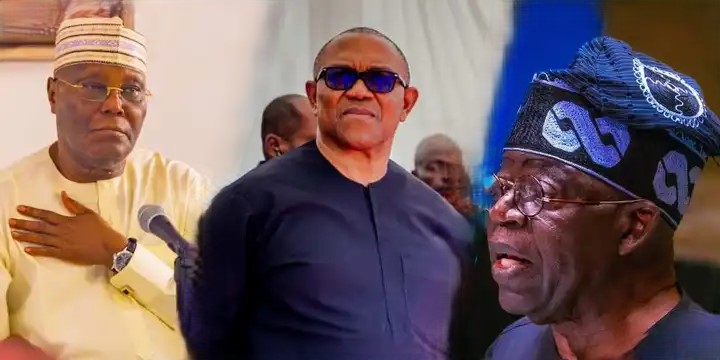
His comments come amid renewed public attention on the academic records submitted by major presidential candidates, including President Bola Ahmed Tinubu and former Vice-President Atiku Abubakar. The Independent National Electoral Commission (INEC) has published the Form EC9 particulars of presidential candidates ahead of the 2027 election, allowing members of the public to scrutinise the information submitted.
Obi himself submitted his academic credentials, which include his West African School Certificate from Christ the King College and a Bachelor of Arts degree in Philosophy from the University of Nigeria, Nsukka.
Tinubu’s published Form EC9 records his Bachelor of Science degree in Business Administration from Chicago State University, while Atiku’s records include his First School Leaving Certificate, West African School Certificate and a master’s degree in International Relations from Anglia Ruskin University.
Obi argued that the public should be able to examine the qualifications and records of all presidential contenders without selective treatment.
He said candidates must be willing to defend their records and explain their plans directly to Nigerians.
Beyond the issue of academic qualifications, Obi used the opportunity to outline his proposed approach to Nigeria’s economy.
He said his administration would seek to move the country away from a consumption-driven economy towards one focused on production, investment and enterprise.
Obi proposed different development priorities for Nigeria’s geopolitical zones, with emphasis on agriculture and manufacturing in the North-West, reconstruction and economic recovery in the North-East, and food production and processing in the North-Central region.
For the South-West, he identified technology, finance and the creative economy as areas with significant potential, while the South-East would focus on industrialisation and entrepreneurship.
He said the South-South region should maximise its oil and gas resources while developing maritime services and fisheries.
On security, Obi pledged to strengthen intelligence coordination among security agencies, improve border management and increase the use of technology in policing.
He also promised greater attention to the conditions that contribute to youth involvement in crime.
In healthcare, he said his administration would focus on maternal and child health, access to essential medicines and improved support for healthcare workers.
The NDC candidate’s comments come as political activities intensify ahead of the 2027 presidential election, with major parties and candidates beginning to present their programmes to voters.
Obi also disagreed with Atiku’s position on restoring petrol subsidy, saying he supported its removal but believed the government had not managed the resulting savings effectively.
As the election approaches, scrutiny of candidates’ qualifications, records and policy proposals is expected to remain a major part of the political debate.