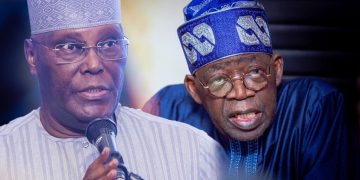


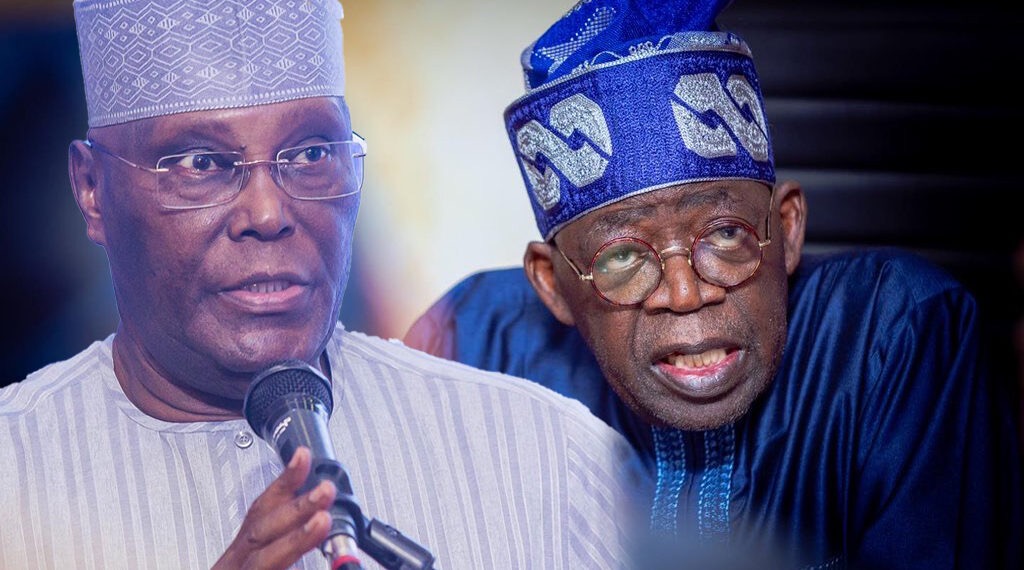
Former Vice President Atiku Abubakar has insisted that neither President Bola Tinubu nor his political allies can prevent him from advocating measures aimed at reducing the burden of petrol prices on Nigerians.
Atiku renewed his call for a targeted fuel subsidy, arguing that the Federal Government has continued to provide financial support to the petroleum sector despite its declaration that the subsidy regime was abolished.
The former vice president made his position known through a statement issued by his Senior Special Assistant on Public Communication, Phrank Shaibu, in Abuja.
Atiku cited figures contained in the audited financial statements of the Nigerian National Petroleum Company Limited (NNPCL), arguing that government spending on what the company described as “energy security expenses” amounted to an indirect form of subsidy.
According to him, NNPCL recorded about N4.84 trillion in energy-security expenses and related shortfalls in 2023, while the figure reportedly increased to approximately N7.13 trillion in 2024.
He argued that NNPCL had explained that part of the expenditure resulted from differences between the exchange rate used in determining the regulated petrol price and the prevailing rate when import obligations were settled.
Atiku therefore maintained that changing the terminology from subsidy to “shortfall,” “under-recovery” or “energy security” did not alter the economic reality.
He argued that public funds were still being used to reduce the difference between the actual cost of petrol and the price paid by consumers.
The former vice president also questioned the Federal Government’s decision to provide incentives to oil companies through tax credits and other concessions while rejecting similar interventions aimed at reducing the financial pressure faced by ordinary Nigerians.
He specifically referenced incentives available to qualifying deep offshore oil and gas projects, arguing that the government was prepared to provide financial relief when it benefited investors but unwilling to offer comparable support to households struggling with rising living costs.
Atiku said the government could not simultaneously justify incentives for major oil investments while describing efforts to make petrol more affordable for Nigerians as economically irresponsible.
The Presidency, however, rejected Atiku’s position and accused him of changing his stance on fuel subsidy for political reasons.
President Tinubu’s Special Adviser on Media and Public Communications, Sunday Dare, said Atiku had previously supported the removal of petrol subsidy and described the policy as unsustainable and vulnerable to corruption.
In a statement titled “Atiku’s Subsidy U-Turn: The Bankruptcy of Desperate Ambition,” Dare accused the former vice president of abandoning his earlier economic position in pursuit of political advantage ahead of the 2027 elections.
He recalled that during the 2023 presidential campaign, Atiku reportedly advocated the complete removal of fuel subsidy as part of his economic programme.
According to Dare, Atiku had argued at the time that the subsidy system was opaque, expensive and susceptible to abuse by powerful interests.
The presidential aide therefore described Atiku’s current demand for subsidy restoration as a major reversal of his previous position.
Dare accused the former vice president of exploiting the economic difficulties currently facing Nigerians for political gain, insisting that the administration’s reforms were designed to address longstanding structural weaknesses in the economy.
The exchange between both camps has further intensified the political debate over fuel subsidy, economic reforms and the rising cost of living as Nigeria approaches the 2027 presidential election.