

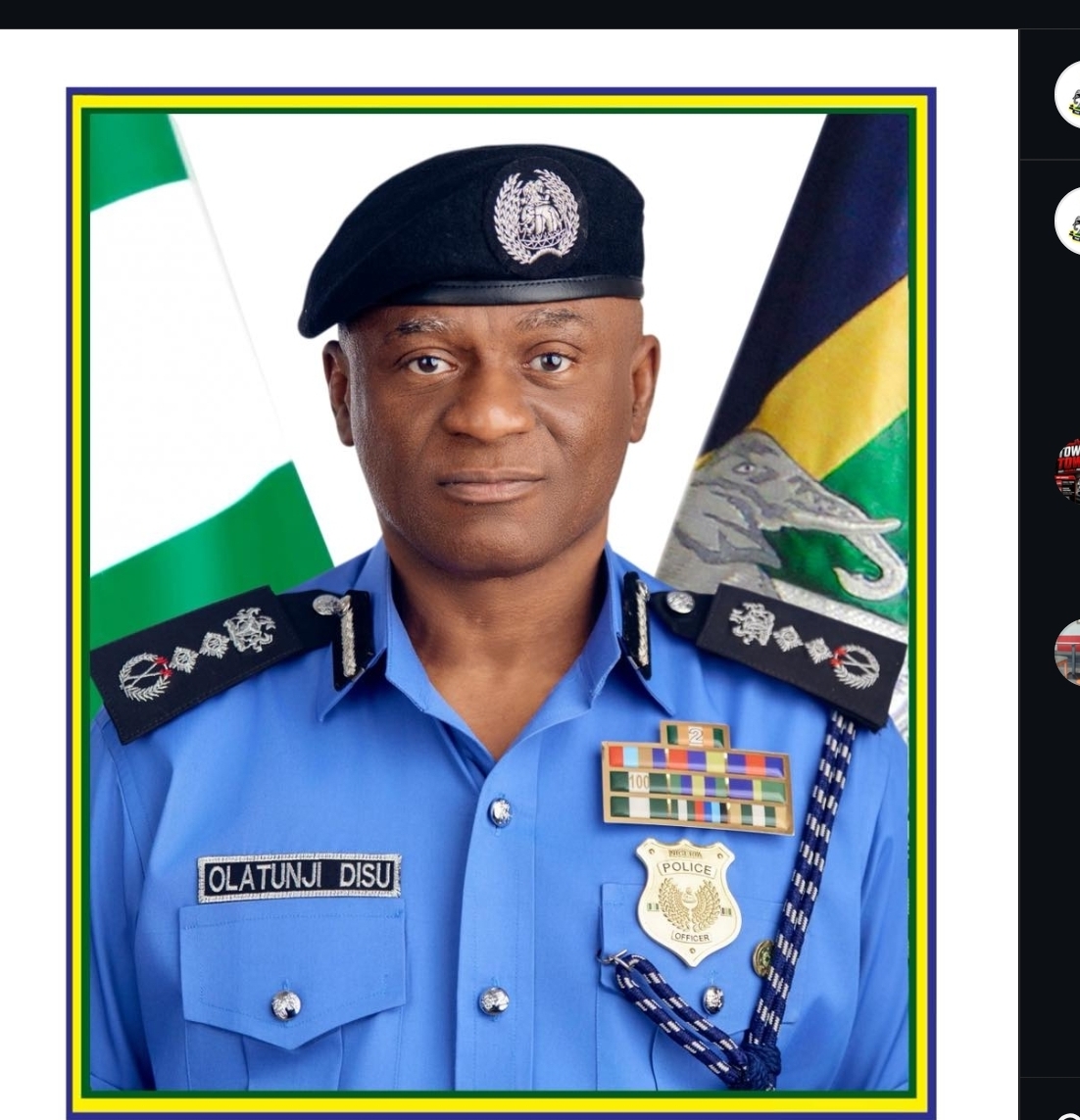
Since his appointment as Acting Inspector-General of Police on February 24, 2026 — and his subsequent confirmation as substantive IGP by the Nigeria Police Council on March 2 — Olatunji Rilwan Disu has pushed a version of policing that leans heavily on visibility, dialogue and preventive engagement, alongside the more conventional business of chasing down crime.
Three developments over the past week capture the shape of that approach: a new schools-and-NYSC security campaign, a three-day youth engagement drive in Kano, and a wider strategic-communications push that has drawn commentary from public relations professionals watching the Force.
At the closing ceremony of the Nigeria Police Force’s International Youth Day 2026 events in Abuja, IGP Disu announced that the security-and-citizenship campaign launched at the event — themed “My Future Is Greater Than Political and Digital Thuggery” — would not stay confined to the capital. He told the gathering the Force intends to carry it into schools, tertiary institutions, NYSC orientation camps and youth organisations nationwide, pairing it with continued preventive policing and messaging on responsible digital citizenship ahead of the 2027 general elections.
The campaign builds on groundwork laid earlier in his tenure. In April, NYSC Director-General Brigadier General Olakunle Nafiu paid a courtesy visit to Disu at Force Headquarters, where the IGP pledged closer cooperation with the Corps — including using police records of corps lodge addresses to respond faster to incidents, and processing exemption arrangements for graduates of the Nigeria Police Academy.
Disu used the Abuja event to warn young Nigerians against being drawn into political violence or online manipulation as the country heads toward elections, framing the choice as one between building a future and being used by others to destroy it.
The clearest on-the-ground expression of that national campaign so far came from Kano State, where the state Police Command — under Commissioner of Police Ibrahim Adamu Bakori — ran a three-day commemoration from August 19 to 21 in compliance with the IGP’s directive.
The programme had three parts. A free medical outreach at Sharada Phase II Quarters offered residents consultations, medication and basic health checks, run jointly by the Command’s medical staff and partner health professionals. Public enlightenment segments aired live on Dala FM and Freedom Radio, covering youth involvement in crime prevention, the risks of political and digital thuggery, and how to report security concerns. The commemoration closed with a Police-Youth Dialogue at the Police Officers’ Mess in Bompai, bringing together the state’s youth groups — from NANS and NAKS student bodies to young journalists, youth persons with disabilities, market associations and community policing volunteers — for a direct conversation with police leadership and divisional officers.
It was at that dialogue that the Command formally launched its own state-level version of the “My Future Is Greater Than Political and Digital Thuggery” campaign, aimed specifically at discouraging electoral violence and online manipulation among Kano’s youth.
“Our youth are the greatest asset of Kano State and Nigeria. We must protect their future by rejecting violence, rejecting manipulation, and embracing dialogue, education, and lawful enterprise,” CP Bakori told the gathering, tying the state effort back to what he described as the IGP’s broader agenda of engagement-driven policing.
The Kano and Abuja events sit inside a broader set of moves that have become associated with Disu’s leadership since March. He has directed police commands to route terrorism-financing, banditry and crude-oil-theft cases to specialised units to strengthen intelligence-led investigation. He has pushed a partnership with the National Judicial Institute to professionalise police training and investigation standards. He has also been visible in the ongoing national debate over state policing, disclosing that the committee examining the proposal studied frameworks in India, the United States and Pakistan before making recommendations, and urging officers to engage the public with informed, objective analysis rather than take sides.
Commentary on his tenure has increasingly focused on style as much as substance. In a recent opinion piece, public relations practitioner Prince Olumuyiwa Adejobi argued that Disu has made strategic communication and community engagement part of the “architecture” of policing rather than an afterthought, pointing to a July 2026 workshop where the IGP told commissioners of police nationwide: “Guns protect lives, but your voices protect our reputation.” Adejobi also credited the administration with reviving the dormant Police Campaign Against Cultism and Other Vices (POCACOV) and directing commissioners to hold regular town-hall meetings with traditional rulers and community leaders.
Whether that emphasis on visibility and dialogue translates into measurable gains in public trust and crime outcomes is still an open question — commentators who have praised the approach also note that its real test lies not in speeches or press statements, but in whether ordinary Nigerians experience a different kind of encounter with police officers at the station level, on the road, and in their communities. For now, the schools-and-NYSC rollout and the Kano youth dialogue represent the clearest signs of the administration trying to move that philosophy beyond Force Headquarters and into direct contact with the public.