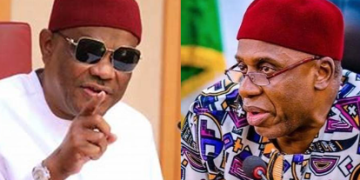


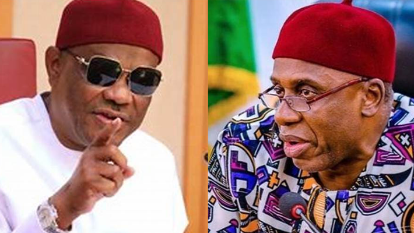
Former Rivers State Governor and ex-Minister of Transportation, Rotimi Amaechi, has criticised the leadership style of the Minister of the Federal Capital Territory (FCT), Nyesom Wike, saying he does not relate with his subordinates in the manner Wike allegedly does.
Amaechi made the remarks while responding to recent comments by Wike amid the continuing political rivalry between the two prominent Rivers politicians. According to him, leadership should be built on mutual respect, discipline, and professionalism rather than intimidation or public confrontation.
The former governor stated that throughout his years in public office, he maintained a respectful relationship with those who worked under him. He argued that effective leadership requires creating an environment where subordinates can contribute without fear or undue pressure.
Amaechi also dismissed comparisons between his leadership approach and that of Wike, insisting that every public office holder should be judged by his conduct and record in office. He maintained that his style of administration was guided by institutional principles and accountability.
The comments come amid renewed exchanges between the two political figures, whose relationship has remained strained since Wike succeeded Amaechi as Governor of Rivers State. Their political disagreements have continued to shape political discussions both within Rivers State and at the national level.
Political analysts say the latest exchange reflects the growing political tension ahead of the 2027 general elections, as prominent politicians continue to reposition themselves and respond to issues affecting the country’s political landscape.
Observers also note that public disagreements among leading political figures are likely to intensify as parties and influential politicians engage in consultations, alliances, and other political activities ahead of the next election cycle.
Despite their differences, both Amaechi and Wike remain influential voices in Nigerian politics, with their statements often generating widespread reactions across the political space.
As preparations for the 2027 elections continue, political observers expect more debates and exchanges among key political actors over governance, leadership, and the direction of the country’s democratic process.