

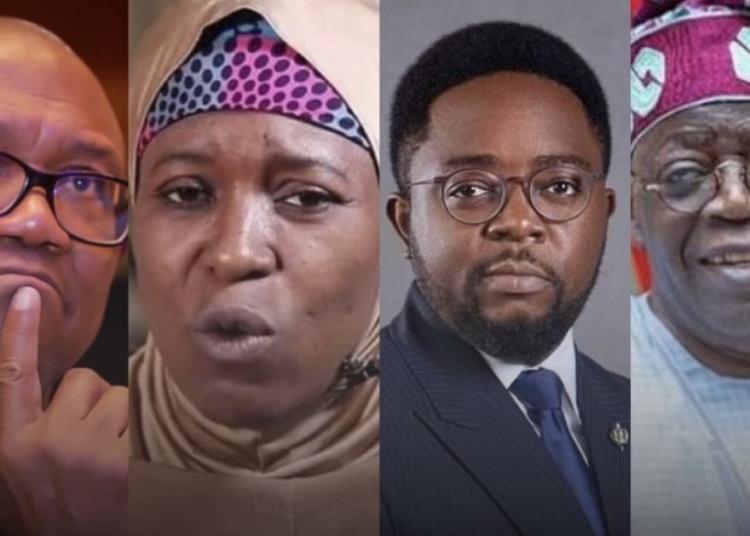
Human rights activist and supporter of the Nigeria Democratic Congress (NDC), Aisha Yesufu, has raised concerns over what she described as unfair treatment of the party’s presidential candidate, Peter Obi, by sections of the media.
Yesufu accused Channels Television presenter Seun Okinbaloye and other journalists of placing excessive attention on Obi while failing to subject other major political figures, including President Bola Ahmed Tinubu, to the same level of questioning and public examination.
The activist made her position known in a video shared on her Instagram account, where she reacted to Obi’s recent appearance on Channels Television’s programme, One-on-One. She argued that the interview focused heavily on issues Obi had repeatedly addressed in previous engagements, describing the repeated questioning as unnecessary.
According to Yesufu, the former Anambra State governor has consistently made himself available for public discussions and has answered questions about his plans, policies and leadership approach, yet journalists continue to revisit the same topics during interviews.
She questioned why Obi receives intense scrutiny over issues such as insecurity, economic reforms and governance plans while other presidential contenders are not subjected to similar demands for explanations.
The activist stated that political accountability should apply equally to all candidates, insisting that every major contender should be challenged on their ideas and records ahead of the 2027 presidential election.
Yesufu also criticised what she described as the limited media engagement of President Tinubu, claiming that the President has not faced the same level of direct questioning from journalists.
She argued that Obi, who frequently interacts with citizens and participates in public discussions, should not be the only political figure constantly pressured to provide answers on national issues.
The activist further commented on the controversy surrounding Obi’s remarks about “Muslim commissioners,” saying the statement had been misunderstood by critics. She explained that Obi was referring to Commissioners of Police rather than political appointees serving in state governments, adding that the issue had been misrepresented.
She called on Nigerians to pay greater attention to the country’s major challenges and avoid focusing excessively on repeated criticisms of one individual.
According to her, many of the issues raised against Obi have already been discussed publicly, and the focus should instead shift toward evaluating all political candidates based on their ability to address Nigeria’s problems.
Yesufu warned citizens against making choices that could negatively affect the country’s future, stressing that Nigerians have the ability to demand better leadership if they make informed decisions.
Her comments followed Obi’s recent interview on Channels Television’s Sunday Politics, where he spoke about his plans ahead of the 2027 presidential election, his proposed solutions to national challenges and his assessment of the current administration.
The interview generated significant reactions online, with supporters praising Obi for accepting another lengthy media engagement and defending his willingness to answer difficult questions.
However, critics argued that some of his responses lacked detailed explanations on how certain policies would be implemented if he becomes president.
During the programme, Okinbaloye questioned Obi on issues including economic management, security and the practicality of his campaign promises. Obi responded by highlighting his previous record in governance and criticising the handling of Nigeria’s economic situation and security challenges under the Tinubu administration.
The exchange has continued to fuel public debate over media responsibility, political accountability and the expectations placed on presidential candidates ahead of the 2027 election.