

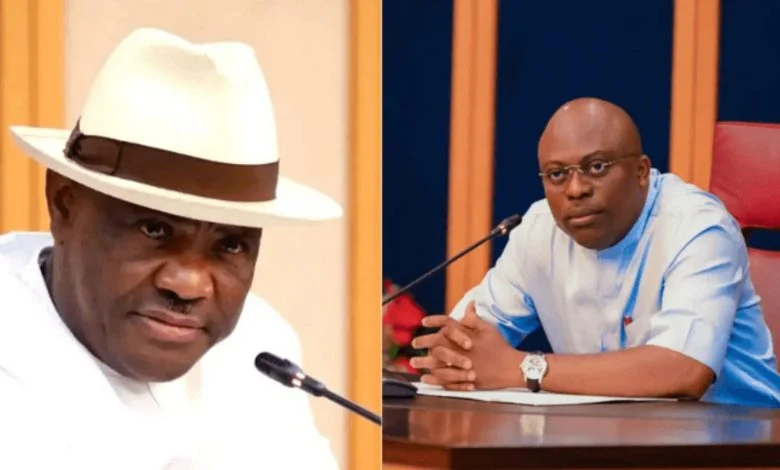
A former Acting Chairman of the Peoples Democratic Party (PDP) in Rivers State, Robinson Ewor, has accused Governor Siminalayi Fubara of betraying the people of the state by aligning with the political coalition associated with the Minister of the Federal Capital Territory (FCT), Nyesom Wike. The remarks come amid ongoing political realignments ahead of the 2027 general elections.
Speaking during a televised interview, Ewor said many Rivers residents and political stakeholders had stood firmly behind Fubara during the prolonged political crisis because they believed he was defending the interests of the state. According to him, the governor failed to openly communicate his intentions to those who supported him throughout the dispute.
Ewor argued that the governor’s decision to align with the coalition amounted to a betrayal of not only his political supporters but also the wider population of Rivers State. He maintained that many individuals, including community leaders and women who organised public demonstrations and prayer rallies, backed Fubara because they believed he was acting in the state’s best interest.
The former PDP chairman also disclosed that he had previously criticised Wike during the height of the political crisis, believing the former Rivers governor was preventing Fubara from effectively governing the state. However, he said subsequent developments changed his understanding of the situation and prompted him to reassess his position.
According to Ewor, greater transparency from the governor could have prevented many Rivers residents from taking political positions based on assumptions. He insisted that political leaders owe citizens honest communication, particularly during periods of intense political uncertainty.
The comments have added a new dimension to the political debate in Rivers State, where alliances and party loyalties have continued to shift following months of disagreements between Fubara and Wike. Political observers say the evolving relationship between the two leaders has significantly reshaped the state’s political landscape ahead of the next election cycle.
Analysts believe the controversy reflects the broader challenges of coalition politics, where changing alliances often generate mixed reactions among party members and supporters. They note that political realignments are common before major elections, but they can also deepen divisions within parties and among the electorate.
Meanwhile, stakeholders have urged political leaders to prioritise dialogue, transparency and issue-based politics as preparations for the 2027 general elections gather momentum. They argue that maintaining public trust requires consistent communication and decisions that reflect the interests of the electorate.
As political activities continue across the country, Rivers State is expected to remain a key battleground, with parties intensifying consultations and grassroots mobilisation. Observers believe the state’s evolving political dynamics will play an important role in shaping alliances and electoral strategies ahead of the 2027 polls.
The accusations against Governor Fubara represent one perspective in the ongoing political debate. Neither the governor nor his office had publicly responded to Ewor’s latest comments at the time the reports were published.