

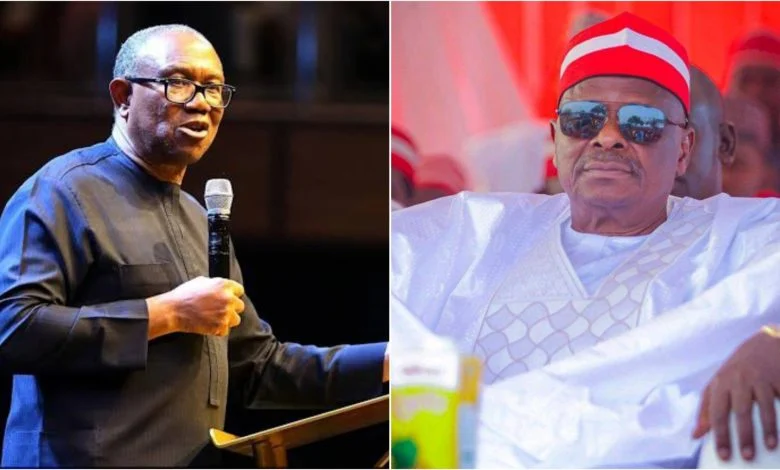
With the 2027 general election drawing closer, political parties have begun laying the groundwork for what is expected to be another fiercely contested presidential race. Although campaigning is still some time away, consultations, alliances and strategic calculations are already shaping the political landscape.
The ruling All Progressives Congress (APC) is expected to enter the election with President Bola Tinubu seeking another four-year term. As the incumbent, Tinubu is likely to benefit from the advantages that often come with holding office. The APC also maintains a strong nationwide political network, governs several states and commands significant influence in the National Assembly, giving it a formidable electoral structure.
Opposition parties, however, believe the political environment offers them a realistic opportunity to challenge the APC’s dominance. They argue that persistent economic hardship, rising inflation, unemployment, insecurity and widespread public frustration with living conditions could influence voter decisions when Nigerians head to the polls.
Even so, a major concern remains whether the opposition can successfully challenge the ruling party without presenting a united front. Political observers continue to debate whether multiple opposition candidates would divide anti-APC votes and ultimately strengthen the incumbent’s chances of re-election.
The conversation has intensified following the emergence of separate opposition platforms. Former Vice President Atiku Abubakar is now leading the African Democratic Congress (ADC) after emerging as its presidential candidate, while former Anambra State Governor Peter Obi has become the standard-bearer of the Nigeria Democratic Congress (NDC).
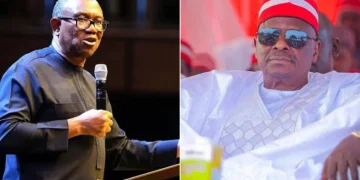
Although both politicians are now contesting under different parties and the Independent National Electoral Commission (INEC) has fixed deadlines for party defections, discussions surrounding possible opposition cooperation have continued. Among the various proposals being considered, one of the most talked-about is the prospect of an Obi-Rabiu Musa Kwankwaso alliance ahead of the election.
Supporters of such a partnership believe it could significantly strengthen the opposition by combining Obi’s popularity across many southern states with Kwankwaso’s influence in Kano State and parts of the North-West. They argue that bringing together their respective support bases could improve the opposition’s chances of mounting a serious challenge against the APC.
Others remain cautious, insisting that elections cannot be predicted simply by adding together votes from previous contests. They note that shifting political loyalties, regional interests, campaign strategies, candidate appeal and changing voter sentiments often produce different outcomes from one election cycle to another.
Regardless of whether an Obi-Kwankwaso alliance eventually materialises, the ongoing discussions reflect a broader understanding within opposition circles that defeating the APC will require careful planning, broad national acceptance, effective coalition-building and a coordinated campaign strategy.
Much of the current debate is rooted in the outcome of the 2023 presidential election, which was regarded as one of Nigeria’s most competitive democratic contests. The race departed from the traditional two-party rivalry after Peter Obi emerged as the Labour Party candidate, while Rabiu Musa Kwankwaso contested on the platform of the New Nigeria Peoples Party (NNPP), creating a four-way contest among the leading candidates.
According to the final results announced by the Independent National Electoral Commission, APC candidate Bola Tinubu won the election with 8,794,726 votes. Atiku Abubakar of the Peoples Democratic Party (PDP) finished second with 6,984,520 votes, while Peter Obi secured 6,101,533 votes. Kwankwaso received 1,496,687 votes, with the bulk of his support concentrated in Kano State and neighbouring parts of the North-West.