


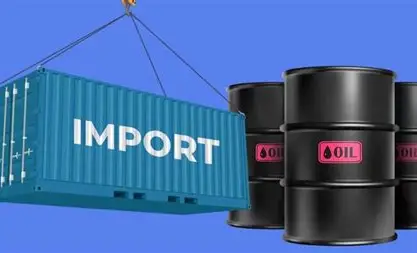
Nigeria’s petrol supply landscape in 2025 was shaped largely by importers, who accounted for about 62 per cent of the country’s total Premium Motor Spirit (PMS) consumption, despite the much-anticipated entry and growing output of domestic refineries. Official industry data showed that while local refining capacity expanded during the year, imported petrol continued to outpace domestic supply, underscoring the country’s persistent dependence on foreign sources for its most consumed fuel.
Figures from the Nigerian Midstream and Downstream Petroleum Regulatory Authority (NMDPRA) revealed that total petrol consumption in 2025 stood at approximately 18.97 billion litres. Of this volume, imported petrol made up about 11.8 billion litres, while domestic refineries supplied roughly 7.5 billion litres, translating to just under 38 per cent of national demand. The data highlighted the scale of the challenge facing Nigeria as it seeks to reduce fuel imports and strengthen local refining.
For decades, Africa’s largest crude oil producer relied almost entirely on imported petrol due to the failure of its state-owned refineries in Port Harcourt, Warri and Kaduna. This dependence strained foreign exchange reserves and made fuel supply vulnerable to global market shocks. The launch of large-scale private refining, particularly the Dangote Petroleum Refinery, was therefore seen as a turning point in Nigeria’s downstream oil sector.
The Dangote refinery, with a capacity of 650,000 barrels per day, began supplying petrol to the domestic market in late 2024 and marked its first full year of PMS supply in 2025. Throughout the year, the refinery accounted for nearly all locally refined petrol, with daily output fluctuating between 17 million and 32 million litres, depending on operational capacity and maintenance schedules. Its total supply for the year was estimated at about 7.53 billion litres.
Despite this progress, the data showed that imports continued to dominate the market. Analysts attributed this to the gradual ramp-up of local refinery operations, logistical and distribution constraints, and demand pressures following the full deregulation of petrol pricing. Under the deregulated regime, marketers are free to source fuel from either local or foreign suppliers, often choosing imports when pricing or availability appears more favourable.
Monthly supply trends indicated that domestic refinery output improved steadily toward the end of the year. In December 2025, local supply peaked at an average of 32 million litres per day, the highest monthly performance recorded. Even at this level, however, imported petrol volumes remained higher, reinforcing the reality that Nigeria’s fuel market is still heavily influenced by external supply chains.
Industry experts note that while the rise in domestic refining represents significant progress, achieving full self-sufficiency will require sustained production stability, efficient distribution networks and supportive policy alignment. They argue that local refineries must consistently operate near capacity to displace imports meaningfully, particularly during periods of high demand.
The continued dominance of imports also reflects structural issues within the downstream sector, including storage limitations, transportation bottlenecks and the pricing dynamics of import parity. In some instances, imported petrol remains competitive due to established supply contracts and global price movements, even as local refineries increase output.
Energy economists believe the 2025 figures offer a mixed picture. On one hand, Nigeria has made measurable strides in local refining after years of dependence on imports. On the other hand, the fact that nearly two-thirds of petrol supply still comes from abroad shows that the transition is far from complete. They caution that without deliberate efforts to optimise local production and logistics, importers may continue to dominate the market in the short to medium term.
As Nigeria pushes forward with reforms in its oil and gas sector, the balance between imported and locally refined petrol will remain a key indicator of progress. The 2025 supply data suggest that while the foundations for reduced import dependence have been laid, sustained policy consistency and operational efficiency will be critical in determining whether domestic refineries can eventually take the lead in meeting the nation’s petrol needs.


Appeal Court Voids Electoral Act Sections Ahead Of 2027 Elections
The Court of Appeal sitting in Abuja has declared some provisions of the Electoral Act 2026 unconstitutional, ruling that certain...



**backbiome**
Mitolyn is a carefully developed, plant-based formula created to help support metabolic efficiency and encourage healthy, lasting weight management.