The recent altercation between Nyesom Wike, the Minister of the Federal Capital Territory (FCT), and a retired naval officer in Abuja has sparked nationwide debate about the limits of military authority, civilian governance, and the lingering echoes of military impunity in Nigeria. The incident, which has drawn attention from civil society, military circles, and the media, has been described by Punch as a throwback to a period when military authority often trumped civil rule. (Punch)
The confrontation occurred on Tuesday at a disputed plot of land in Gaduwa, a fast-developing suburb of Abuja. Reports indicate that the land, allegedly tied to a retired Chief of Naval Staff, was being developed without the necessary approvals from the FCT administration. Minister Wike, leading a team of officials from the FCT’s enforcement unit, demanded that military personnel present documentation verifying ownership and approval for construction. When the officials attempted to carry out enforcement, they were reportedly confronted and intimidated by uniformed personnel, including a retired naval officer.
Video footage of the incident, widely circulated on social media, shows Wike in a heated exchange with the officer, at one point admonishing him, stating: “You cannot continue to act with such impunity.” The minister emphasized that no individual, regardless of military rank or past service, is above the law, and that enforcement agencies must be allowed to execute their duties without obstruction. This public confrontation has intensified conversations about the role of the military in civilian affairs and raised questions about the respect for civil authority in Nigeria.
The clash has attracted widespread reactions from various stakeholders. Civil society groups, including the Civil Society Legislative Advocacy Centre (CISLAC), have condemned Wike’s approach, arguing that publicly confronting military personnel could undermine the discipline and respect traditionally accorded to uniformed officers. Legal practitioners have also weighed in, calling for careful handling of the dispute to avoid escalation into a constitutional crisis.
Conversely, retired military officers and defence commentators argue that individuals who have served in the armed forces continue to wield considerable influence and that such confrontations challenge the hierarchical respect embedded in military culture. General Lucky Irabor (retd) and other former service chiefs have expressed concern that undermining military officers, even in civilian capacities, could erode institutional respect for the armed forces and set dangerous precedents. The Defence Headquarters (DHQ) responded to the incident with a cryptic social media post stating: “It is an honour to serve in the Nigerian military. Unshaken. Unbent. Unbroken.” This has been interpreted as a reinforcement of military authority in the face of perceived civilian encroachment.
Minister Wike, however, defended his actions, clarifying that his issue was not with the military institution but with individuals flouting the law. He insisted that enforcement of land-use regulations is a legal duty of the FCT administration and that no one, regardless of their military background, should impede lawful operations. Wike emphasized that he has immense respect for the military and that any dispute should be addressed through proper channels, including the Chief of Defence Staff or the president, rather than through impunity at the grassroots level.
Political observers have noted that the incident highlights enduring tensions between civilian authorities and military influence in Nigeria. Punch editorialized that the episode is symptomatic of broader challenges in civil-military relations, suggesting that military overreach or perceived entitlement to bypass civilian authority remains a recurring problem. The editorial warned that such incidents, if unchecked, threaten democratic governance and the supremacy of civil institutions.
The federal government has ordered an official probe into the confrontation, signaling the seriousness with which it regards the situation. Meanwhile, public debate continues, with some Nigerians supporting Wike’s insistence on law enforcement and others cautioning against public confrontations with military personnel. Former presidential candidate Peter Obi described the clash as a “national embarrassment,” while civil society advocates called for clear guidelines to delineate the boundaries between civilian governance and military influence.
As the probe unfolds, the Wike saga serves as a stark reminder of Nigeria’s complex history with military rule and the persistent need to assert civilian authority. It underscores the delicate balance between respecting the military institution and enforcing the rule of law — a balance that remains central to Nigeria’s democratic evolution.
—

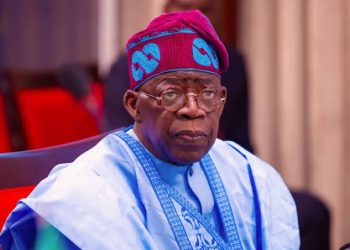
Atiku Demands Answers From Tinubu, APC Over ₦10bn Ebola Fund
Former Vice-President Atiku Abubakar has demanded that President Bola Tinubu and the All Progressives Congress (APC) explain how the ₦10...