


Oil production among members of the Organisation of the Petroleum Exporting Countries (OPEC) has recorded a notable decline, with Nigeria, Libya, and Venezuela emerging as key laggards in meeting the group’s collective production targets. The latest OPEC survey shows that the trio’s persistent output challenges continue to undermine overall supply levels, raising concerns about the cartel’s stability and its ability to meet global demand expectations.
According to figures compiled from OPEC’s October production survey, the group’s total crude oil output slipped marginally by about 30,000 barrels per day (bpd), falling short of the set targets for the period. While some members such as Saudi Arabia and the United Arab Emirates recorded slight production increases, these gains were offset by sharp declines in Nigeria, Libya, and Venezuela countries battling chronic operational, political, and economic disruptions.
In Nigeria, crude production averaged around 1.43 million barrels per day in October, well below the nation’s OPEC quota of 1.5 million bpd. Despite repeated government assurances that output would improve, recurring issues of oil theft, pipeline vandalism, and underinvestment in upstream infrastructure have continued to cripple the country’s performance. The Nigerian Upstream Petroleum Regulatory Commission (NUPRC) recently admitted that while production had improved marginally from the lows of early 2024, sustained sabotage and delays in the rehabilitation of key export terminals have stalled progress.
Energy analysts say Nigeria’s situation is particularly concerning because of its heavy fiscal dependence on oil. With crude accounting for nearly 90 percent of export earnings and over half of government revenue, falling production directly undermines budgetary projections and foreign exchange inflows. “Nigeria’s inability to meet its OPEC quota has broader macroeconomic implications,” said energy economist Chinedu Okafor. “It affects the government’s fiscal balance, weakens the naira, and limits capital investment in critical sectors.”
Libya’s contribution to the production decline stems largely from renewed political unrest and disruptions at major oilfields. The North African nation, which has long struggled to stabilise its energy sector amid rival political factions, has seen intermittent shutdowns due to protests and blockades. Recent clashes in the southern oil-producing regions further reduced the country’s daily output, frustrating efforts by the Libyan National Oil Corporation to maintain consistent supply.
Venezuela, meanwhile, continues to grapple with the effects of international sanctions and decaying infrastructure. Despite efforts to restore capacity through partnerships with foreign oil companies, output from the South American producer remains below pre-crisis levels. Refining and export constraints, coupled with equipment failures and limited access to investment capital, have severely restricted its capacity to contribute meaningfully to OPEC’s production goals.
The combined output shortfalls from these three countries have created a drag on OPEC’s overall strategy to balance the global oil market. While the group had hoped to gradually ease production curbs and stabilise prices, the inability of certain members to meet even modest output targets has forced the cartel to reconsider its approach. As a result, other producers like Saudi Arabia and Iraq have had to shoulder additional production burdens to prevent market distortions.
For global oil markets, the decline adds a new layer of complexity. Reduced OPEC output could support higher oil prices in the short term, but it also risks eroding the cartel’s credibility if internal disparities persist. Analysts warn that prolonged underperformance by key members may undermine the group’s influence over pricing and supply coordination in the coming months.
In Nigeria, the federal government has reiterated its commitment to raising production. The Minister of State for Petroleum Resources, Heineken Lokpobiri, recently announced new policy measures aimed at improving security around key oil infrastructure and attracting fresh investment to the sector. However, experts caution that without significant reforms in governance, licensing, and community engagement, such efforts may yield limited results.
As OPEC prepares for its next policy meeting, attention will likely focus on how the organisation intends to address these disparities. For now, Nigeria, Libya, and Venezuela remain the weak links in an otherwise recovering global oil market a reminder that production capacity alone is not enough without stability, investment, and reform.

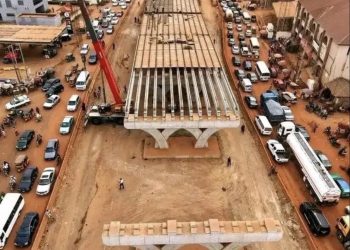
Mararaba Twin Flyover Construction Records Steady Progress
Construction work on the twin flyover project in Mararaba, Karu Local Government Area of Nasarawa State, is progressing steadily...

**back biome**
Mitolyn is a carefully developed, plant-based formula created to help support metabolic efficiency and encourage healthy, lasting weight management.