The Nigerian National Petroleum Company Limited (NNPC Ltd) has announced its intentions to acquire a 20 percent stake in the Dangote Petroleum Refinery and Petrochemicals Free Zone Enterprise, a move that could significantly reshape Nigeria’s downstream oil sector. The announcement marks a strategic partnership between Nigeria’s state-owned oil giant and one of Africa’s largest private industrial investments, owned by billionaire businessman Aliko Dangote.
The Dangote Refinery, located in the Lekki Free Trade Zone in Lagos State, is projected to be the largest single-train refinery in the world upon completion. It is designed to process 650,000 barrels of crude oil per day and produce refined petroleum products such as petrol, diesel, jet fuel, and polypropylene. With Nigeria traditionally relying on imports to meet domestic fuel demand, the refinery is expected to revolutionize local fuel production, reduce import dependence, and bolster the country’s foreign exchange reserves.
In line with these national objectives, NNPC’s planned acquisition of a 20 percent stake is being viewed as a strategic move to increase government participation in the downstream sector. Reports indicate that the investment commitment by NNPC would amount to approximately US$2.76 billion, a sum intended to strengthen the refinery’s operations and ensure that Nigeria benefits from direct participation in one of the largest oil projects on the continent.
Aliko Dangote, in previous statements, emphasized that partnering with NNPC was part of a broader plan to involve the Nigerian government in the refinery’s operations, ensuring alignment with national energy security goals. “Having NNPC as a shareholder will not only enhance operational efficiency but also strengthen the country’s energy sector as a whole,” Dangote had noted.
However, despite the initial excitement, challenges have arisen in executing the agreement. Reports indicate that NNPC had difficulties meeting the payment schedule initially agreed upon, raising questions about the state oil company’s capacity to fulfill such a large capital commitment. Aliko Dangote confirmed that the delay in payment had reduced NNPC’s ownership to approximately 7.2 percent, well below the intended 20 percent. He stated, “NNPC was meant to pay their balance by June, but they have yet to fulfill the obligations. Now, they only own a 7.2 percent stake in the refinery.”
The implications of this development are multifaceted. For NNPC, the reduced stake limits the company’s influence over the refinery’s operations and its share of the profits. The shortfall in funding also raises broader concerns about the ability of state-owned entities to participate fully in major industrial projects without delays or renegotiations. For the Dangote Refinery, the change in ownership concentration could impact strategic decision-making, investor confidence, and potential financing options for expansion and operations.
Economists and industry experts have highlighted that the partnership, if fully realized, could serve as a template for collaboration between private enterprises and state-owned corporations in Nigeria’s oil and gas sector. It has the potential to catalyze downstream industrial development, improve local refining capacity, and foster economic growth. With the refinery projected to produce significant volumes of refined petroleum products, NNPC’s involvement would have positioned the company to directly influence domestic fuel pricing, supply stability, and distribution networks.
Looking ahead, the key question is whether NNPC will be able to meet its financial obligations and eventually restore its planned 20 percent stake. Observers also expect the refinery to continue its trajectory toward operational commencement, with full-scale production expected to alleviate the chronic fuel shortages that have plagued Nigeria for decades.
The Dangote Refinery represents a landmark investment not just for Nigeria but for Africa’s energy landscape. Its success hinges on collaboration between private investors and government entities. While the current challenges highlight operational and financial hurdles, they also underscore the potential for public-private partnerships to transform Nigeria’s oil and gas sector. The world will be watching closely as NNPC navigates this high-stakes partnership, with implications for energy security, industrial development, and national economic stability.

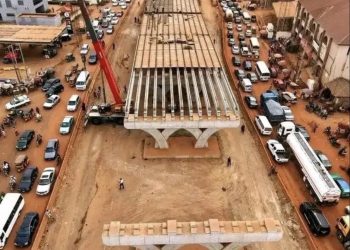
Mararaba Twin Flyover Construction Records Steady Progress
Construction work on the twin flyover project in Mararaba, Karu Local Government Area of Nasarawa State, is progressing steadily...