

The Executive Chairman of the (FIRS)Federal Inland Revenue Service Zacch Adedeji, has applauded the Nigerian judiciary for its consistent and well-reasoned judgments in tax-related cases, describing them as vital to maintaining fairness, certainty, and stability in the country’s fiscal framework.
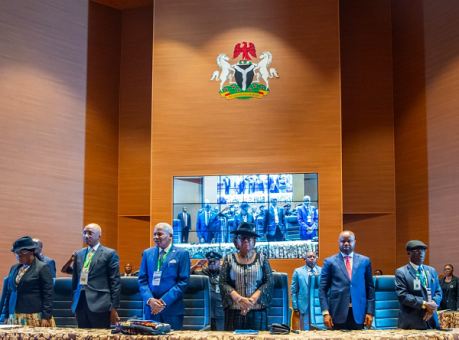
In a statement issued on Tuesday, Adedeji made the commendation during a capacity development workshop for Justices of the Supreme Court, Court of Appeal, and Judges of the Federal High Court. The event, organised by the National Judicial Institute (NJI), focused on new and evolving tax laws. Adedeji praised the NJI for hosting what he called a “timely and necessary” training that enhances judicial understanding of Nigeria’s dynamic tax system.
The FIRS boss noted that recent legal and policy reforms,such as amendments to the Finance Acts, the Petroleum Industry Act, and other revenue laws,have reshaped the nation’s fiscal landscape. He stressed that these changes demand stronger cooperation between the judiciary and tax authorities to ensure fair interpretation and consistent application of tax legislation.
Adedeji emphasised that the judiciary plays a central role in upholding the delicate balance between the lawful powers of tax administrators and the rights of taxpayers. “Through its interpretative authority, the judiciary serves as the ultimate safeguard of equity in taxation,” he stated. “Your clear and consistent decisions have brought stability, predictability, and confidence to Nigeria’s tax administration.”
He further explained that timely and well-founded judicial rulings are essential to promoting voluntary tax compliance, enhancing investor trust, and improving revenue mobilisation. “When tax disputes are resolved swiftly and based on sound judicial principles, it strengthens compliance and contributes to economic progress,” he added.
Reiterating FIRS’s commitment to partnership, Adedeji assured that the Service will continue to work closely with the judiciary through ongoing knowledge exchange, technical cooperation, and regular dialogue. He urged all stakeholders in the fiscal system to build stronger alliances to facilitate the early and efficient resolution of tax matters.
Adedeji also highlighted that the rise of the digital economy and the growth of international trade have created new and complex taxation issues. These developments, he said, make continuous judicial education crucial to ensuring Nigeria’s legal system remains responsive and globally competitive.
In conclusion, the FIRS Chairman expressed confidence that the insights gained from the workshop would further enhance the quality of judicial interpretation and improve the overall effectiveness of tax adjudication. He maintained that sustained collaboration between the judiciary and tax institutions is key to building a fairer, more efficient, and globally aligned tax system capable of supporting Nigeria’s economic sustainability and inclusive growth.