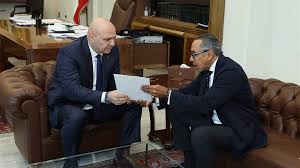


Egyptian Ambassador to Lebanon Alaa Moussa has reaffirmed Cairo’s support for Lebanon’s upcoming parliamentary elections, emphasizing the importance of holding them as scheduled despite ongoing political divisions.
In an interview on LBCI’s Nharkom Said TV program, Moussa stated, “We hope lawmakers agree on what is best, but a lack of consensus cannot be a pretext to postpone the elections.” He stressed that political disagreements should not be used as an excuse to delay the democratic process.
Moussa made it clear that Egypt remains neutral in Lebanon’s internal political dynamics. “It does not matter to us who wins more or fewer seats; this is for the Lebanese people to decide,” he said. “Claims that regional or international powers favor a delay are simply not true. Ultimately, this is a Lebanese decision.”
He also highlighted that Lebanon’s top political leaders—including the president, prime minister, and parliament speaker—have all expressed commitment to holding the elections on time.
Discussing the role of the Quintet Committee—comprising Egypt, France, the United States, Saudi Arabia, and Qatar—Moussa explained that while the group originally focused on resolving Lebanon’s presidential vacuum, its mandate has since expanded. The committee now works to support Lebanon’s economic recovery and security stability through both bilateral and multilateral efforts.
On regional developments, Moussa addressed the ongoing war in Gaza, reaffirming Egypt’s call for an immediate ceasefire and the continued flow of humanitarian aid. He strongly rejected any plans for the forced displacement of Palestinians, stating, “There will be no forced migration of the Palestinian people, and Egypt will never participate in such a plan.”
Commenting on U.S. proposals for the future governance of Gaza, Moussa said Egypt welcomed the latest plan and urged Hamas to engage constructively. “They should seize the positive points and build on them,” he noted.
Moussa’s remarks come at a critical time for Lebanon, as the country continues to navigate political gridlock, economic crisis, and regional instability.