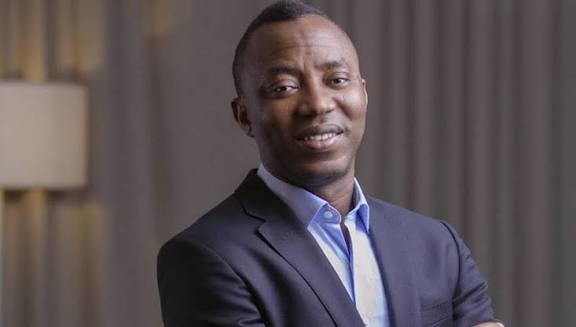
New evidence has surfaced suggesting Nigeria’s Department of State Services (DSS) may have falsified an official government signature while pursuing criminal charges against human rights activist Omoyele Sowore.
The allegations center on apparent discrepancies between the authentic signature of M.B. Abubakar, who serves as Director of Public Prosecutions at the Federal Ministry of Justice, and the signature appearing on documents filed against Sowore in connection with cyberbullying charges.
Court documentation reviewed Wednesday evening revealed notable differences between Abubakar’s verified signature on previous legal filings and the signature presented in the current case against Sowore. The activist himself brought attention to these discrepancies through social media, comparing the questioned signature with examples from other recent legal proceedings.
Sowore characterized the DSS as operating outside legal boundaries and described the cyberbullying charges as fabricated. The charges stem from his public criticism of President Bola Ahmed Tinubu, whom he referred to as a “criminal” in social media posts.
The controversy began when the DSS filed a five-count criminal charge at the Federal High Court in Abuja, naming Sowore as the primary defendant alongside social media companies X Corp. and Meta Platforms Inc. The charges specifically target statements Sowore made about President Tinubu on various social media platforms.
The case remains in preliminary stages, with no judge yet assigned and no arraignment date scheduled.
In response to the criminal charges, Sowore has initiated his own legal challenge, filing suit against the DSS, Meta, and X Corp. at the Federal High Court in Abuja. His legal team, led by attorney Tope Temokun, argues that the DSS actions constitute unconstitutional censorship of social media expression.
The counter-suit seeks to prevent the DSS from directing social media platforms to remove Sowore’s content, including posts critical of government officials. Legal representatives frame the dispute as fundamental to protecting free speech rights in Nigeria.
Sowore’s legal team invokes Section 39 of Nigeria’s 1999 Constitution, which guarantees citizens’ freedom of expression without interference. They argue that allowing security agencies to dictate content on global platforms would effectively silence political criticism and create what they term a “digital dictatorship.”
The lawsuit requests court declarations establishing that the DSS lacks legal authority to censor Nigerian social media users and that international platforms should not comply with what the legal team characterizes as unlawful censorship demands.
Prior to the criminal charges, the DSS had formally requested that Sowore delete his critical posts about President Tinubu, describing them as “false, malicious, and inciting.” The agency warned of legal consequences if Sowore failed to comply with their deletion demands.
The DSS also petitioned Meta and X directly, urging them to remove Sowore’s posts and deactivate his verified accounts on their platforms.
Sowore has refused to retract his statements, maintaining that criticizing government officials represents a constitutional responsibility of citizens in a democratic society.
The case highlights ongoing tensions between Nigerian security agencies and civil society activists over the boundaries of permissible political criticism. Sowore, who previously ran for president, has a history of confronting government authorities over various political and social issues.
Legal observers note that the outcome of this dispute could establish important precedents for social media regulation and free speech protections in Nigeria’s digital landscape.
The controversy also raises questions about the appropriate role of international social media companies when faced with government censorship requests in various jurisdictions worldwide.
As the legal proceedings develop, both sides are framing the dispute in broader terms about democratic principles, constitutional rights, and the proper limits of state power in the digital age.