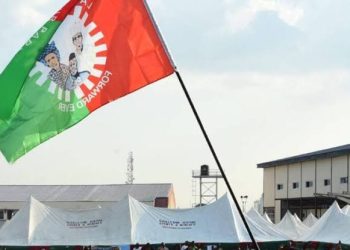
The ruling All Progressives Congress (APC) has launched sharp criticism against the opposition Peoples Democratic Party (PDP) regarding its handling of the 2027 presidential ticket arrangements.
Speaking through its Lagos State spokesman Seye Oladejo on Thursday, the APC characterized the PDP’s recent policy shifts as evidence of organizational confusion. The controversy centers on the PDP’s decision to abandon its initial plan to zone the 2027 presidential ticket to the South, instead opening it to candidates from all regions.
According to Oladejo, this reversal demonstrates what he termed the PDP’s inability to maintain consistent political direction. The APC spokesperson suggested that President Bola Ahmed Tinubu’s administration has created such significant political momentum that it has disrupted the opposition’s strategic planning.
The APC representative painted a picture of an opposition party struggling with internal coordination. “The larger-than-life image of the APC under President Bola Ahmed Tinubu has so overwhelmed the PDP that it no longer knows whether to go left, right, or in circles,” Oladejo stated in his remarks.
The ruling party spokesperson went further to characterize the PDP’s open-ticket approach as a symptom of institutional weakness rather than democratic inclusivity. He drew parallels to the party’s 2023 electoral experience, suggesting that previous zoning controversies had negative consequences for the opposition.
From the APC’s perspective, the opposition’s policy adjustments reflect broader organizational challenges. Oladejo described the current PDP structure as resembling what he called “a political gambling house where desperate politicians are invited to test their luck.”
The Lagos APC spokesman positioned his party as maintaining focus on governance responsibilities while suggesting the opposition remains preoccupied with internal politics. He emphasized what he described as the ruling party’s commitment to reform initiatives and public service delivery.
This exchange occurs against the backdrop of early positioning for the 2027 election cycle. The debate over geographical zoning of political positions remains a significant factor in Nigerian political discourse, with parties regularly adjusting their approaches based on strategic considerations.
The APC’s commentary reflects the typical adversarial relationship between Nigeria’s major political parties, with each side seeking to frame the other’s actions as evidence of weakness or poor judgment.
As both parties prepare for future electoral contests, these types of political exchanges are expected to intensify. The effectiveness of either party’s current strategy will ultimately be tested through democratic processes and public response.
The debate over zoning policies highlights ongoing discussions about political representation and regional balance in Nigeria’s democratic system.