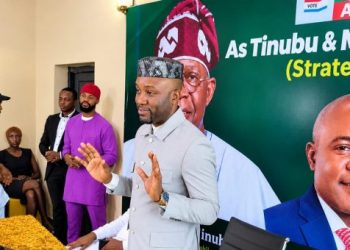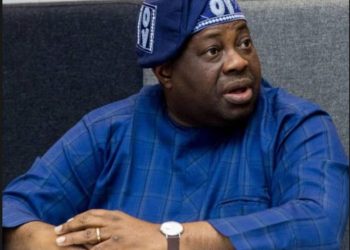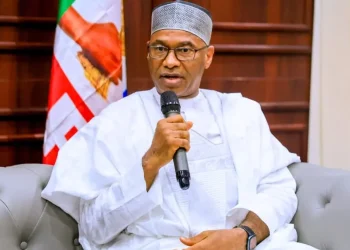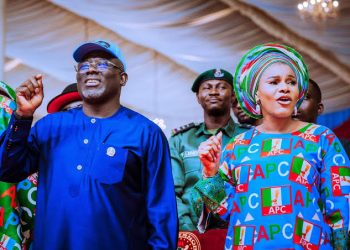


Segun Sowunmi, a member of the All Progressives Congress (APC) Presidential Campaign Council, has criticised former Vice President Atiku Abubakar, accusing him of being detached from the economic difficulties facing ordinary Nigerians. He described Atiku’s public lifestyle and conduct as evidence of what he termed an “Emir complex”.
The APC chieftain also challenged the ability of opposition politicians, including Atiku and former Rivers State Governor Rotimi Amaechi, to speak credibly on poverty, arguing that their extensive involvement in government raises questions about their understanding of the hardships experienced by ordinary citizens.
Sowunmi expressed his reservations about Amaechi’s recent criticism of poverty in Nigeria, noting that the former governor had spent a significant portion of his political career holding public office.
He questioned how Amaechi could present himself as a defender of struggling Nigerians after spending years in government, suggesting that the opposition figure’s political record should be considered when evaluating his current position.
According to Sowunmi, politicians who have benefited from government positions for decades must explain how their experiences qualify them to represent the interests of citizens battling financial difficulties.
The APC campaign council member similarly questioned Atiku’s ability to relate to the realities of impoverished Nigerians, referring to his tenure as vice president under former President Olusegun Obasanjo between 1999 and 2007.
Sowunmi argued that Atiku’s years in influential political positions, alongside his personal lifestyle, raised doubts about his capacity to understand the everyday struggles of low-income households.
He maintained that the former vice president’s public appearances, often accompanied by a convoy and displays of affluence, reflected a lifestyle far removed from the circumstances of ordinary Nigerians.
Explaining his use of the expression “Emir complex”, Sowunmi likened Atiku’s disposition to that of a highly influential traditional ruler who is accustomed to receiving respect, praise and special treatment from those around him.
He explained that the expression described a powerful individual whose privileged position could make it difficult to appreciate the experiences of people without similar access to wealth and influence.
Sowunmi also compared the expression to what he called an “Oba complex”, referring to the manner in which certain influential figures are treated with considerable reverence by people in their immediate environment.
The APC chieftain subsequently argued that Atiku lacked the necessary understanding to position himself as a representative or defender of poor Nigerians.
He insisted that opposition politicians should not be allowed to criticise the administration of President Bola Tinubu without having their own political histories and records subjected to similar scrutiny.
Sowunmi’s comments come amid increasing political activity ahead of Nigeria’s 2027 general election, with opposition figures continuing to challenge the Tinubu administration over economic conditions and other national concerns.
President Tinubu is seeking re-election for another four-year term, while several APC governors and some political officeholders elected on other party platforms have expressed support for his second-term ambition.
The exchange further highlights the growing political contest between the ruling party and opposition figures as political actors intensify efforts to influence public opinion ahead of the next presidential election.