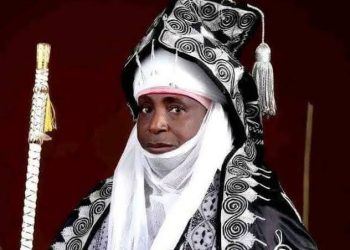


The President of the Enugu State Customary Court of Appeal, Justice George Nnamani, has warned that the increasing involvement of courts in electoral matters across West Africa is undermining citizens’ right to freely choose their leaders.
Nnamani gave the warning on Thursday while delivering the keynote address at the fourth edition of the Civil Society Week for West Africa 2026, held in Enugu State. The event, hosted by Spaces for Change, focused on strengthening judicial protection of civic space in the region.
He expressed concern that courts were increasingly taking over responsibilities traditionally handled by electoral management bodies, including decisions on election outcomes, party registration and candidates’ eligibility to contest elections.
According to him, the trend threatens democratic participation by allowing judicial decisions to determine who can run for office and who is excluded from the electoral process.
Nnamani noted that such interventions could deprive citizens of their right to choose their representatives and undermine the freedoms of association and peaceful assembly.
The judge also raised concerns about executive overreach, warning that judicial decisions were sometimes being used to shield excessive government actions from scrutiny.
He stressed that financial autonomy was essential to ensuring judicial independence and protecting courts from external influence.
While commending the Enugu State Government for implementing judicial financial autonomy, Nnamani criticised states where judges were compelled to seek funds, saying the practice weakened the judiciary.
Earlier, the Executive Director of Spaces for Change West Africa, Victoria Ibezim-Ohaeri, warned against the growing use of judicial processes to restrict civic freedoms across the region.
Citing the organisation’s report, Civic Space in West Africa: Trends, Threats & Futures (2nd Edition), she disclosed that cases of judicially backed human rights violations had increased by nearly 700 per cent, rising from nine cases over six years to 70 cases in less than three years.
Ibezim-Ohaeri said legal processes were increasingly being used to restrict public movements, undermine opposition figures and justify government crackdowns.
She also criticised the use of strategic lawsuits against public participation, describing them as legal actions designed to intimidate and silence journalists, whistleblowers and grassroots organisations.
She called on judges, civil society groups and other stakeholders from participating countries to develop practical measures to strengthen judicial independence and protect fundamental human rights.
Ibezim-Ohaeri maintained that democracy could only thrive when the judiciary independently defended constitutional rights and ensured that citizens’ voices were heard.