

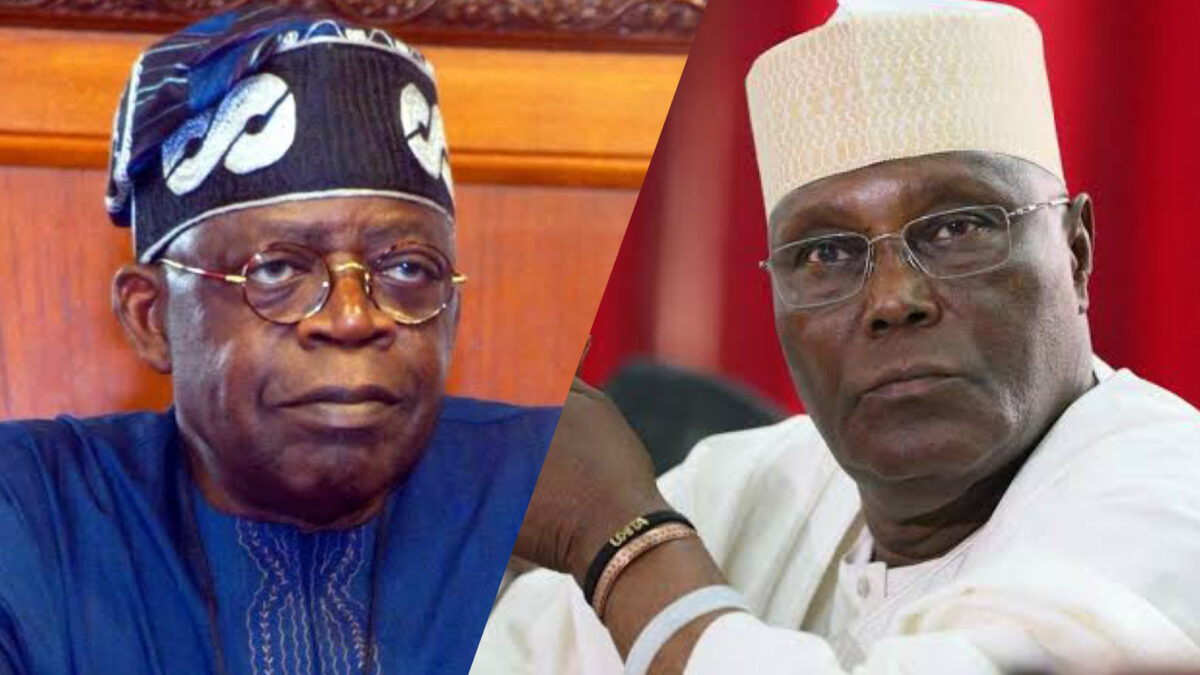
President Bola Tinubu’s Special Assistant on Social Media, Dada Olusegun, has criticised former Vice-President Atiku Abubakar for renewing calls for accountability over the October 2020 Lekki Toll Gate shooting, questioning why the former presidential candidate did not raise the issue during his visits to former President Muhammadu Buhari.
Olusegun accused Atiku of exploiting the sixth anniversary of the #EndSARS protests to advance his presidential ambition, arguing that the former vice-president had opportunities to question Buhari, who was Nigeria’s president when the shooting occurred.
The presidential aide made the remarks in a statement responding to Atiku’s demand for answers about who authorised the deployment of security personnel during the incident.
He cited Atiku’s visits to Buhari in Daura, Katsina State, on June 22, 2024, and at the former president’s retirement residence in Kaduna on April 11, 2025, arguing that the meetings provided opportunities to raise questions about the shooting.
“Those two opportunities presented you with chances to ask former President Buhari, who was President at the time of the Lekki Toll Gate protests, the questions you are now asking President Tinubu,” Olusegun said.
He argued that Atiku’s decision to renew the demand six years after the incident raised questions about his motives and suggested that the former vice-president’s intervention was politically driven.
“That it took you six years to ask these questions is a testament to your insincerity and desperation to become President,” he added.
Atiku, however, has maintained that Nigerians deserve answers about the circumstances surrounding the shooting and the question of responsibility for the actions of security personnel at the toll gate.
Atiku renews demand for answers over Lekki shooting
Atiku renewed his call for accountability in a post on his X account on Tuesday, marking the sixth anniversary of the #EndSARS protests.
The former vice-president questioned why the country had yet to establish a clear public account of who authorised the actions that led to the shooting at the Lekki Toll Gate in Lagos during the protests against police brutality.
“Six years after the Lekki shooting, Nigeria is still waiting for a clear answer to one devastating question: Who gave the order?” Atiku asked.
He criticised the ruling All Progressives Congress (APC), accusing the party of failing to provide satisfactory answers about the incident and to offer young Nigerians the better future they had demanded during the protests.
Atiku also criticised Tinubu’s response to the shooting, referring to remarks the president made in October 2020 when he questioned aspects of the protesters’ presence and conduct amid reports of casualties.
The former vice-president’s statement placed the incident within the broader debate over police accountability, the treatment of young protesters and the government’s response to demands for reforms in law enforcement.
The Lekki Toll Gate shooting remains a deeply contested episode in Nigeria’s recent history, with continuing public disagreement over aspects of the incident, the casualties and the extent to which accountability has been achieved.
Tinubu’s aide defends president’s role in 2020
Responding to Atiku, Olusegun argued that Tinubu, who was not president at the time of the shooting, should not be held responsible in the same manner as the administration that was in office in October 2020.
He also claimed that Tinubu suffered during the unrest, alleging that the president’s Bourdillon residence in Lagos was nearly razed and that Tinubu and members of his domestic staff had to flee for safety.
“In case your memory is failing you, sir, may I remind you that President Tinubu, who was an ordinary citizen in 2020, suffered perhaps more than anyone else during the protests,” Olusegun said.
The aide’s argument was that Atiku should direct his questions towards the administration that was in power when the incident occurred rather than use the anniversary to criticise Tinubu.
However, the fact that Buhari was president in 2020 does not, by itself, resolve questions about the respective responsibilities of security agencies, public officials and other authorities involved in the events surrounding the shooting.
Atiku’s demand centres on establishing who authorised the operation and ensuring that the circumstances surrounding the incident are adequately addressed.
Olusegun’s response, meanwhile, focused on Atiku’s political record, his previous interactions with Buhari and what the aide described as the former vice-president’s motivation for revisiting the issue.
Olusegun disputes use of ‘Lekki Massacre’
The presidential aide also challenged the use of the expression “Lekki Massacre” to describe the incident, arguing that the term had not been definitively established through legal proceedings.
He accused Atiku of using the description to criticise Tinubu and gain a political advantage ahead of the next presidential election.
The terminology surrounding the incident has remained a point of public and political contention. However, disputes over the appropriate label should be distinguished from the separate questions of what happened at the toll gate, whether protesters were injured or killed, and who was responsible for the actions of security personnel.
The absence of a final legal determination on a particular label does not, on its own, settle the underlying factual questions or remove the need for credible investigations into alleged abuses.
Olusegun maintained that Atiku’s intervention was politically motivated, describing the former vice-president’s demand as an attempt to exploit a painful national event for electoral purposes.
He also accused Atiku of trying to revive his economic recovery plan as part of his broader political ambition and dismissed the former vice-president’s prospects of securing the presidency.
The allegations about Atiku’s motives were Olusegun’s political assessment and were not independently established by the statements cited.
What happened during the #EndSARS protests?
The #EndSARS protests began in October 2020, as young Nigerians took to the streets to demand an end to police brutality and the disbandment of the Special Anti-Robbery Squad (SARS), a unit widely criticised over allegations of abuse and misconduct.
The demonstrations spread across several parts of the country and developed into a broader movement calling for police reform, accountability and improved governance.
On October 20, 2020, security personnel were deployed to the Lekki Toll Gate protest site in Lagos, where protesters had gathered. Reports of gunfire, injuries and casualties generated widespread outrage, with videos and accounts from the scene circulating nationally and internationally.
The events prompted questions about the conduct of security personnel, the circumstances under which force was used and the authorities responsible for decisions taken that night.
Subsequent inquiries and public investigations examined aspects of the incident, but disputes over the details, the interpretation of evidence and accountability have continued to feature in public debate.
The anniversary has therefore remained an occasion for survivors, families, activists and political figures to renew calls for answers and reforms.
Lekki shooting becomes a political flashpoint
The exchange between Atiku and Tinubu’s aide highlights how the Lekki Toll Gate shooting continues to influence Nigeria’s political discourse years after the #EndSARS demonstrations.
For Atiku, the demand for answers is an accountability issue involving the state’s response to protesters and the need to establish responsibility for the events of October 2020.
For Olusegun, Atiku’s renewed intervention raises questions about political consistency, particularly given the former vice-president’s reported meetings with Buhari after the shooting.
The disagreement also reflects the wider political contest ahead of the 2027 general election, as political actors increasingly scrutinise one another’s records, statements and positions on significant national issues.
Nevertheless, questions about the Lekki shooting cannot be resolved solely by exchanging political accusations. Establishing responsibility requires credible evidence, transparent examination of the events and appropriate accountability for any proven wrongdoing.
Six years after the incident, the demand for a clear and publicly credible account of what happened at the toll gate remains central to the continuing debate over the #EndSARS protests and the protection of citizens’ rights in Nigeria.