


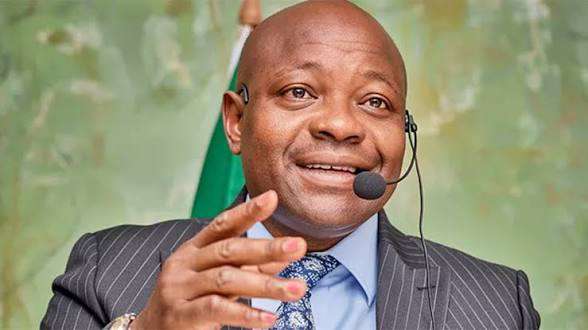
The Director-General of the Department of State Services (DSS), Oluwatosin Ajayi, has directed operatives of the agency not to arrest individuals over matters that are purely civil in nature.
Ajayi disclosed this during a media interview, explaining that the directive forms part of ongoing reforms aimed at strengthening the rule of law, accountability and respect for human rights within the DSS.
According to the DSS boss, his administration has focused on reforms in areas including law enforcement, inter-agency cooperation, accountability, human rights, as well as infrastructural and administrative development.
He said the reforms were designed to establish a clearer distinction between civil disputes and criminal matters, noting that security agencies should not use force to resolve issues that belong before the courts.
Ajayi stressed that civil disagreements should be handled through appropriate legal channels rather than through arrests or the deployment of security personnel.
He cited the case involving political economist Prof. Pat Utomi, saying the DSS chose to seek judicial interpretation rather than arrest him over allegations concerning an attempt to establish what was described as a “shadow government.”
The DSS DG also referred to a legal dispute involving the Socio-Economic Rights and Accountability Project (SERAP), explaining that the agency allowed the matter to proceed through the courts rather than arresting those involved.
According to him, the court subsequently ruled in favour of SERAP and awarded more than N100 million in the case.
Ajayi said the approach demonstrates the agency’s willingness to allow the judiciary to resolve disputes where there is no basis for arrest.
He reiterated that he had instructed DSS personnel that no one should be arrested simply because of a civil dispute.
The DSS chief also discussed the agency’s relationship with journalists, describing members of the media as professional colleagues who perform a different but important role in informing the public.
He said the DSS’s responsibility includes providing classified information to the government, while journalists inform citizens about issues of public interest.
The latest directive is expected to influence how DSS operatives handle disputes that do not involve criminal offences or threats to national security.
Ajayi’s position also highlights the importance of due process and respect for fundamental rights in the activities of security agencies.
The development comes amid continued public discussions about the powers of security agencies and the need to ensure that arrests are based on lawful grounds.
The DSS leadership said the reforms are intended to strengthen professionalism within the service while ensuring that its powers are exercised responsibly.