

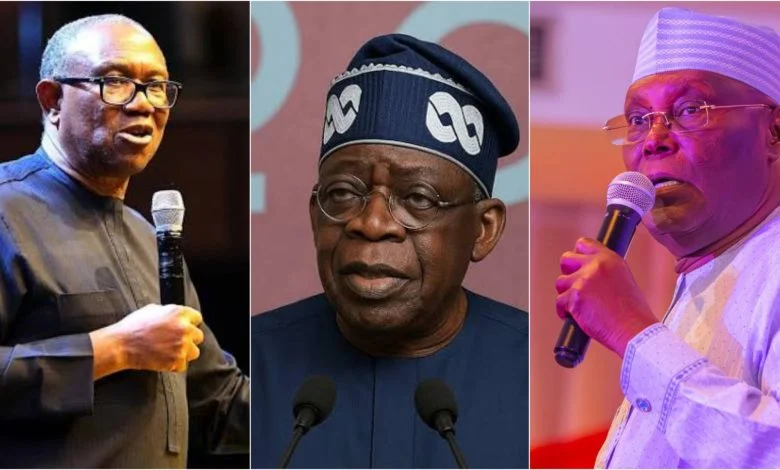
Nigeria’s opposition parties are encountering renewed challenges in their attempt to unite behind one presidential contender ahead of the 2027 general election, despite increasing appeals for them to put aside their differences and form a stronger political front against President Bola Tinubu.
The latest effort to achieve opposition unity took place in Abuja on Monday, where seven political parties gathered under the G-100 initiative to discuss possible cooperation and examine the chances of producing a mutually acceptable presidential candidate.
However, the absence of two prominent opposition figures, former Vice-President Atiku Abubakar of the African Democratic Congress (ADC) and Peter Obi of the Nigeria Democratic Congress (NDC), appeared to cast doubt on the viability of the proposed arrangement. Neither politician attended the meeting, and their respective running mates were also not present.
Their absence has fuelled speculation that convincing the major contenders to abandon their separate presidential ambitions could prove difficult. Although the opposition parties are interested in mounting a strong challenge against Tinubu, who is pursuing another term in office, disagreements over leadership have continued to complicate attempts to establish a unified platform.
Monday’s gathering was another in a series of efforts aimed at creating an opposition alliance. An earlier meeting held in Ibadan on April 25, led by Oyo State Governor Seyi Makinde, also failed to produce a concrete agreement. Makinde, who is associated with the Allied Peoples Movement (APM), did not attend that gathering.
Organisers of the latest meeting said the discussions extended beyond simply deciding on a presidential candidate. They also considered a possible agreement that could limit the tenure of a consensus candidate to one term.
ADC National Publicity Secretary Bolaji Abdullahi explained that the Abuja discussions were focused on broader cooperation among opposition parties rather than solely selecting one person to contest the presidency.
He noted that the emergence of a joint candidate could become one of the outcomes if the participating parties eventually reach sufficient agreement.
The ruling All Progressives Congress (APC), however, remains sceptical about the opposition’s chances of achieving such unity.
APC National Secretary Senator Ajibola Basiru argued that the parties had already demonstrated their inability to work together during the period leading to their individual primaries. He therefore questioned how they could suddenly agree on one contender after candidates had emerged on different platforms.
Basiru described the coalition discussions as largely driven by personal political ambitions rather than a genuine national interest. He also claimed that the opposition had begun its efforts too late, comparing the situation to attempting to secure a horse after it had already escaped.
APC National Publicity Secretary Felix Morka similarly dismissed the initiative. According to him, the failure of the principal opposition figures to attend Monday’s meeting demonstrated the difficulties already confronting the coalition effort.
Meanwhile, Atiku and Obi have previously expressed openness to the idea of serving only one term if elected. However, neither politician has publicly committed to withdrawing from the 2027 contest to support the other.
The relationship between both politicians has also changed over time. They were previously associated with efforts to build an opposition coalition under the ADC arrangement, but Obi later departed from the platform in May.
Former Cross River State Governor and Peoples Redemption Party (PRP) presidential candidate Donald Duke has adopted a different approach. He has indicated that he would be willing to step aside if another contender emerges as the strongest option for defeating Tinubu.
Duke maintained that opposition politicians should prioritise their shared objective and select the individual considered most capable of achieving it rather than allowing personal ambitions to dominate the process.
He warned that failure to establish a united opposition could once again benefit Tinubu at the ballot box. While describing the President as a formidable politician, Duke criticised his administration’s performance, arguing that Tinubu had demonstrated significant weaknesses in governance and should not be given another term.