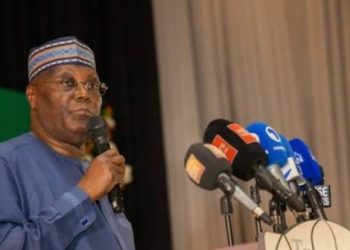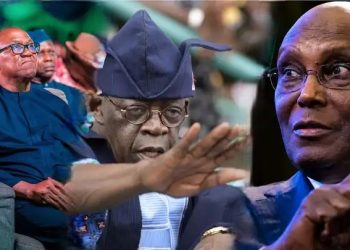


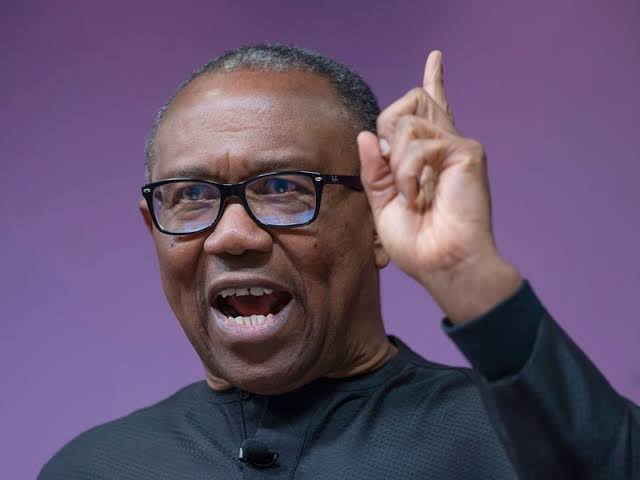
The presidential candidate of the African Democratic Congress (ADC), Atiku Abubakar, and his Nigeria Democratic Congress (NDC) counterpart, Peter Obi, were absent on Monday as opposition parties and presidential candidates commenced fresh negotiations in Abuja on the possibility of presenting a single candidate against the ruling All Progressives Congress (APC) in the 2027 presidential election.
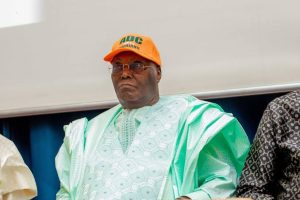
The summit, convened by the G-100 political pressure group at the Yar’Adua Centre, brought together representatives of six opposition parties the ADC, Allied Peoples Movement (APM), NDC, Peoples Democratic Party (PDP), Peoples Redemption Party (PRP) and Social Democratic Party (SDP).
Those in attendance included the PRP presidential candidate, Donald Duke; SDP presidential candidate, Adewale Adebayo; Democratic Leadership Alliance candidate, Moses Olusoji; and APM vice-presidential candidate, Lawan Daura, alongside other party leaders and stakeholders.
No official explanation was immediately given for the absence of Atiku and Obi. However, a source familiar with the discussions said the two opposition leaders were closely monitoring the process and could take a position after assessing the framework being developed by the G-100 organisers.
The source, who spoke on condition of anonymity because he was not authorised to speak on the matter, said the emergence of the G-100 after the various parties had already produced their presidential candidates could make the negotiations more complicated.
“While the goal of the G-100 is laudable, Atiku is perhaps thinking that they started quite late. He is in support of every legitimate strategy to unseat the APC-led government, but the fact that the group emerged after the parties had produced their respective presidential candidates didn’t make the work easier.
“The argument is, who will be willing to step down at this point in time? These are what I think Atiku is looking at at the moment, but I am not speaking for him,” the source said.
On Obi’s absence, the source attributed it to the political calculations surrounding the reported alliance between the former Anambra State governor and former Kano State governor, Rabiu Kwankwaso.
“As for Obi, I would have been surprised to see him here. Unless others agree to put aside their ambition in support of the Obi/Kwankwaso ticket, I don’t see them backing out of the race.
“However, both men are likely to attend subsequent meetings if they are sure the G-100 is on track,” the source added.
Although efforts to obtain official explanations from the camps of both presidential candidates were unsuccessful, the spokesman of the House of Representatives minority caucus, Afam Ogene, said their absence should not be interpreted as a lack of support for the initiative.
Ogene explained that Monday’s summit was largely focused on establishing the structures and framework for the proposed opposition collaboration.
“It’s just the laying of structures, so the party chairmen and officials largely handled that,” he said.
Similarly, Atiku’s media aide, Phrank Shaibu, said the former vice president’s absence was unavoidable and should not be interpreted as a boycott or lack of commitment to opposition unity.
Shaibu said Atiku remained committed to the objective of building a broad and disciplined opposition ahead of the 2027 election.
“His Excellency’s absence was unavoidable and should not be mischievously interpreted as a boycott or lack of commitment to opposition unity.
“He is fully aligned with the objective of the summit and has made his position clear: Nigeria urgently needs a broad, disciplined and united opposition capable of ending the hardship, insecurity and economic mismanagement of the Tinubu administration in 2027.
“Atiku’s commitment to that cause is not in doubt,” Shaibu said.
Duke Pledges Support for Consensus Candidate
Despite the absence of two of the opposition’s most prominent presidential contenders, Donald Duke pledged to support whoever emerges from the negotiations as the opposition’s consensus candidate.
Duke, a former governor of Cross River State, said his commitment to the process was not dependent on whether he eventually emerged as the candidate.
“We will support any political party that emerges in 2027. Whatever decision is arrived at today, I will not walk away but will strive all along because that’s what the people want to see,” he said.
The summit came against the backdrop of the opposition’s failure to coordinate its votes during the 2023 presidential election.
In his opening remarks, G-100 convener, Salihu Lukman, argued that opposition parties collectively secured about 13 million votes in 2023 — substantially more than the less than nine million votes recorded by eventual winner, President Bola Ahmed Tinubu.
He said the opposition lost the opportunity to defeat the APC because its votes were divided among several candidates.
“Nobody stole 13m votes. We divided them ourselves, in public, and we did it knowing exactly what the consequence would be,” Lukman said.
He urged the opposition to draw lessons from the negotiations that preceded the 2015 presidential election, when opposition parties eventually merged to form the APC and defeated the then-ruling PDP.
According to Lukman, the success of the 2015 alliance was not based on personal relationships among the political actors but on an agreed process and clearly defined rules.
“What they had was not affection. What they had was sequence. They agreed on the rules before they knew the outcome,” he said.
Lukman acknowledged that producing a single opposition candidate would require some political actors to make significant sacrifices.
“Someone will have to accept an outcome he did not want,” he said.
“There is no version of this that costs nobody anything. Someone in this hall will have to accept an outcome he/she did not want. That is what unity is. It is not a communiqué. It is somebody’s disappointment, borne well,” he added.
The group said its objective was not merely to create another electoral alliance but to provide Nigerians with a credible alternative to the ruling party.
“Our only interest is the one stated in the Doctrine we published in August, which is that a democracy is sustained not merely by holding elections, but by the credible possibility of an alternative government.
“Today, that possibility is in this room. It is in nobody else’s hands,” Lukman declared.
The latest initiative comes as opposition parties intensify efforts to prevent a repeat of the 2023 presidential election, when votes were split among Atiku Abubakar, Peter Obi, Rabiu Kwankwaso and other candidates, allowing Tinubu to emerge with a plurality of the votes.