

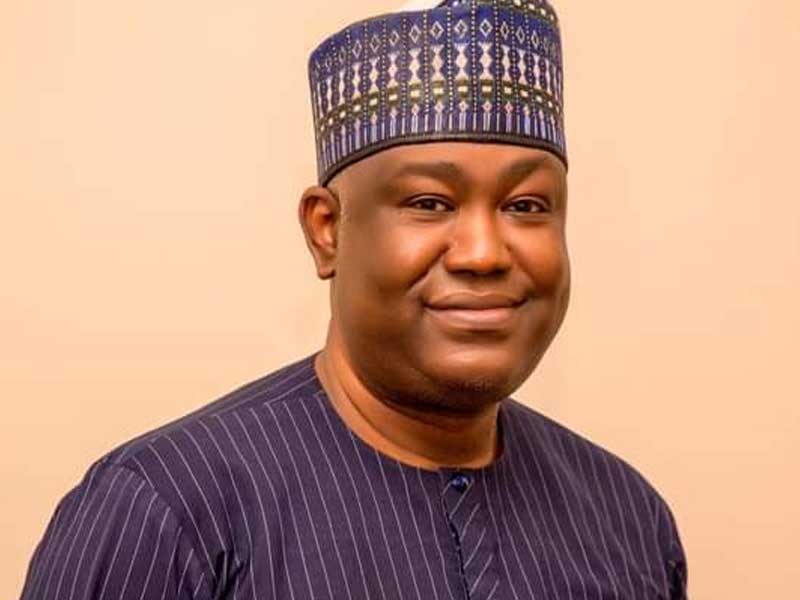
Presidential candidate of the Accord Party, Dr Gbenga Olawepo-Hashim, has described former Vice President Atiku Abubakar as the “father of subsidy removal” in Nigeria’s Fourth Republic, demanding an explanation and apology from him over his recent reversal on fuel subsidy removal.
Hashim, who has consistently opposed the removal of subsidy on petroleum products, reiterated his position during an interview with Trust TV, where he advocated the restoration of subsidy on petrol and other strategically important products to shield citizens and productive sectors from severe economic shocks.
He questioned the sincerity of politicians who previously supported subsidy removal but have now changed their positions without acknowledging or explaining their earlier stance.
“Some candidates who campaigned in the last election to remove subsidy are now reversing themselves without even regretting their earlier display of ignorance and lack of compassion for the people,” he said.
Hashim specifically criticised Atiku for changing his position without addressing his previous advocacy for subsidy removal.
“Atiku’s recant on subsidy removal without an apology is dishonesty. If you change your position because circumstances or evidence have changed, tell Nigerians why you changed. There is nothing wrong with changing your mind. What is wrong is pretending that you never held the position in the first place,” he said.
According to Hashim, Atiku, President Bola Tinubu and Peter Obi all campaigned on subsidy removal during the 2023 presidential election, while he, Omoyele Sowore and Adewole Adebayo opposed the policy.
He argued that Atiku’s position on subsidy removal predated the Tinubu administration, describing the former vice president as one of the earliest prominent advocates of subsidy removal and wholesale privatisation during the Fourth Republic.
“The truth of the matter is that Atiku, before Tinubu, on the national political scene, has been the father of the idea of subsidy removal and wholesale privatisation in this republic, he and his so-called economic team,” Hashim said.
Recalling events in 1999, when Atiku served as Vice President under former President Olusegun Obasanjo and headed the government’s economic team, Hashim said the administration increased petroleum product prices and removed subsidy.
He said he and other PDP officials publicly opposed the decision at the time, noting that Alhaji Iro Dan Musa, then PDP Deputy National Chairman; Harry Marshall, National Vice Chairman, South South; Abubakar Magaji, National Vice Chairman, North Central; Emmanuel Ibeshi, National Publicity Secretary; and himself, then Deputy National Publicity Secretary, jointly addressed a press conference condemning the policy.
Hashim added that the National Assembly also passed resolutions against the decision, prompting the executive to reverse it.
“We opposed subsidy removal when it was politically inconvenient to do so. We did not suddenly discover the suffering of Nigerians because another election is approaching,” he said.
He maintained that the historical record showed his opposition to subsidy removal was based on principle rather than electoral considerations.
Hashim proposes targeted subsidy
Hashim said the debate over subsidies should move beyond the blanket argument that all subsidies are wasteful, advocating instead for a transparent and sustainable system that protects citizens and productive sectors.
He argued that subsidies could be strategically deployed to reduce production costs, protect purchasing power, support industrial activity and cushion the effects of sudden economic shocks.
“There is subsidy in America and Europe. Only ignorant and wicked people make a blanket argument against subsidy,” he said.
“Our position is simple: restore subsidy on petroleum products and other strategic products where necessary, but do it intelligently. Subsidy should be targeted at protecting the Nigerian economy and Nigerian people, not at enriching intermediaries.”
The Accord Party candidate said Nigeria needed originality, courage and compassion in leadership, rather than politicians who change their positions for electoral advantage.
He reaffirmed his commitment to an economic programme centred on affordable energy, repositioning Nigeria as a reliable global energy supplier, protecting domestic productive capacity, industrialisation, job creation, stronger purchasing power and strategic government intervention in critical sectors.
“The Nigerian people are not laboratory animals for politicians to experiment on and then return to them during election season with a new script. We must learn from our mistakes, tell the truth about them and build a better economic future,” Hashim said.