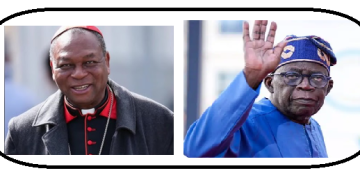


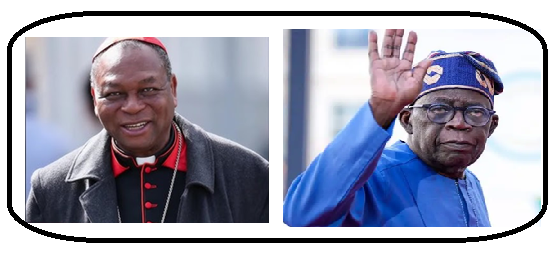
The Archbishop Emeritus of Abuja, Cardinal John Onaiyekan, has warned that Nigeria’s deepening unemployment crisis has pushed many young graduates into a state where marriage, family life, and any long-term planning have become unthinkable, even after years spent earning a university degree.
The 82-year-old cleric made the comments in an interview on Frontline, a current affairs programme on Eagle 102.5 FM in Ilese-Ijebu, Ogun State, where he reflected on Nigeria’s economic condition in the aftermath of a recent meeting between the Catholic Bishops’ Conference of Nigeria (CBCN) and President Bola Tinubu.
Describing youth unemployment as one of the country’s gravest problems, Onaiyekan said graduates who struggled through university now find themselves unable to translate their education into a livelihood, let alone a stable adult life. He put it starkly: young people who cannot find work also cannot think about marriage, starting a family, or making any plans for their future — a situation he called simply “terrible.”
The cardinal argued that a government’s success should not be measured by growth figures or reports from bodies like the World Bank, but by the tangible welfare of ordinary citizens. For him, the real test of governance is how life is actually being lived by the average Nigerian, not what appears in economic statistics.
He went on to warn that the frustration building among Nigeria’s unemployed youth could carry serious consequences if the situation is not addressed with urgency. In his view, turning things around does not require complicated policy — only the political will to govern honestly, fairly, and justly.
Onaiyekan also called for closer cooperation between Christian and Muslim leaders in engaging government on national issues, suggesting that a united religious front would carry more weight in advocating for ordinary Nigerians than either community acting alone.
The cardinal’s remarks came against the backdrop of a closed-door meeting on July 28, 2026, between President Tinubu and a CBCN delegation at the State House in Abuja. Led by the conference’s president, Archbishop Matthew Ndagoso, the bishops used the meeting to raise concerns about insecurity, economic hardship, the state of tertiary education, and the conduct of Nigeria’s democracy, including the integrity of the 2027 elections.
Onaiyekan, who was part of the delegation, later gave his own account of the encounter in a separate interview on Arise Television, saying the exchange was frank but that President Tinubu firmly rejected the bishops’ bleak assessment of the economy and security situation. According to the cardinal, the president insisted the country was not “bleeding” and that his administration’s reforms had already moved Nigeria out of what he described as a difficult period.
That television appearance triggered its own controversy. The presidency criticised Onaiyekan for publicly characterising a private meeting, with a presidential aide describing it as inappropriate and an overreach of clerical privilege. Onaiyekan defended himself by stressing that the position he presented was not personal opinion but the product of extensive internal consultation within the CBCN, and that the bishops had no political ambitions — only a duty, as religious leaders, to speak honestly about the conditions facing both their members and the wider public.
This is not the first time the cardinal has sounded the alarm on the link between joblessness and the erosion of ordinary life milestones for young Nigerians. In earlier remarks following the CBCN-Tinubu meeting, he had already told the presidency that the church was “done talking” and that it was now time for government to translate dialogue into better governance, repeating his warning that armies of frustrated, unemployed graduates represent a risk the country cannot afford to ignore.