

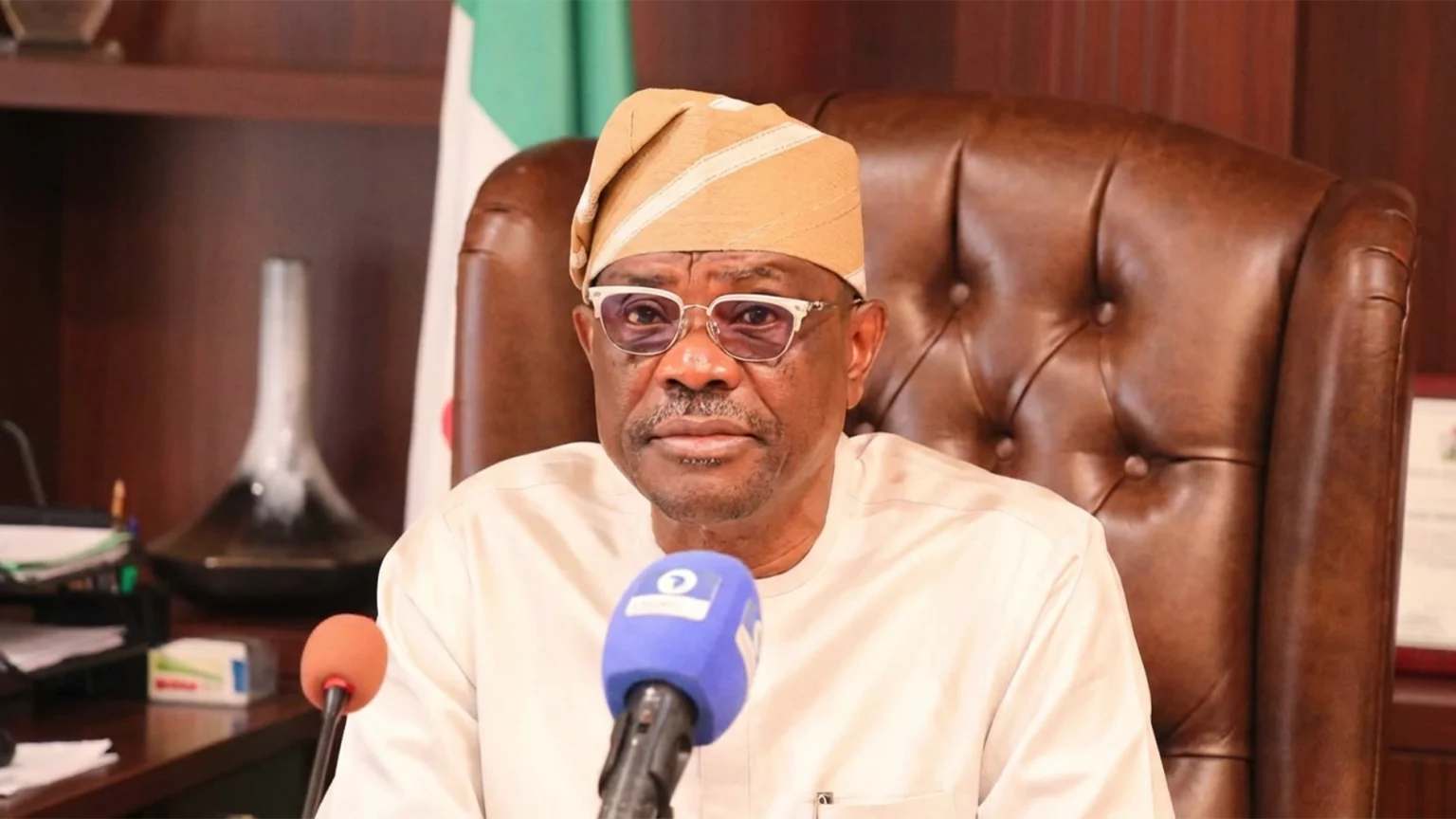
Minister of the Federal Capital Territory (FCT), Nyesom Wike, has criticised opposition political parties over the controversies surrounding their congresses and primary elections, arguing that the disputes have exposed weaknesses in their claims of providing Nigerians with a credible alternative to the ruling establishment.
Speaking during his monthly media chat in Abuja, Wike said the crises rocking some opposition parties revealed that many of the issues they often accuse major political parties of perpetuating are also present within their own organisations. According to him, allegations of irregularities, manipulation, and dissatisfaction among aspirants and party members have undermined the image they sought to project to the public.
He noted that parties that presented themselves as champions of democratic reforms are now grappling with internal disagreements and protests over the conduct of their congresses and primaries. Wike argued that these developments should encourage Nigerians to judge political actors by their actions rather than their public rhetoric.
The former Rivers State governor maintained that managing political parties in Nigeria requires practical political experience and a thorough understanding of the country’s democratic realities. He added that parties that have remained active and relevant over time have done so because they understand the complexities of Nigeria’s political environment.
Wike also dismissed suggestions that some long-established political parties had become irrelevant. According to him, political relevance is determined by factors such as performance, public support, and internal unity rather than media narratives or political propaganda.
He urged political leaders across the country to focus on strengthening democratic institutions and improving internal party democracy instead of engaging in campaigns aimed at discrediting their opponents.
On the issue of former Vice President Atiku Abubakar’s search for a running mate, Wike described the matter as politically unviable. He argued that many Nigerians believe the presidency should remain in the southern region until 2031 in line with the principle of power rotation.
Reflecting on his experience during the 2022 Peoples Democratic Party (PDP) presidential primary, Wike claimed he had long believed that the coalition formed under the African Democratic Congress (ADC) was structured primarily to advance Atiku’s political ambitions.
According to him, events surrounding the PDP primary strengthened that belief. He referenced the roles played by key political figures during the process, alleging that their actions favoured Atiku’s emergence. Wike further pointed to criticisms from some presidential aspirants who have questioned the credibility of the ADC presidential primary, insisting that such complaints support his position regarding the coalition’s intentions.
The FCT minister also spoke about the political arrangement known as the Rainbow Coalition in Rivers State, which comprises members of the All Progressives Congress (APC), PDP, and Labour Party. He explained that the coalition was established to encourage inclusive governance and cooperation among political stakeholders.
Wike disclosed that discussions were ongoing within the coalition and that a consensus governorship candidate for Rivers State could emerge by mid-August. He denied claims that Governor Siminalayi Fubara had been pressured to abandon any second-term ambition, stressing that the governor remains a member of the coalition.
He explained that Fubara’s recent absence from political activities was due to an overseas trip, which had been communicated to coalition leaders. Wike added that stakeholders in Rivers State were already mobilising support for President Bola Tinubu ahead of the January 18, 2027 presidential election and expressed confidence that the Rainbow Coalition would remain united regardless of who eventually becomes the state’s next governor