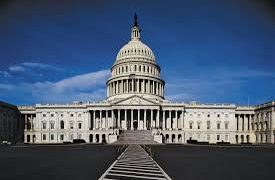


The U.S. House of Representatives is holding a critical joint briefing on Tuesday to examine alleged violence against Christian communities in Nigeria. Led by House Appropriations Committee Vice Chair Mario Díaz-Balart along with members from Foreign Affairs and Financial Services Committees, the session will convene with the U.S. Commission on International Religious Freedom and other experts to assess the situation.
The roundtable aims to gather testimony and evidence for a comprehensive report directed by President Trump on the massacre of Nigerian Christians and congressional steps to support White House efforts to protect vulnerable faith communities worldwide.
The statistics presented by U.S. lawmakers paint a dire picture:
- Over 7,000 Christians have been killed in Nigeria in 2025 alone, averaging 35 deaths per day, according to Congressional reports
- Between 50,000 and 100,000 Christians have been killed since Boko Haram’s insurgency began in 2009
More than 19,000 churches have been attacked or destroyed
A 2024 report by the Observatory for Religious Freedom in Africa revealed that Nigeria accounted for 90% of all Christians killed globally each year
In Benue and Plateau States alone, more than 9,500 individuals, mostly Christians, were killed between May 2023 and May 2025, with roughly half a million newly displaced
Congressional reports identify three main groups responsible for attacks:
- Boko Haram – Islamist terrorist organization operating primarily in northeastern Nigeria
- Islamic State West Africa Province (ISWAP) – ISIS affiliate carrying out attacks on Christian communities
- Fulani militant groups – Armed herders accused of targeting Christian farming communities, particularly in the Middle Belt states
Fulani militants have killed more Christians than Boko Haram in Plateau, Benue, Niger, Nasarawa, and Southern Kaduna states, according to the International Christian Concern’s 2025 Global Persecution Index.
The Tuesday briefing is part of a broader congressional push:
March 2025: The House Foreign Affairs Subcommittee on Africa approved measures urging President Trump to impose sanctions on Nigeria following a congressional hearing on March 12
November 2025: A public hearing was held on November 20 to review Trump’s redesignation of Nigeria as a Country of Particular Concern (CPC)
Resolution Introduced: Congressman Riley Moore introduced a resolution condemning the persecution of Christians in Nigeria and supporting Trump’s CPC designation
Investigation Mandate: President Trump has tasked Congressman Moore and the House Appropriations Committee with leading congressional investigations and recommendations to combat Christian persecution in Nigeria
The “Country of Particular Concern” Designation
The CPC status is central to U.S. policy response:
Nigeria was first placed on the CPC list in 2020 under Trump, before President Biden removed it in 2021
Trump redesignated Nigeria as a CPC on October 31, 2025
The designation opens the door for sanctions on Nigerian officials and restrictions on U.S.-Nigeria cooperation
It requires Congressional approval to become permanent policy
Trump warned that the United States would respond decisively, including the possibility of military action, if Nigeria failed to stop the alleged atrocities, though this generated controversy.
U.S. lawmakers have criticized the Nigerian government on multiple fronts:
The U.S. Commission on International Religious Freedom warned that Nigeria’s security forces have failed to curb the violence and that in some cases, local officials have been complicit
The resolution identifies the Nigerian Government’s failure to act in defense of Christians as a key concern
Blasphemy laws in northern states under Sharia law have allegedly been weaponized against religious minorities, with some carrying the death penalty
President Bola Tinubu rejected the claims, stating that Nigeria stands firmly as a democracy governed by constitutional guarantees of religious liberty and that the characterization of Nigeria as religiously intolerant does not reflect the national reality.
Tinubu has emphasized that religious freedom is a core tenet of Nigeria’s collective identity and has approved a delegation to participate in a new U.S.-Nigeria Joint Working Group focused on security cooperation.
It’s worth noting that research data shows that while there have been more attacks on churches in the last six years, there were more attacks on mosques in 2015 and 2017, indicating that both Christians and Muslims are under attack by terrorist groups in Nigeria. Some analysts argue the violence is more complex than purely religious persecution, involving ethnic tensions, resource competition, and governance failures affecting multiple communities.
The Tuesday briefing represents the latest step in what has become an intensive congressional focus on Nigeria’s security crisis, with potential outcomes including diplomatic pressure, targeted sanctions, aid restrictions, and enhanced security cooperation through the Joint Working Group framework.


**backbiome**
Mitolyn is a carefully developed, plant-based formula created to help support metabolic efficiency and encourage healthy, lasting weight management.