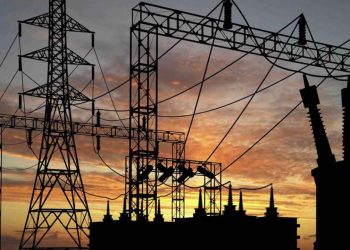
The Niger Delta Power Holding Company (NDPHC) has linked the renewed delay in restoring operations at the 500-megawatt Alaoji Power Plant to pending approvals for gas supply contracts and metering infrastructure. The firm explained that these unresolved certifications have stalled the facility’s reconnection to the national grid.
Alaoji, one of Nigeria’s largest gas-fired power plants under the National Integrated Power Project (NIPP), has been out of operation for nearly two years, worsening the nation’s persistent electricity shortage. NDPHC had earlier projected an August 2025 deadline for the plant’s revival, but the target was missed, raising fresh doubts about the government’s ability to bring dormant power assets back on stream and expand grid capacity.
In July, NDPHC’s Managing Director, Jennifer Adighije, announced that the company had made significant strides in improving generation capacity, doubling output within nine months. She described the Alaoji restoration as a crucial milestone in the firm’s broader strategy to reactivate idle facilities and strengthen grid stability.
However, new figures from the Nigerian Electricity Regulatory Commission (NERC) indicated that Alaoji remained inactive throughout August, contributing nothing to national generation. By contrast, plants such as Olorunsogo I and Omotosho I recorded utilisation rates above 90 per cent. NERC’s latest factsheet also showed that most NDPHC-owned plants continued to underperform, with only Ihovbor 2 in Edo State operating close to its full capacity.
Responding to inquiries, NDPHC officials said that although all critical equipment for the restart had been delivered, final clearance from the Nigerian Gas Infrastructure Company Limited (NGIC) was still awaited. “We have completed the procurement and delivery of all essential materials for gas supply and metering, but NGIC must certify the installations before we can proceed,” one official stated.
According to company sources, once NGIC issues the necessary approval, installation could be completed within three weeks, paving the way for the plant’s return to operation before year-end. “We are fully prepared; the gas supply certification is the only remaining step,” another senior official confirmed.
The persistent delay has reignited public concern over the government’s capacity to rehabilitate non-operational power assets and narrow Nigeria’s widening electricity gap. In August, the country’s average daily generation stood at 4,106 megawatt-hours per hour,far below the estimated 17,000 MW required to meet national demand. This represents a 74 per cent grid load factor, highlighting continued inefficiencies across the power sector.
NERC data revealed that ten major plants,Egbin, Delta, Kainji, Zungeru, Afam, Shiroro, Jebba, Okpai, Ihovbor, and Geregu,contributed nearly 80 per cent of total output in August. Hydro facilities such as Kainji and Jebba performed strongly, with load factors of 94 and 73 per cent respectively, while gas-powered stations like Afam II achieved an impressive 97 per cent despite fuel supply challenges.
Although Nigeria’s installed generation capacity stands at 13,625 MW, only about 5,514 MW was available in August, reflecting just 40 per cent utilisation. The figures underscore long-standing issues including inadequate gas supply, aging infrastructure, and weak operational efficiency. For homes and businesses, the deficit has sustained reliance on costly diesel and gas generators, driving up operating expenses and undermining competitiveness across key sectors.