

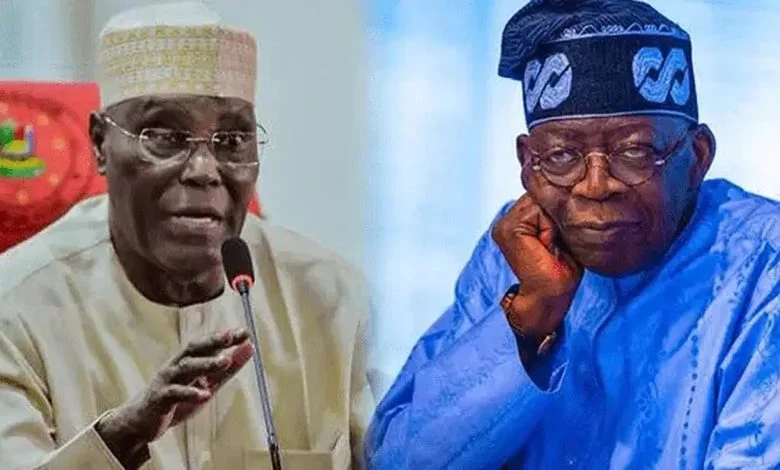
Former Vice President Atiku Abubakar has urged the Federal Government to conduct a detailed audit of revenues accruing to the Federation Account and the deductions made from them, following another increase in the price of petrol nationwide.
Atiku, who is the African Democratic Congress (ADC) presidential candidate, also condemned the economic policies of President Bola Tinubu’s government, arguing that Nigerians are experiencing severe financial pressure despite the country continuing to earn significant income from crude oil.
His position was contained in a statement signed by his Senior Special Assistant on Public Communication, Phrank Shaibu.
According to Atiku, the international price of crude oil currently stands at approximately $102.52 per barrel, while motorists in some parts of Nigeria now pay as much as N1,470 for a litre of petrol.
He compared the situation with developments in 2008, when crude reportedly sold for about $147 per barrel but petrol was available for N65 per litre under the administration of the late President Umaru Musa Yar’Adua.
Atiku argued that the contrast raises serious questions about the country’s management of oil earnings and the impact of government policies on ordinary citizens.
The former vice president alleged that the present administration has maintained a lack of transparency around FAAC distributions, petroleum income, deductions and other financial arrangements.
He therefore requested a detailed account of all Federation Account earnings from 2023 until the present, including the total amount collected, deductions made before allocations, the statutory justification for those deductions, the accounts into which the funds were transferred and the individuals or institutions that ultimately received them.
Atiku referred to figures from the June 2025 FAAC meeting, claiming that the Federation generated N4.232 trillion in gross revenue but only N1.818 trillion was shared.
He questioned the large sums reportedly categorised as collection expenses, interventions, refunds, transfers and savings, insisting that the figures should be independently examined.
The ADC candidate also demanded an explanation of what happened to the financial resources supposedly freed by the removal of petrol subsidy.
He recalled that the government had presented the subsidy reform as a measure that would release funds for important areas such as hospitals, schools, roads and other public infrastructure.
However, Atiku argued that Nigerians have endured years of increased living costs without receiving sufficient information about how the supposed savings and additional earnings have been spent.
He further called for greater transparency regarding transactions linked to the Renewed Hope Infrastructure Development Fund, OML 143, crude oil earnings and the Nigerian National Petroleum Company Limited’s international liquefied natural gas business.
Questions surrounding offshore companies, crude lifting arrangements, maritime security agreements and other alleged revenue channels should, according to him, also be independently investigated.
Atiku maintained that matters of such magnitude should not be settled through political arguments or media statements. He called for relevant government records to be made public and for independent forensic professionals to scrutinise the financial transactions.
He also criticised the justification of the latest petrol increase on the basis of global market conditions, arguing that Nigerian workers earn considerably less than citizens in developed economies.
Using figures cited in his statement, Atiku compared Nigeria’s N70,000 minimum wage with the United States federal minimum wage of $7.25 per hour and pointed to lower petrol prices in America.
He accused the Tinubu administration of imposing fuel costs comparable to those in richer countries while Nigerians continue to survive on substantially lower incomes.
Atiku concluded by insisting that Nigerians deserve clear answers regarding crude earnings, FAAC deductions, subsidy savings and other government revenues.
He maintained that citizens should not be continually asked to endure economic sacrifices without knowing how the nation’s resources are being managed.