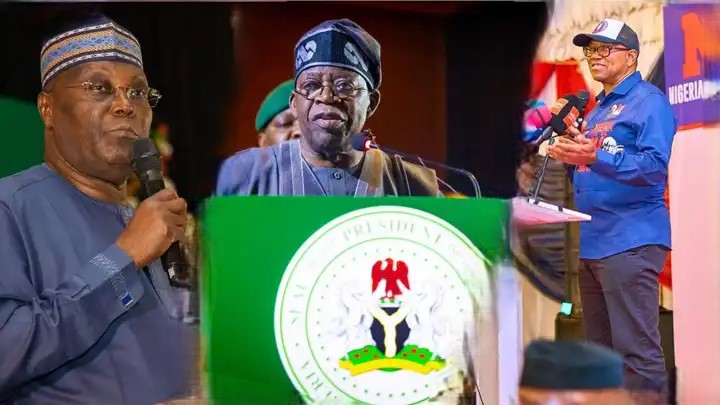
The struggle by Nigeria’s opposition parties to produce a single presidential candidate ahead of the 2027 general elections appears to be facing fresh challenges as major political contenders continue to maintain their individual ambitions.
Recent political developments suggest that attempts to consolidate the opposition against President Bola Ahmed Tinubu may have suffered setbacks, with several presidential hopefuls unwilling to withdraw from the race in favour of another candidate.
Former Vice President Atiku Abubakar and former Anambra State Governor Peter Obi remain among the prominent figures associated with the opposition movement, but both are now pursuing separate presidential platforms.
Atiku is the presidential candidate of the African Democratic Congress (ADC), while Obi has emerged as the presidential candidate of the Nigeria Democratic Congress (NDC).
The development has complicated earlier efforts to establish a broad opposition coalition capable of presenting a single candidate against the ruling All Progressives Congress (APC).
Reports indicate that other presidential contenders, including Oyo State Governor Seyi Makinde, Omoyele Sowore and Adewole Adebayo, have also maintained their political ambitions rather than stepping down for another candidate.
The situation has raised concerns among opposition figures who believe that multiple candidates could divide the votes of Nigerians seeking an alternative to the APC.
The 2023 presidential election provides a major reference point for the current debate. President Tinubu won that election in a contest that featured several major opposition candidates, including Atiku and Obi.
Obi, who contested under the Labour Party, secured significant support in parts of the country, while Atiku maintained strong backing in several northern states. The division of opposition votes contributed to a highly competitive three-way contest.
With the 2027 election approaching, some opposition leaders have argued that a similar division could benefit the incumbent if the major opposition blocs fail to agree on a common strategy.
However, the continuing ambitions of individual candidates suggest that reaching such an agreement could prove difficult.
Political negotiations have also been complicated by questions over which candidate should lead any proposed alliance. While some groups have favoured Atiku because of his previous presidential experience, others have pointed to Obi’s support base and performance in the 2023 election.
The disagreement has created a delicate situation for opposition parties, which must balance the desire for a united platform with the ambitions of politicians who have already secured party tickets.
Meanwhile, the ruling APC and President Tinubu have continued preparations for the 2027 contest. Supporters of the administration have pointed to political alliances and the growing realignment of politicians around the president as factors that could strengthen the ruling party’s position.
An APC chieftain, Osita Okechukwu, recently urged Tinubu to maintain his political alliance with FCT Minister Nyesom Wike, arguing that the relationship could have strategic value for the president in 2027.
The widening political contest means opposition parties face increasing pressure to resolve their differences before the election.
For now, the possibility of a single opposition presidential candidate remains uncertain, with major contenders continuing to defend their individual ambitions.