

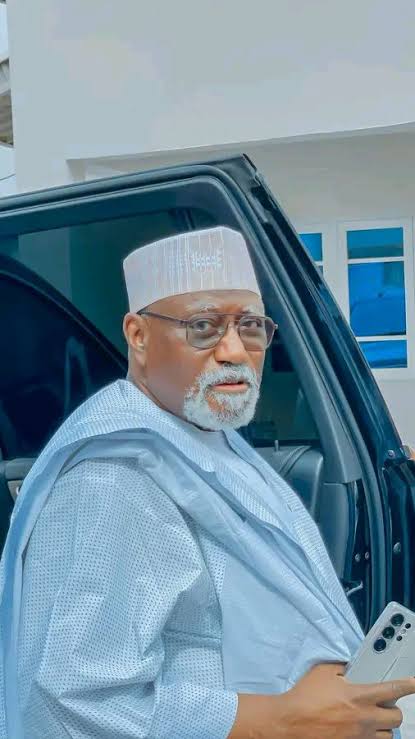
Former Director-General of the Department of State Services (DSS), Lawal Daura, has revisited the circumstances surrounding the sealing of the National Assembly during the administration of former President Muhammadu Buhari.
Daura recently addressed the controversial incident during an interview, explaining why he authorised the action despite questions over whether the then Acting President, Yemi Osinbajo, had been consulted.
According to the former intelligence chief, he did not believe he needed clearance from either Osinbajo or the President before carrying out an operation he considered necessary. He maintained that his position as DSS Director-General gave him the responsibility to respond to situations that, in his assessment, required immediate action.
When questioned about whether Osinbajo knew about the decision before security operatives moved to restrict access to the National Assembly, Daura rejected the suggestion that presidential approval was required.
He explained that certain security situations demand prompt decisions, adding that waiting for instructions could sometimes prevent an officer from effectively dealing with an emerging threat.
Daura compared his decision to the actions expected of a police officer who encounters a crime that is about to occur. He argued that such an officer would be expected to intervene rather than abandon the situation while attempting to obtain permission from superior officers.
To illustrate his point, he asked whether a policeman who notices an offence about to happen on the street should first leave the scene, contact the Divisional Police Officer or Commissioner of Police, and wait for directives before taking action.
For the former DSS boss, the same principle applied to the circumstances surrounding the National Assembly incident. He said he acted based on his understanding of his duties and what he believed needed to be done at the time.
Daura was also asked if he had reconsidered the decision or felt sorry about his involvement in the incident.
He responded firmly that he had no regrets. The former DSS chief said he remained unapologetic about the action and would not describe his decision as a mistake.
The shutdown of the National Assembly in 2018 attracted considerable criticism and sparked a national debate about the relationship between security agencies and the legislature. It also raised questions about the authority of security officials to take such measures without explicit approval from the country’s political leadership.
Years after the incident, Daura’s comments have brought renewed attention to the episode. His explanation offers his perspective on why security operatives were deployed around the National Assembly and why he believed the action was within his responsibilities.
Daura’s position remains that his decision was based on what he considered a pressing security concern and that, in such circumstances, he was not obligated to wait for authorisation before acting.