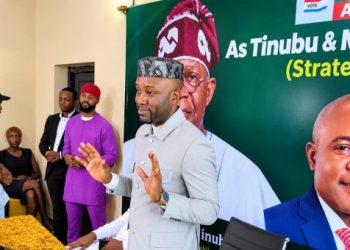


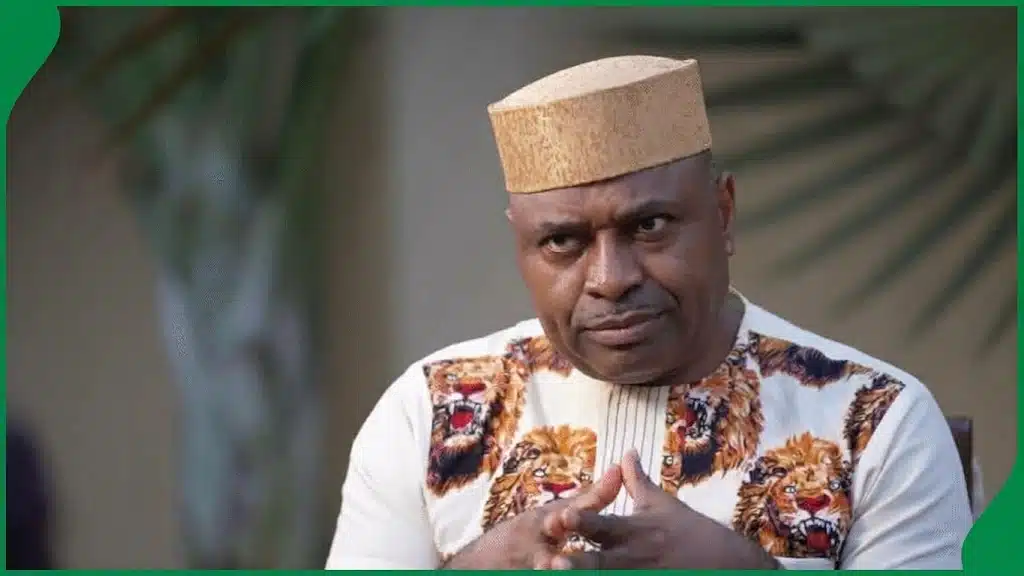
The spokesperson for the African Democratic Congress (ADC) presidential campaign, Kenneth Okonkwo, has explained why members of the party were not present at the unveiling of the campaign headquarters of Oyo State Governor Seyi Makinde in Abuja.
The event attracted several notable political figures, including Peter Obi, who attended the ceremony and expressed his support for the Oyo governor. The ADC, however, was not represented at the gathering, prompting questions about the party’s decision to stay away.
According to Okonkwo, the absence of ADC officials should not be interpreted as a sign of hostility towards Makinde or the political movement surrounding him. He argued that the ceremony was essentially an affair organised around the governor’s political platform and, as a result, did not necessarily require the participation of ADC leaders.
Makinde, who has continued to attract attention within Nigeria’s opposition political space, was described by Obi as someone capable of occupying the nation’s highest political office.
Speaking at the ceremony, Obi praised Makinde and suggested that the governor possesses the qualities required to serve as President of Nigeria. He also reiterated his position that the country’s political actors should be prepared to cooperate beyond party lines in the national interest.
The former presidential candidate maintained that his presence at the event was motivated by friendship, solidarity and a desire to support Makinde rather than an attempt to create political divisions.
Obi further stated that he would be willing to cooperate with whoever emerges victorious in a genuinely free and credible election, stressing the need for Nigerians to put the survival and progress of the country ahead of political disagreements.
Despite Obi’s attendance and the presence of other political personalities, the ADC chose not to send representatives to the occasion.
During an interview with News Central on Monday, Okonkwo addressed the issue and dismissed suggestions that the party’s non-attendance should be viewed as controversial.
He explained that the occasion was fundamentally connected to the Allied Peoples Movement (APM) and therefore should be regarded within that political context. In his view, there was no compelling reason for senior ADC figures to participate in an event that was primarily associated with another political organisation.
Okonkwo also took a swipe at some of the politicians who attended the ceremony. He suggested that certain political figures have developed a reputation for turning up at almost any public gathering once they receive an invitation.
According to him, their attendance at such events should not necessarily be interpreted as evidence of a major political alignment or partnership.
He said the individuals in question were the type who would readily appear at various social occasions, regardless of whether the gathering was political or otherwise.
Okonkwo added that some politicians were particularly eager to be seen at public functions and would attend whenever they were invited, irrespective of the size or importance of the gathering.
His comments therefore sought to distinguish the ADC’s decision from the actions of politicians who chose to attend Makinde’s campaign office launch.
While Obi’s appearance at the ceremony highlighted his willingness to maintain relationships across political divides, Okonkwo’s explanation showed that the ADC viewed the occasion differently.
The development comes amid continuing political realignments and discussions about possible cooperation among opposition figures ahead of future elections in Nigeria.