

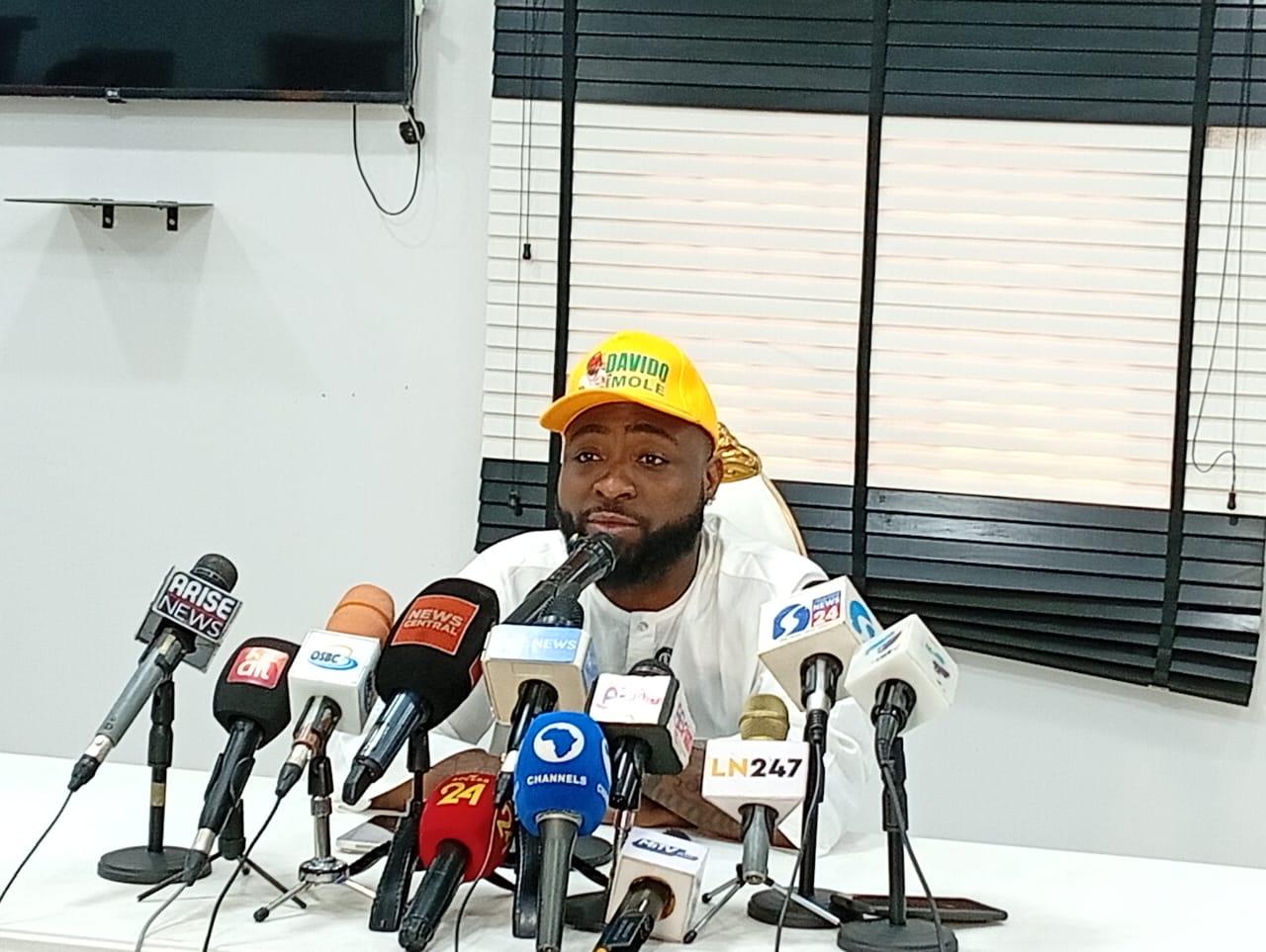
Afrobeats star David Adeleke, popularly known as Davido, has emerged as a major figure in the political campaign that secured Governor Ademola Adeleke’s second term in office, highlighting the growing influence of celebrities in Nigerian elections.
Davido, who is the governor’s nephew, became formally involved in the Accord Party’s political structure in December 2025 when he travelled to Osogbo to collect his party membership card.
His political role expanded in April 2026 when he was appointed Chairman of the Imole Youth Mobilisation Campaign Council. He subsequently took an active part in the campaign, engaging with commercial motorcycle and tricycle operators and appearing at rallies in Osogbo, Ede and other parts of the state.
Following the announcement of the election results on August 16, Davido celebrated alongside supporters and posted a message to his uncle, writing: “We did it, uncle.”
Adeleke defeated the All Progressives Congress candidate, Bola Oyebamiji, by 66,252 votes, winning 19 of Osun State’s 30 local government areas.
The result has prompted renewed debate over the role of celebrity influence in Nigerian politics, particularly the extent to which social-media followings and popular culture can translate into electoral support.
From entertainment to politics
Davido’s involvement in the election went beyond appearances at campaign rallies. His large social-media following and popularity among young Nigerians made him a prominent component of the Accord Party’s youth mobilisation strategy.
The campaign presented his involvement as an important factor in attracting young voters and generating enthusiasm around Adeleke’s re-election bid.
However, his political involvement has also attracted criticism from opponents who have questioned whether celebrity-driven mobilisation can substitute for traditional political organisation and policy-based campaigning.
The controversy has been heightened by Davido’s existing position within the Osun government.
In October 2025, Adeleke appointed his nephew chairman of the newly established Osun Sports Trust Fund, which was intended to attract investment and philanthropic support for the state’s sports infrastructure.
The appointment has since become a subject of political criticism. The Osun APC has alleged that the state has yet to produce a functional government-owned stadium and has also criticised the performance of the state’s football clubs.
Those claims have been used by opposition figures to question whether Davido’s government appointment has produced the results promised when he took office.
Allegations of financial inducement
The campaign has also faced allegations from the opposition over its youth mobilisation activities.
An APC spokesman alleged that vulnerable young people were given money in exchange for political support. However, the allegation has not been established as fact, and no documentary evidence was presented in the claims cited.
The allegation nevertheless reflects a broader concern surrounding Nigerian elections, where political campaigns are frequently accused of using financial incentives alongside rallies and grassroots mobilisation.
Davido and the Adeleke campaign have presented the mobilisation effort as an attempt to engage young people and bring them closer to the political process.
A powerful political family
Davido’s involvement has also drawn attention to the Adeleke family’s long-standing presence in Osun politics.
Ademola Adeleke became governor after years of political activity by members of his family. His late brother, Isiaka Adeleke, was the first civilian governor of Osun State after the return to democratic rule.
Another brother, Adedeji Adeleke, is a prominent businessman and Davido’s father. Members of the extended family have also held public and political positions in the state.
Davido’s role in his uncle’s re-election campaign has therefore been viewed by critics as another example of the family’s continuing political influence.
Supporters, however, argue that his involvement demonstrates the ability of popular culture and younger generations to participate directly in politics.
What happens after the election?
With the election concluded, attention is likely to shift from campaign mobilisation to governance.
Davido is expected to return largely to his music career, while the Adeleke administration faces pressure to deliver on its promises to Osun residents.
Questions surrounding the state’s sports infrastructure, the performance of its football clubs and the effectiveness of youth-focused initiatives are likely to remain part of the political debate.
The election has demonstrated the potential power of celebrity influence in Nigerian politics. But whether that influence can translate into lasting improvements in governance will ultimately depend on what happens after the campaign crowds have dispersed and the political spotlight moves elsewhere.
For Osun, the real test of the Adeleke administration’s second term will not be the size of the rallies or the reach of its celebrity campaigners, but whether the government can convert electoral support into measurable results for residents.