

The Kano State Government has disclosed that it has channelled about N996.29bn into 1,557 development projects since the administration of Governor Abba Kabir Yusuf came into office.
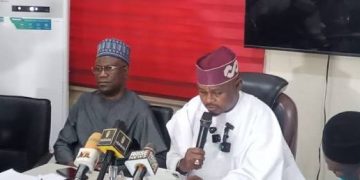
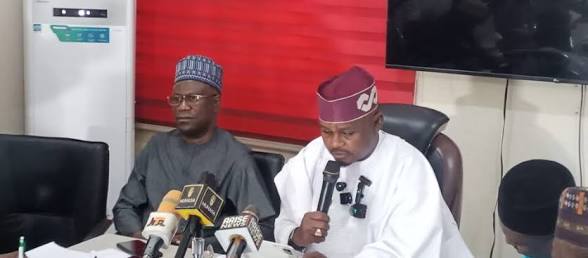
The disclosure was made on Sunday by the Commissioner for Public Procurement, Projects Monitoring and Evaluation, Nura Maaji Sumaila, at an international briefing where he provided updates on the government’s projects, spending, procurement processes and distribution of infrastructure across the state.
Sumaila explained that work had been completed on 867 of the projects, representing 55.68 per cent of the total number. Another 654 projects, which account for roughly 42 per cent, are currently being executed.
He added that 26 projects had progressed to the contract-award phase, while 10 others had been prepared for award.
The commissioner said government records indicated that contracts worth N695.20bn had obtained the required Certificates of No Objection. He also disclosed that payment claims totalling N444.75bn had gone through the ministry’s verification process.
According to him, the approved NOC value represents 69.78 per cent of the total contracts, while the payments reviewed so far amount to 44.64 per cent of the overall contract value.
He assured that the ministry would continue tracking the implementation of projects and scrutinising expenditure to ensure that government investments produce the expected results.
Giving a breakdown of the projects by location, Sumaila said 598 projects with a combined value of N299.36bn were situated within the eight metropolitan LGAs.
In the 36 rural local government areas, 653 projects were being implemented at a total cost of N287.90bn.
He identified the development of rural communities as one of the administration’s major areas of focus, stressing that significant funding had been directed towards projects outside the metropolitan centres.
The commissioner further said 37 projects valued at N159.50bn were classified as multi-LGA initiatives because their implementation cuts across different local government areas. In addition, 269 projects classified as statewide and other interventions carried a combined value of N249.54bn.
He explained that the multi-LGA category comprises large infrastructure schemes such as road expansions, bridges, solar-powered streetlights, traffic control facilities and roads connecting different parts of the state.
According to him, placing such projects under individual LGAs could distort the figures because several communities benefit from the same project.
Among the high-value projects mentioned at the briefing was the N113.19bn mass housing development in Rijiyar Gwangwan, Dawakin Kudu.
Others include the N24.77bn Katsina Road expansion, which covers parts of Fagge and Dala, as well as the N21.90bn Modern Cities infrastructure programme covering Dawakin Kudu, Dawakin Tofa and Kumbotso.
He also mentioned the N27.74bn Madobi-Yako-Kafin Maiyaki/Kiru Road and the N22bn Rural Model City housing programme designed to cover communities across the state’s 36 rural LGAs.
Sumaila argued that the size and reach of some of the projects meant that government performance should not be judged simply by counting the number of projects allocated to each local government.
He noted that a single major infrastructure project could cost several billions of naira while benefiting residents in numerous communities.
The commissioner, however, acknowledged that some of the major initiatives had not moved beyond the award stage. He specifically cited the Dawakin Kudu mass housing project and the Rural Model City scheme, saying the government was still completing the necessary procurement and due-process requirements.
He assured Kano residents, development partners and the international community that the ministry would continue to tighten its oversight of public procurement, project execution and payment processes.
Sumaila said the government’s priority was to ensure that funds earmarked for development were properly accounted for and that completed investments delivered practical benefits to residents across Kano State.