

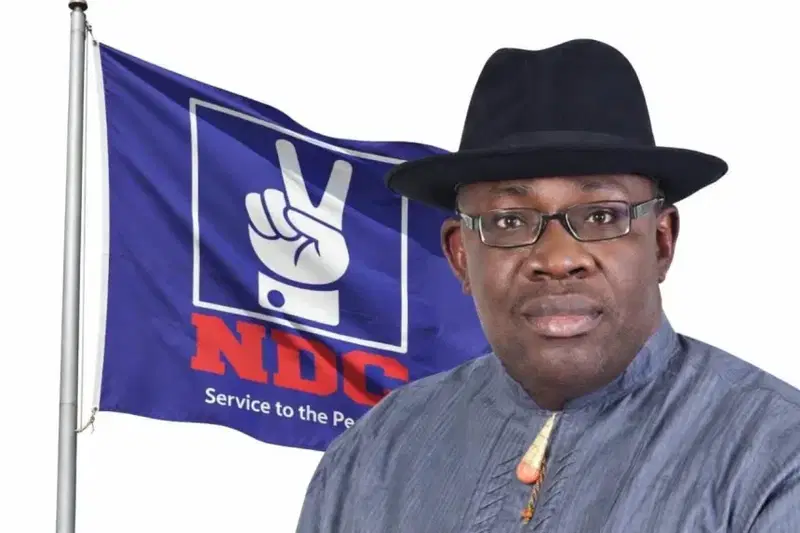
National Leader of the Nigeria Democratic Congress (NDC), Senator Seriake Dickson, has expressed strong optimism that President Bola Tinubu and the governing All Progressives Congress (APC) could lose power in the 2027 general elections if the process is transparent and credible.
Speaking during an interview on Channels Television’s Sunday Politics, Dickson argued that the mood across the country reflects growing frustration with the current administration and that such public sentiment could shape the outcome of the next election cycle.
According to him, many Nigerians remain disappointed by what they consider unmet expectations under the APC government, creating conditions that could favour political change.
“As both a political leader and someone who engages with Nigerians regularly, we understand the concerns people have expressed and the expectations they believe have not been fulfilled. That reality could significantly influence future elections,” he said.
Dickson maintained that democratic competition should remain open and fair, stressing that every political platform should be given equal opportunity to participate in the electoral process without restrictions.
He argued that political dominance should be determined only through the ballot and not through institutional barriers or selective participation.
“All parties interested in contesting should be allowed to do so freely. Elections should remain the only legitimate mechanism for deciding political leadership,” he stated.
The former Bayelsa State governor also disclosed that the NDC remains receptive to conversations with opposition forces ahead of the 2027 contest, especially as political realignments continue to reshape the landscape.
While acknowledging the possibility of strategic partnerships, Dickson said the party’s preference would naturally be for any future alliance to strengthen and support NDC’s electoral ambitions.
He explained that dialogue among opposition groups remains an important political option but cautioned against assuming outcomes before formal processes are completed.
“Our position is not based on superiority. Once candidate selections and internal arrangements are concluded, broader discussions may take place. Whether those discussions result in alliances remains uncertain, but every political opportunity will be considered,” he said.
His remarks come at a time when opposition figures across the country are exploring possible collaboration ahead of the next election cycle, especially following renewed political engagements involving former leaders and emerging blocs.
Beyond electoral issues, Dickson addressed legal attempts aimed at challenging the status of the NDC, dismissing efforts to deregister the party as politically driven and lacking substance.
He insisted that such actions would not disrupt the party’s preparations for future elections and expressed confidence that all NDC candidates would eventually appear on official ballots.
According to him, the party completed every constitutional and regulatory requirement necessary for registration and remains confident that both the Independent National Electoral Commission and the courts will uphold due process.
Dickson also rejected objections raised over the party’s emblem, arguing that the peace symbol associated with the NDC is universally recognised and cannot be claimed exclusively by any person or institution.
He maintained that symbols associated with peace have existed globally for decades and remain part of shared public expression rather than private ownership.