


Domestic airlines in Nigeria may be forced to suspend operations within the next seven days if urgent action is not taken to address the soaring cost of aviation fuel, industry stakeholders have warned.
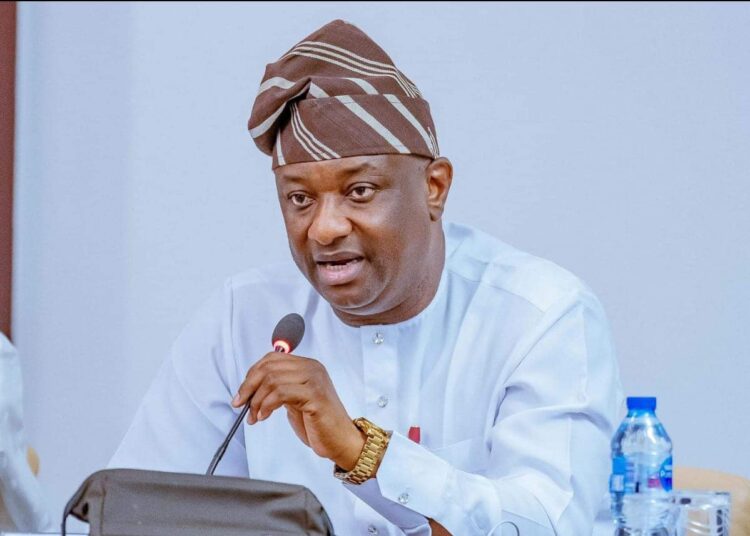
The warning followed a crucial meeting convened by the Minister of Aviation and Aerospace Development, Festus Keyamo, with the Airlines Operators of Nigeria (AON), fuel marketers, and regulators. The meeting ended in a deadlock, with no agreement reached on how to curb the sharp rise in the price of Jet A1 fuel.
Briefing journalists after the meeting, Keyamo said consultations would continue over the next 48 to 72 hours in search of a workable solution. He acknowledged that the nearly 300 percent increase in aviation fuel prices has placed severe strain on airline operators, who may be left with no option but to raise ticket fares to remain in business.
The meeting, held with the approval of President Bola Tinubu, brought together key stakeholders for what Keyamo described as the first direct engagement between airline operators and fuel marketers. Participants included airline executives, oil marketers supplying Jet A1, and regulators from the petroleum sector led by the Permanent Secretary of the Ministry of Petroleum Resources.
According to the minister, discussions were candid, with each group outlining its challenges. Airlines emphasized the unsustainable cost of fuel, while marketers pointed to their own operational difficulties.
“We reviewed pricing margins to determine whether there is profiteering or unjustified inflation,” Keyamo said. “Marketers explained the constraints they face, and airlines also presented their perspective.”
To resolve the impasse, all parties agreed to appoint representatives who will engage intensively over the coming days to establish a fair pricing framework.
“The airlines cannot sustain operations beyond the next seven days without adjusting fares. They have been stretched to their limits,” Keyamo warned.
He added that while the aviation sector operates within a free market system, it must still be subject to oversight. “A free market is not a licence for excesses. Whether there is any form of collusion will become clearer soon, and we will keep the public informed,” he said.
Meanwhile, Chairman of Air Peace, Allen Onyema, attributed the surge in aviation fuel prices partly to global geopolitical tensions, particularly the U.S.–Iran situation. However, he argued that the increase in Nigeria is disproportionately high compared to global trends.
“Globally, rising crude oil prices typically lead to proportional increases in by-products like aviation fuel. What we are witnessing in Nigeria is abnormal,” Onyema said.
He noted that while other countries have recorded increases of around 70 percent, Nigeria has experienced spikes of between 250 and 270 percent.
“This disparity prompted government intervention and the convening of this meeting,” he added.
Onyema warned that without immediate intervention, domestic airlines may be forced to shut down operations.
“It is not about a lack of willingness to operate, but about survival,” he said. “The cost of fuel and overall operations has become unsustainable, and airlines simply lack the financial capacity to continue under these condition