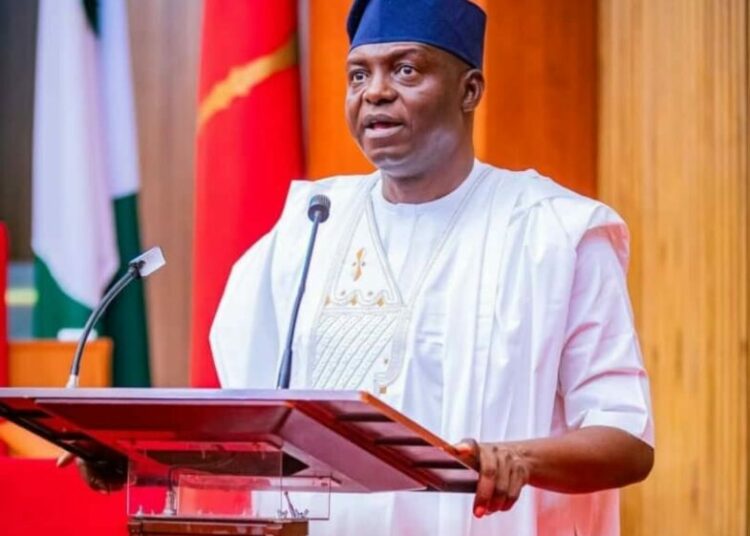
The All Progressives Congress (APC) has taken a significant step toward the 2027 presidential election as Senator Iyorchia Ayu Yilwatda, National Secretary of the party, confirmed that he has obtained the party’s 2027 presidential re-election nomination forms. The development signals the commencement of formal moves within the APC for President Bola Ahmed Tinubu’s re-election bid and highlights growing organisational activity ahead of next year’s polls.
Yilwatda, speaking on behalf of the party leadership, said that the acquisition of the nomination forms reflects APC’s readiness to launch an organised campaign that will rally nationwide support for President Tinubu’s bid for a second term in office. He emphasised that the process of securing the forms is a formal and necessary requirement under the party’s constitution and the Electoral Act, and reiterated the party’s commitment to internal democracy in selecting its presidential flagbearer.
The party official said that the APC leadership has been engaging stakeholders at all levels to ensure that the nomination process proceeds smoothly, with adherence to party regulations, inclusive consultation and respect for zoning arrangements. He added that the party expects aspirants who have expressed interest in the presidency to participate in the nomination and primary process in a transparent and competitive manner.
By securing the nomination forms early, Yilwatda noted that the APC is positioning itself to build momentum and cohesion within its ranks, with the aim of projecting a united front for the general elections. He encouraged party members to remain focused on grassroots mobilisation, policy advocacy and voter engagement as part of preparations for 2027.
The 2027 election cycle has already begun to shape up as political activities intensify across Nigeria’s party landscape. With the ruling APC taking the lead on initiating internal processes, other political parties are also working on their own strategies for candidate selection and campaign planning. Analysts say that the early acquisition of nomination forms underscores the seriousness with which major parties are approaching the election, recognising the need for strategic groundwork well ahead of the polls.
In his comments, Yilwatda highlighted President Tinubu’s leadership track record, saying that the administration’s achievements in key sectors — including economic reforms, infrastructure development and security strategies — provide a solid foundation for seeking a fresh mandate. He urged party supporters to actively contribute to the campaign by articulating the APC’s vision for the nation and engaging constructively with citizens on issues that matter most ahead of the polls.
Political commentators say that the nomination process marks a critical phase for the APC as internal debates and consultations intensify. While securing the forms does not automatically guarantee an unopposed candidacy, it represents a procedural step that formalises intent and triggers subsequent stages of campaign activity such as primaries, policy summits and membership mobilisation.
Some observers noted that President Tinubu’s potential re-election bid has generated discussions within the party about consensus building, leadership balance and regional representation, with various stakeholders advocating for unity and strategic discipline. Yilwatda’s announcement is seen as part of efforts to manage these dynamics while maintaining focus on collective goals.
The APC’s progressive move contrasts with opposition parties, which have also begun mobilising and defining their strategies for the 2027 elections, including candidate declarations, coalition building and voter outreach. As the political environment evolves, parties are positioning themselves to compete for national and state offices, reflecting the high-stakes nature of the upcoming electoral contest.
As the nomination exercise moves forward, attention will turn to the APC’s primary timetable, delegate selection mechanics and the level of engagement among aspirants and party structures. What unfolds in the coming months is expected to shape party narratives and influence voter sentiment across Nigeria.