


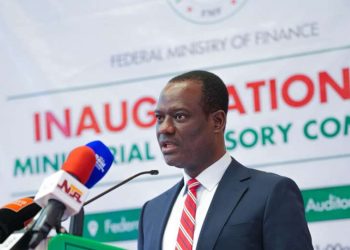
ABUJA, Nigeria — The Federal Government of Nigeria has officially acknowledged a staggering N30 trillion shortfall in revenue for the 2025 fiscal year, a development that exposes significant challenges in the nation’s fiscal planning and budget execution. The disclosure was made on Tuesday by the Minister of Finance and Coordinating Minister of the Economy, Wale Edun, during a joint session with the House of Representatives Committees on Finance and National Planning while discussing the 2026–2028 Medium Term Expenditure Framework (MTEF) and Fiscal Strategy Paper (FSP).
The government originally projected total revenue of ₦40.8 trillion for 2025 to support the ₦54.9 trillion “Budget of Restoration” — an ambitious plan designed to stabilize the economy, boost growth, and secure peace across the country. However, according to Edun, the actual inflows are now expected to amount to only about ₦10.7 trillion, leaving a yawning gap of roughly ₦30 trillion.
Edun attributed the shortfall to underperformance across key revenue streams, particularly the oil and gas sector — traditionally the backbone of Nigeria’s fiscal earnings. He highlighted weak collections from Petroleum Profit Tax (PPT) and Company Income Tax (CIT) paid by oil companies, as well as lackluster performance in several non-oil revenue components. These factors have compounded fiscal pressures and undermined government’s ability to raise the funds needed to meet planned spending.
The minister’s candid admission contrasts sharply with earlier assertions by President Bola Tinubu in September, when the president claimed that the government had already met its revenue targets for the year. “Today I can stand here before you to brag: Nigeria is not borrowing. We have met our revenue target for the year and we met it in August,” Tinubu told members of the Buhari Organisation at the Presidential Villa in Abuja.
Despite the revenue shortfall, Edun maintained that the government has managed to meet its critical financial obligations through what he described as “prudent treasury management.” He said that salaries, statutory transfers to states and local governments, and both domestic and foreign debt servicing obligations have all been honoured in a timely manner. This, he insisted, was achieved by creative sequencing and prioritization of available funds.
Edun also provided details on capital expenditure performance, noting that capital releases to ministries, departments, and agencies in 2024 amounted to about ₦5.2 trillion out of a budgeted ₦7.1 trillion — a 73% implementation rate. Including multilateral and bilateral funded projects, total capital expenditure stood at ₦11.1 trillion out of a projected ₦13.7 trillion, or approximately 84% execution.
Despite these figures, lawmakers expressed growing concern over the government’s reliance on optimistic revenue projections, particularly those tied to volatile oil earnings. Edun warned that future budgeting must be flexible and grounded in realistic assumptions, cautioning against “committing expenditure to revenue streams that have consistently failed to materialize.”
Further deepening the debate, the Minister of Budget and National Planning, Atiku Bagudu, told lawmakers that the MTEF and FSP were developed after broad consultations with government entities, the private sector, civil society organisations, and international partners. Bagudu noted that while the policy planning retains an oil production target of 2.06 million barrels per day, a more cautious assumption of 1.84 million barrels per day has been adopted for revenue projections in the 2026 budget framework.
At the session, the Chairman of the House Committee on Finance, James Faleke, urged fiscal realism, warning against “bloated budgets” that are difficult to implement and often lead to fiscal slippage. Lawmakers also debated the broader implications of revenue underperformance, with some arguing that it could roll over a large portion of unfunded capital projects into the 2026 budget cycle, raising questions about continuity and economic impact.
The government’s admission of a massive revenue shortfall comes at a time when Nigeria is grappling with multiple economic headwinds: weak global oil prices, production constraints, structural limitations in tax administration, and the lingering effects of macroeconomic reforms. Analysts say this shortfall underscores the urgent need for fiscal diversification and stronger domestic revenue mobilisation to reduce dependence on crude oil earnings.
As the National Assembly reviews the MTEF and FSP in the coming weeks, pressures are likely to intensify for a more sustainable fiscal path — one that balances ambitious development goals with realistic revenue assumptions and robust economic management.


Over 30 Suspected Sex Workers Arrested as Ebonyi Seals Unapproved Guest House
More than 30 people described as suspected commercial sex workers have been arrested in Abakaliki, the Ebonyi State capital, following...

**back biome**
Mitolyn is a carefully developed, plant-based formula created to help support metabolic efficiency and encourage healthy, lasting weight management.