

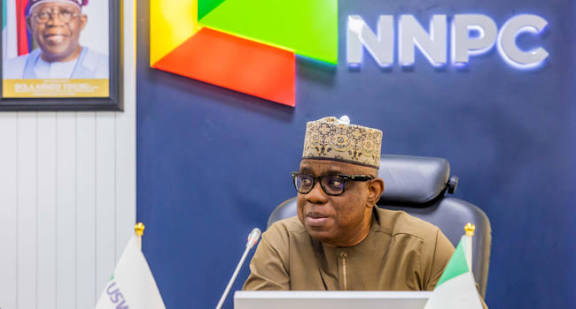
The (NNPCL) Nigerian National Petroleum Company Limited has set a new target of June 2026 to finalise the selection of technical partners for the country’s state-owned refineries, aiming to revive facilities that have struggled for years due to underinvestment and a decline in refining expertise. The announcement was made by NNPCL’s Group Chief Executive Officer, Bayo Ojulari, during a press briefing in Abuja, where the company also reported a record Profit After Tax of N5.4 trillion for the 2024 financial year.
Ojulari noted that Nigeria’s three state-owned refineries,Port Harcourt, Warri, and Kaduna,remain “well below international standards” despite ongoing rehabilitation efforts. He explained that their products are commercially uncompetitive compared to privately owned facilities like the Dangote Refinery. To address this, NNPCL plans to partner with competent private entities that already operate functional refineries and have proven technical expertise. These partnerships will be structured as commercial collaborations, rather than state-driven initiatives, with the private partners leading operations while NNPCL complements their capabilities.
Highlighting the need for expertise, Ojulari acknowledged that much of the technical know-how now resides abroad, noting that many specialists operating large refineries are foreign due to the erosion of local capability over time. He stressed that partnerships would be based strictly on verifiable track records and that NNPCL seeks to attract private operators with existing refineries rather than theoretical experience. The aim is to redesign some state-owned refineries into hybrid plants capable of producing products that meet global standards and are commercially marketable. Firm timelines for completion will be released after these redesign and hybridisation plans are finalised, with a clearer roadmap expected by mid-2026.
The state-owned refineries, with a combined installed capacity of 445,000 barrels per day, have remained largely inactive for over a decade, despite billions of dollars spent on turnaround maintenance. The Port Harcourt refinery is undergoing a $1.5 billion rehabilitation, Warri is being upgraded in collaboration with Daewoo Engineering, and Kaduna requires extensive overhaul to process complex crude. The operational success of Dangote Refinery, producing Euro-V standard fuels, has further exposed the technological gaps of the state-owned facilities.
Beyond refining, NNPCL is working to raise Nigeria’s crude oil production to 1.7 million barrels per day by year-end, up from 1.5 million barrels per day last year, with a target of 1.8 million barrels next year and an ambitious goal of two million barrels per day by 2027. These gains are supported by improved security, Joint Venture financing, and new upstream investments.
Ojulari emphasized that NNPCL now operates as a limited liability company under the Companies and Allied Matters Act, with greater commercial freedom provided by the Petroleum Industry Act. He highlighted that governance reforms, transparency, and staff development are central to positioning NNPCL as one of Africa’s most competitive oil companies. By improving partnerships and investor confidence, NNPCL aims to transform its operations and build a sustainable path for Nigeria’s oil and refining sector.