


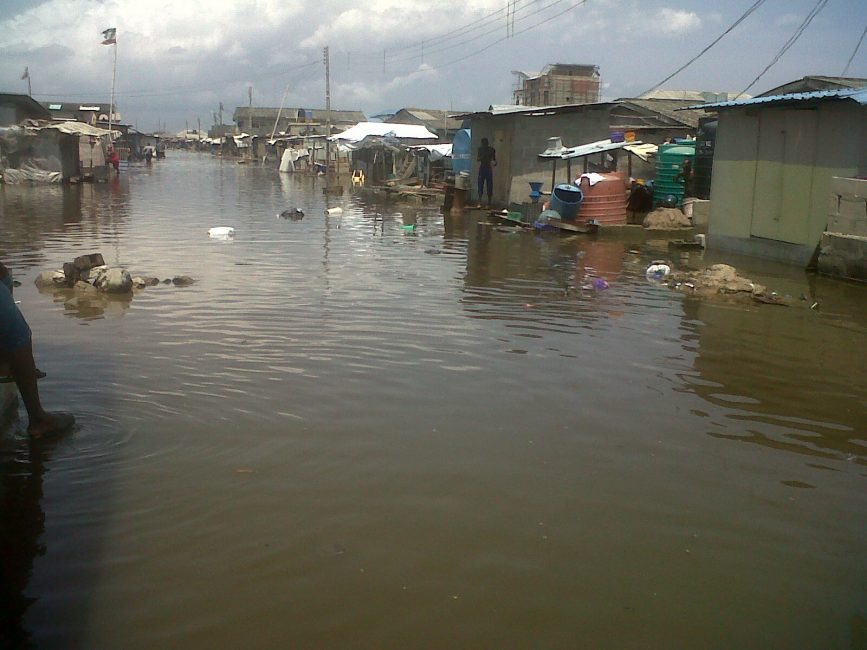
The coastal community of Apakin, a centuries-old fishing village near Lagos, is facing an existential threat as rising sea levels, coastal erosion, and powerful ocean surges continue to wash away homes, farmlands, boats, and even ancestral burial grounds. Once a thriving settlement known for its fishing and maritime culture, Apakin now stands on the brink of extinction, with residents watching helplessly as the Atlantic Ocean steadily consumes their land.
Over the past few decades, environmental experts estimate that nearly 80% of Lagos State’s shoreline has been eroded by the advancing sea. In Apakin, what used to be bustling fishing docks and family compounds have been reduced to waterlogged ruins. “Every year, the ocean comes closer,” said one community elder. “We’ve lost our homes, our ancestors’ graves, and our way of life.”
Residents say the destruction has worsened in recent years due to large-scale human activities, including dredging projects, sand mining, and port construction, which have disrupted natural coastal defenses. These projects, while aimed at expanding trade and infrastructure, have inadvertently made vulnerable communities like Apakin more exposed to ocean surges. Locals claim that the removal of mangroves and sandbanks natural barriers that protect against flooding has left them defenseless against the waves.
Community leaders have repeatedly appealed for government intervention and international assistance, but their cries have largely gone unanswered. Despite pledges from both regional authorities and global environmental organizations to tackle coastal erosion and protect endangered communities, residents say tangible action has been slow or nonexistent. “We’ve had visits and promises,” said a youth leader in the village. “But no real help has come. The sea doesn’t wait for bureaucracy it’s already taking everything.”
Environmental scientists warn that what is happening in Apakin is a microcosm of the broader climate crisis facing Nigeria’s coastal regions. Rising global temperatures are melting polar ice, causing sea levels to rise and intensifying tidal surges along the West African coast. Lagos, a megacity of over 20 million people, is among the most at-risk cities in the world for climate-induced flooding.
In response, local activists are calling for a mix of immediate relief measures and long-term adaptation strategies. They recommend constructing sea walls, restoring mangrove forests, and enforcing stricter regulations on coastal dredging. Some propose relocating the most vulnerable families while providing them with sustainable housing and livelihoods elsewhere.
The Lagos State Environmental Protection Agency (LASEPA) has acknowledged the growing crisis, stating that coastal erosion is a “national emergency” that requires coordinated action among government, private developers, and international partners. However, progress remains slow due to funding challenges and competing development priorities.
For Apakin residents, time is running out. Each passing tide brings more destruction, displacing families and erasing cultural heritage built over generations. The plight of Apakin serves as a powerful reminder of how climate change, poor planning, and neglect of local communities intersect to create humanitarian and environmental disasters.
If no urgent steps are taken, Apakin and other coastal villages like it may soon vanish entirely beneath the waves, leaving behind nothing but memories of a community swallowed by the sea.