

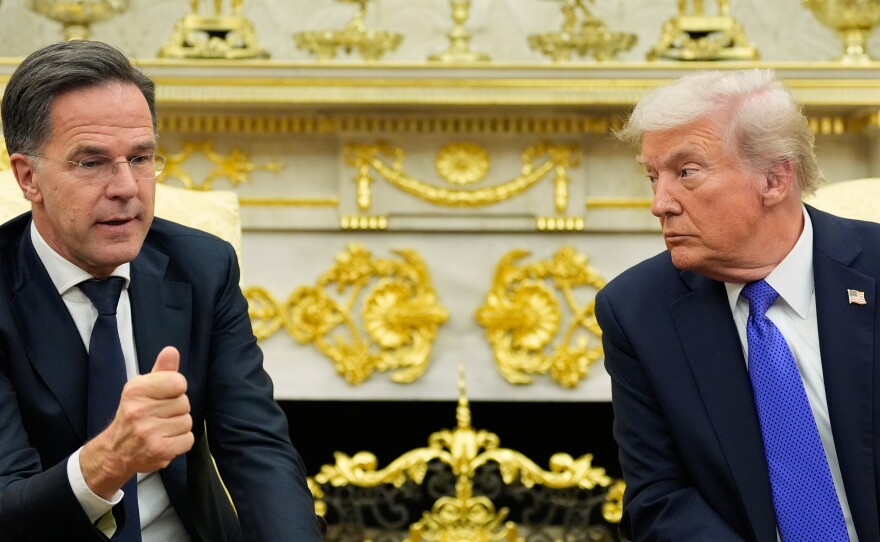
The United States has imposed sweeping sanctions on Russia’s two largest oil companies, Rosneft and Lukoil, in a move aimed at tightening economic pressure on Moscow and forcing an immediate ceasefire in its war against Ukraine. The decision marks the first time the Trump administration has directly targeted Russia’s energy sector since the full-scale invasion began.
Announcing the sanctions, President Donald Trump said he had called off a planned meeting with Russian President Vladimir Putin, explaining that he “didn’t feel like we were going to get to the place we have to get.” The sanctions, described by Treasury Secretary Scott Bessent as an effort to “degrade Putin’s war chest,” were introduced after what appeared to be a week of shifting signals from Washington over its approach to the conflict.
Ukraine’s President Volodymyr Zelensky welcomed the U.S. action, calling it a “timely and powerful step” toward weakening Russia’s ability to sustain the war. Russia’s Foreign Ministry, however, denounced the measures as “entirely counterproductive,” claiming they would not create “any particular problems” for the Russian economy.
The sanctions announcement capped a week of confusion in U.S. foreign policy. On October 16, Trump publicly floated the idea of supplying Ukraine with Tomahawk long-range missiles capable of striking deep inside Russian territory. The next day, after a phone call from Putin, Trump revealed plans to meet the Russian leader for a summit in Budapest.
On October 17, Zelensky visited the White House for his third meeting with Trump in 2025, hoping to secure the missile deal. However, the talks reportedly turned tense. Trump refused to approve the delivery of Tomahawks and instead urged Ukraine to make territorial concessions to Russia to end the war,an offer Zelensky rejected. Following the meeting, Trump publicly called for an end to hostilities along existing front lines, signaling a position closer to Moscow’s terms.
By October 18, European leaders, alarmed by Trump’s shifting tone, reaffirmed their “unwavering commitment” to supporting Ukraine’s sovereignty and independence. Despite growing unease among allies, preparations for the Budapest summit continued into the following week.
On Monday, U.S. Secretary of State Marco Rubio held discussions with Russian Foreign Minister Sergey Lavrov to lay the groundwork for the summit. Lavrov reiterated that Moscow’s stance had not changed since earlier negotiations in Alaska: Russia would only agree to a broader peace deal addressing what it called the “root causes” of the war, not a simple ceasefire.
By Tuesday, however, plans for the summit had unraveled. According to reports, talks between Rubio and Lavrov revealed deep divisions, and the White House later announced that there were “no plans” for an immediate Trump-Putin meeting. Asked about the reversal, Trump said he wanted to avoid “a waste of time.”
Despite Moscow’s insistence that summit preparations were still underway, Washington’s decision to impose sanctions the following day ended any remaining diplomatic momentum. The move was widely viewed as a major victory for Ukraine and its European allies, who had long urged Washington to intensify economic pressure on Moscow.
Zelensky praised the sanctions as a significant show of support, coinciding with the European Union’s 19th sanctions package against Russia. Although the Kremlin has downplayed the impact, analysts say the measures strike at the heart of Russia’s energy revenues, signaling a new phase in the West’s strategy to constrain Putin’s war machine.



**back biome**
Mitolyn is a carefully developed, plant-based formula created to help support metabolic efficiency and encourage healthy, lasting weight management.