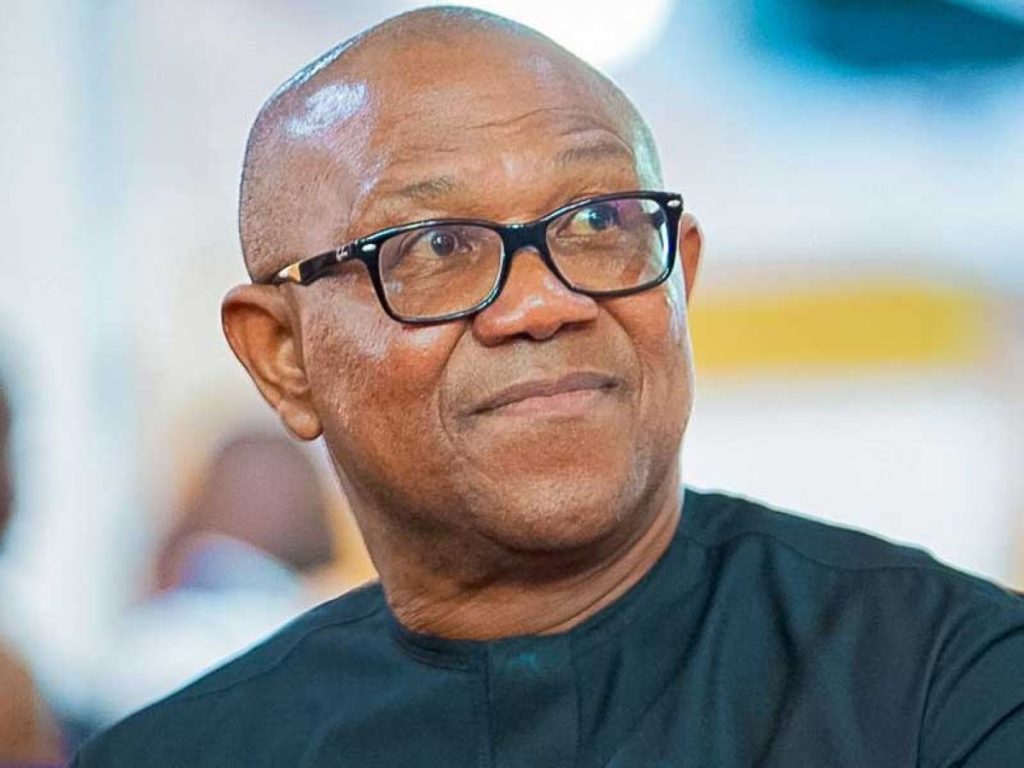
Nigerian politician and former presidential candidate Peter Obi has concluded a spiritual pilgrimage to Rome, where he and his wife undertook prayers for Nigeria’s future during the Catholic Church’s Jubilee Year celebration.
The Rome visit came immediately after a two-day trip to the United States, where Obi addressed the Friendship Club on October 4 and spoke at the 1st Ubuntu African Youth Assembly in Washington on October 5. He departed for Rome that same evening, arriving on October 6.
During the pilgrimage, Obi and his wife passed through the Holy Doors of all four major Papal Basilicas in Rome – a significant ritual during the Jubilee Year, which occurs every twenty-five years in the Catholic tradition.
On October 7, the couple visited three basilicas: St. Mary Major, where they prayed at the grave of the late Pope Francis; the Papal Basilica of Saint Paul Outside the Walls, where Cardinal James Harvey received them; and the Papal Basilica of St. John Lateran. They also prayed at the Scala Sancta, the sacred steps Jesus is believed to have climbed before Pontius Pilate.
The following day, October 8, they attended the Papal General Audience at St. Peter’s Basilica, where they heard Pope Leo XIV’s catechesis on hope and perseverance. They completed their pilgrimage by passing through the final Holy Door at St. Peter’s.
In his statement, Obi said the couple dedicated their prayers specifically to Nigeria, expressing gratitude that despite 65 years of challenges since independence, the nation has remained united. However, they also sought divine intervention for the country’s numerous struggles.
“We prayed for the injection into our political landscape selfless and compassionate leaders whose hearts God would touch,” Obi stated, calling for leaders characterized by truthfulness, altruism, competence, and commitment to the common good.
During their pilgrimage, the couple encountered several Nigerian pilgrims and were granted an audience with Pope Leo XIV, to whom they requested prayers for Nigeria.
While emphasizing his faith in divine providence, Obi concluded his statement with a call for practical action, rejecting fatalism. “Faith does not absolve us of responsibility; rather, it calls us to action,” he wrote, urging Nigerians to contribute with “honesty, diligence, and love” toward national healing and progress.
He ended with his characteristic optimism: “A new Nigeria is possible.”
The pilgrimage reflects Obi’s continued engagement with Nigeria’s challenges through both spiritual and civic means, as the country grapples with economic difficulties, security concerns, and calls for improved governance.