

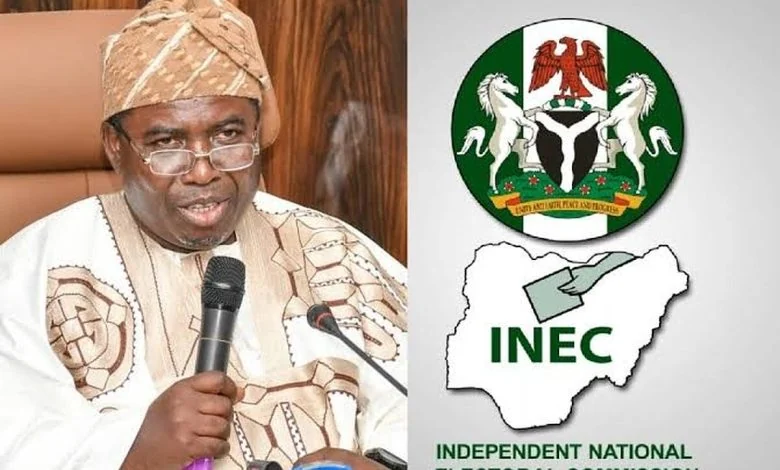
The Socio-Economic Rights and Accountability Project (SERAP) has asked the Independent National Electoral Commission (INEC) to make its electoral technology assessment documents available to the public, giving the commission’s Chairman, Professor Joash Amupitan, seven days to respond.
The demand was conveyed through a Freedom of Information application dated November 28, 2026, and signed by the organisation’s Deputy Director, Kolawole Oluwadare.
SERAP is requesting access to detailed records on the Bimodal Voter Accreditation System (BVAS), the INEC Result Viewing Portal (IReV) and other digital platforms expected to support the conduct of the 2027 general elections.
The intervention comes following a nationwide demonstration of INEC’s electronic voting infrastructure, which took place on Saturday, November 28, at 17,676 polling locations.
The programme was designed to examine the machines’ ability to authenticate eligible voters and facilitate the electronic delivery of polling-unit results.
Afterwards, INEC expressed satisfaction with the outcome, pointing particularly to better fingerprint recognition. Nevertheless, the commission admitted that the number of voters who turned up was below expectations.
Observations from different parts of the country also brought attention to operational setbacks, including equipment failures, delayed deployment of election workers and difficulties with identifying registered voters.
Against this background, SERAP wants the electoral authority to furnish the public with the complete outcome of the trial, including attendance records, accreditation statistics, operational difficulties and remedial actions.
It also wants clarification on whether the limited participation affected the exercise’s ability to establish the actual capacity of the machines ahead of the 2027 elections.
Furthermore, the organisation is seeking copies of independent investigations into the digital infrastructure, including cybersecurity examinations, penetration-testing results and technical evaluations conducted by specialists.
It wants INEC to identify vulnerabilities uncovered during these investigations, disclose recommendations made by the assessors and explain what has been done to resolve the identified problems.
Another issue raised concerns the possibility of external interference with the commission’s electronic infrastructure. SERAP wants information about protective arrangements against hacking, unauthorised entry, interference with databases and alteration of election results.
The organisation argued that confidence in electronic voting arrangements must be supported by verifiable evidence rather than public assurances from electoral authorities.
It also maintained that Amupitan’s positive remarks about the simulation make it necessary for the commission to release the records supporting his assessment.
Other materials requested include documentation on the commission’s digital infrastructure, personnel access permissions, system surveillance, backup facilities, emergency restoration procedures and physical copies of polling-unit results.
SERAP acknowledged that certain information, particularly login credentials, passwords, server addresses and IP details, should remain restricted to protect the commission’s infrastructure.
However, it maintained that such precautions should not prevent the release of audit findings and other documents that can safely be examined by the public.
The organisation also raised questions about possible security breaches involving INEC’s databases and servers, urging the commission to investigate suspected incidents and introduce appropriate corrective measures.
In support of its application, SERAP referenced Sections 47, 60 and 62 of the Electoral Act 2026, alongside Articles 9 and 19 of the African Charter on Human and Peoples’ Rights and the International Covenant on Civil and Political Rights, respectively.
It maintained that granting its request would give Nigerians, election monitors, civil society organisations and independent technology professionals the opportunity to scrutinise the commission’s preparations before the 2027 general elections.