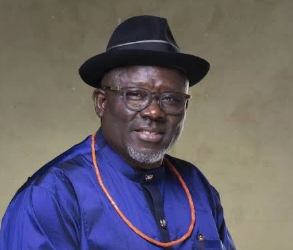



An All Progressives Congress (APC) chieftain, Dr Josef Onoh, has said that singing Nigeria’s former national anthem, Arise, O Compatriots, is not a criminal offence under the 1999 Constitution or the National Anthem Act 2024.
Onoh made the clarification during an interview on Arise News on Monday while commenting on the controversy surrounding the presidential candidate of the Nigeria Democratic Congress (NDC), Peter Obi, and other party members who sang the former anthem at a political gathering in Lagos.
He described the criticism trailing the incident as unnecessary, arguing that the law does not prescribe any punishment for citizens who sing the previous anthem.
According to him, although President Bola Tinubu signed the National Anthem Act into law in May 2024, restoring Nigeria, We Hail Thee as the country’s official anthem, the legislation did not criminalise the use of the former anthem.
Onoh maintained that both anthems reflect Nigerians’ historical connection and allegiance to the country.
He said, “These two national anthems symbolise our allegiance and our deep-rooted historical affiliation to our nation.”
The APC chieftain further argued that Section 3 of the National Anthem Act specifies occasions when the current anthem must be performed but does not expressly include private political town hall meetings among the mandatory gatherings.
He also referenced Section 24(a) of the 1999 Constitution, which identifies respect for the national anthem as a civic responsibility, noting that it does not prescribe criminal sanctions for failing to sing or recite it.
The controversy followed an NDC town hall meeting in Lagos last week, attended by Obi and the party’s governorship candidate, Funso Doherty.
During the gathering, attendees sang Arise, O Compatriots after reportedly failing to join in rendering the current anthem, Nigeria, We Hail Thee.
The incident attracted criticism from the Minister of the Federal Capital Territory, Nyesom Wike, and the Minister of Aviation and Aerospace Development, Festus Keyamo.
While Wike accused Obi of showing disrespect to national symbols, Keyamo described the development as suggestive of secessionist tendencies.
However, some NDC members defended the action, insisting that singing the former anthem was a spontaneous decision by attendees rather than a deliberate rejection of the country’s official anthem.
Nigeria adopted Nigeria, We Hail Thee at independence in 1960 before replacing it with Arise, O Compatriots in 1978. The original anthem was restored in May 2024 following the passage of the National Anthem Bill.