

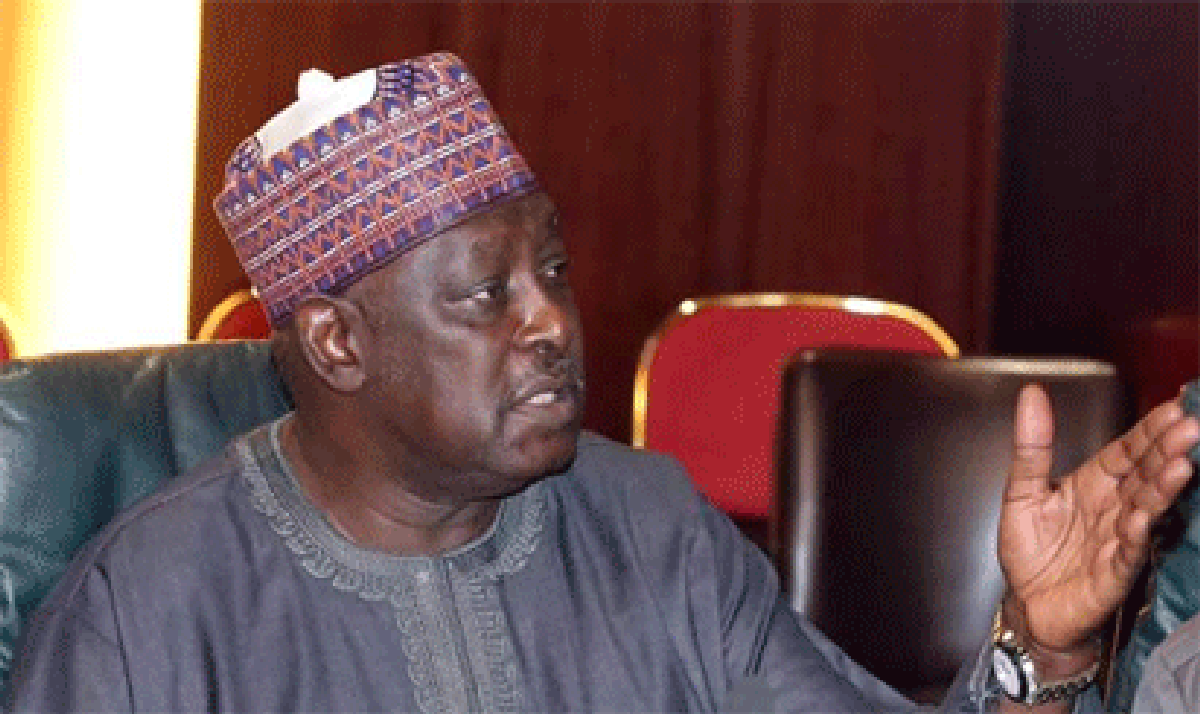
Babachir Lawal, a leading member of the Nigerian Democratic Congress (NDC), has shed light on the factors responsible for the departure of some influential personalities from Peter Obi’s political circle, arguing that their decisions to move elsewhere should not be taken as proof that the group is experiencing internal disintegration.
The former Secretary to the Government of the Federation made this known during an interview on Arise News while discussing the recent movement of prominent figures away from the former Labour Party presidential flagbearer’s political structure.
Among those who have recently departed is Yunusa Tanko, who moved to the Social Democratic Party (SDP) and was subsequently appointed to oversee the presidential campaign organisation of Adewole Adebayo.
During the programme, Lawal was asked whether the repeated withdrawal of key associates suggested that Obi’s political platform was facing serious difficulties or gradually losing its influence.
In his response, he rejected the notion that losing prominent supporters automatically translates into organisational weakness. He argued that political realignments happen across different parties and are not peculiar to Obi’s supporters.
Making reference to his previous involvement in President Bola Tinubu’s political structure, Lawal recalled that several well-known politicians had also separated themselves from the former Lagos State governor’s camp.
He cited Kashim Imam and former Osun State Governor Rauf Aregbesola as examples, stressing that their decisions to move away did not bring an end to Tinubu’s political organisation.
According to him, political associations bring together people whose objectives are not always the same. While certain individuals participate because they genuinely want to contribute to society, others are attracted by the opportunities they believe political involvement can offer.
He explained that disagreements and departures are therefore unavoidable, particularly when members discover that the benefits they anticipated are not forthcoming.
Using the workplace as an example, Lawal noted that employees regularly resign from organisations when they receive better offers elsewhere. He maintained that political actors should not be expected to remain permanently attached to a platform when their personal circumstances or expectations change.
He further pointed to the financial limitations of the Obidient movement, admitting that the platform does not possess the substantial funding available to some established political organisations.
Lawal observed that some participants may have joined the movement expecting financial assistance to meet their daily needs and family responsibilities. However, the inability to provide such support could leave them dissatisfied and encourage them to explore other political opportunities.
He stressed that people have personal commitments, including household expenses and other financial obligations, which could influence their decisions to abandon a political association.
The NDC chieftain equally challenged individuals who attempt to present themselves as the most important contributors to political victories.
Reflecting on his time in government under former President Muhammadu Buhari, he recalled receiving visits from people who claimed to have spent enormous sums or mobilised substantial support to secure Buhari’s electoral success.
Some allegedly insisted that their personal involvement was responsible for the former president’s victory.
However, Lawal maintained that candidates and political leaders should retain the authority to determine the actual contributions made by individuals within their organisations.
He argued that allowing people to independently determine their own importance would encourage inflated assessments and unrealistic expectations.
His intervention comes as the Obidient movement continues to attract attention over the departure of prominent associates and its ability to maintain political cohesion ahead of Nigeria’s 2027 general elections.