


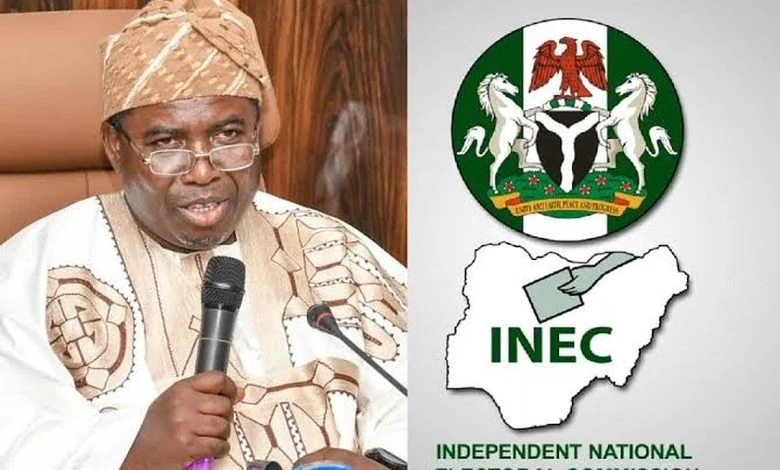
Former Minister of Education, Oby Ezekwesili, has asked the head of the Independent National Electoral Commission (INEC), Prof. Joash Amupitan, to vacate his position following claims that Nigeria’s electoral register may have been manipulated before the 2027 general elections.
Ezekwesili warned that the allegations had created troubling questions about the reliability of the country’s electoral arrangements, stressing that unresolved concerns could affect Nigerians’ confidence in the forthcoming polls.
She described the voters’ database as a vital instrument in determining participation during elections, arguing that any breach of its integrity could cast serious doubt on the legitimacy of the entire exercise.
The former minister voiced her position on Monday during an interview on Arise Television’s Prime Time programme, where she questioned the handling of the controversy and called attention to the responsibility of INEC’s leadership.
She maintained that the seriousness of electoral irregularities should not be judged by the number of questionable individuals allegedly captured in the register. According to her, the discovery of even a handful of unqualified names could undermine the credibility of the process.
Ezekwesili explained that the register provides the basis for determining citizens entitled to exercise their voting rights. She therefore insisted that any allegation suggesting interference with the document must receive immediate and proper attention.
She cautioned that failure to resolve the matter could further erode public confidence in the electoral body and its ability to deliver an acceptable outcome in 2027.
During the broadcast, she maintained that even if only 10 people who were not eligible to vote had been unlawfully included in the register, such an occurrence would be sufficient to raise questions about the validity of the election.
She argued that the controversy demanded clear answers and accountability from those overseeing the commission rather than allowing doubts about the electoral records to continue.
The former minister also called on Amupitan to take responsibility for the allegations, insisting that he should consider relinquishing his appointment if his administration could no longer earn the trust of the electorate.
She noted that the duties of the electoral umpire are not restricted to organising voting exercises, counting ballots and announcing successful candidates. They also include safeguarding sensitive electoral information, upholding neutrality and ensuring transparency throughout the process.
Ezekwesili further disclosed that the controversy had affected her perception of the commission’s present administration, adding that Amupitan should independently recognise the situation and step aside without waiting for external pressure.
She argued that public office holders must be prepared to acknowledge failures and accept responsibility whenever their actions or the institutions they supervise become subjects of serious public concern.
The former minister equally expressed reservations about political organisations and their aspirants continuing preparations for the next general elections while questions about the reliability of the electoral system remain unanswered.
She suggested that resolving the concerns surrounding the voters’ register should receive priority rather than allowing political campaigns and other election-related engagements to overshadow the matter.
The national voters’ database remains a central part of Nigeria’s election framework, as it contains the records of individuals recognised as qualified to participate in the voting process.
Consequently, claims involving illegal enrolment, questionable voter information or unauthorised alterations can create doubts about the fairness of the exercise.
Ezekwesili maintained that INEC must provide satisfactory explanations and demonstrate that appropriate measures are being taken to address the allegations.
She emphasised that the authority of an electoral institution is not established solely by the laws empowering it but also by the confidence citizens place in its ability to discharge its responsibilities fairly.
Her call for Amupitan to leave office is therefore anchored on the need for accountability and the restoration of public trust in Nigeria’s electoral system before the 2027 general elections.